
Upright microscopes
Upright microscopes hold the objectives above the specimen and the light source below, the traditional configuration for viewing prepared slides, smears, and thin sections. Optika builds its upright range across five series – B-290, B-380, B-510, B-810, and B-1000 – moving from entry-level teaching instruments to flagship, fully modular research microscopes, all sharing the same commitment to infinity-corrected optics and the exclusive X-LED illumination system. Whichever series fits your budget and application, you get brightfield as standard, with darkfield, phase contrast, polarized light, fluorescence, and metallurgical observation available depending on the model.
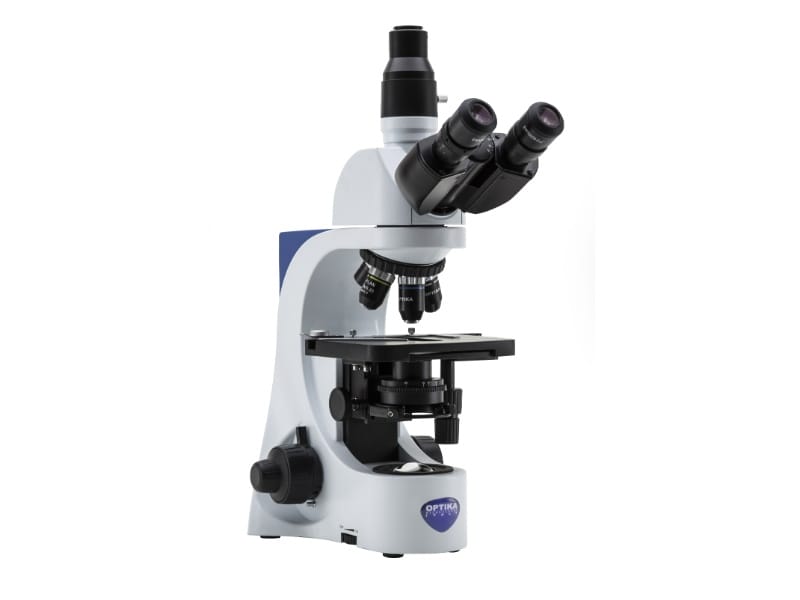
- Type: Brightfield, trinocular
- Magnification: Up to 1000x
- Optics: IOS N-PLAN, infinity corrected
- Illumination: X-LED3
- Head: Trinocular, 30 degree inclined
€1.072,00 excl. VAT
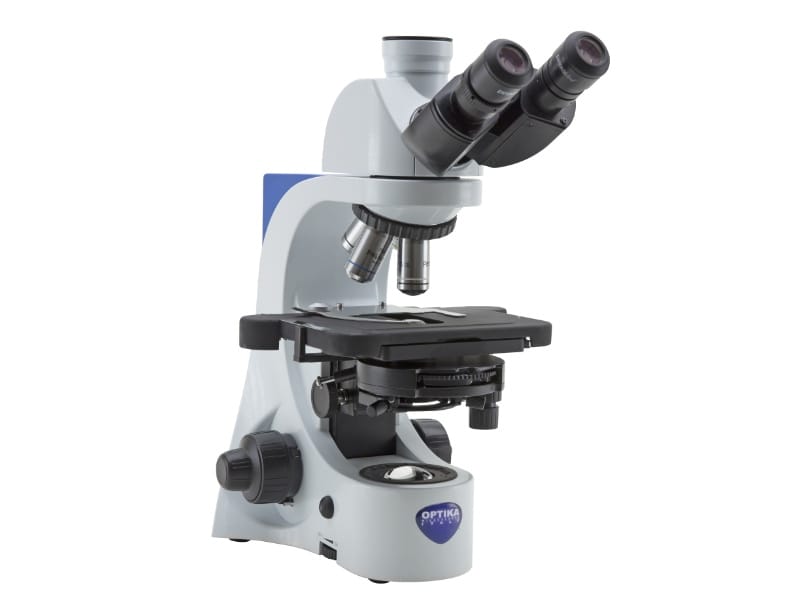
- Type: Phase contrast microscope
- Magnification: 40x – 1000x
- Optics: N-PLAN / W-PLAN
- Illumination: 3.6 W X-LED3 (ALC)
- Head: Binocular, 30 degrees inclined, 360 degrees rotating
€1.778,00 excl. VAT
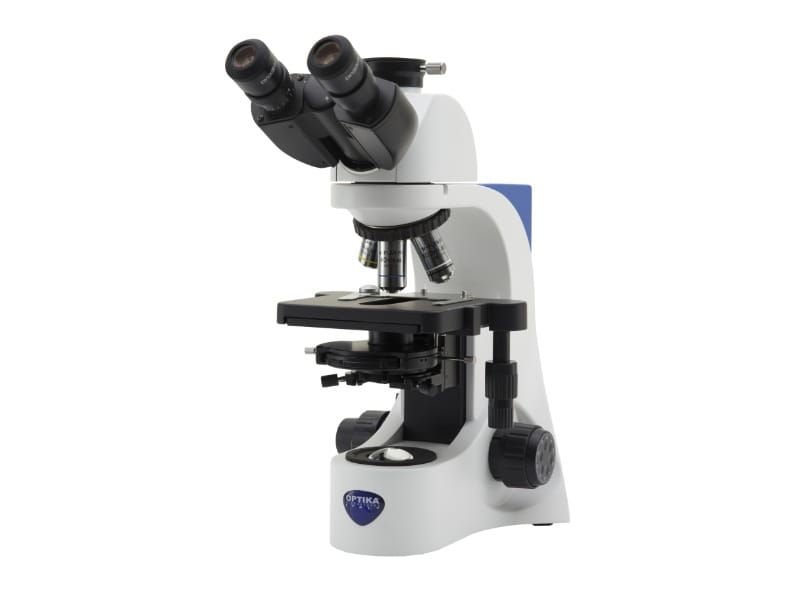
- Type: Phase contrast, trinocular
- Magnification: Up to 1000x
- Optics: N-PLAN / W-PLAN PH objectives
- Illumination: X-LED3
- Head: Trinocular, 30 degree inclined
€1.694,00 excl. VAT
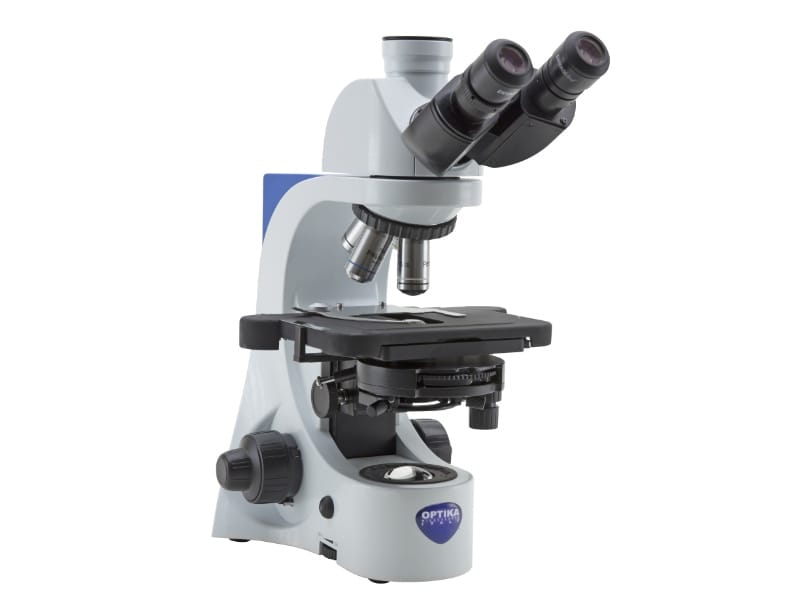
- Type: Phase contrast, binocular
- Magnification: Up to 1000x
- Optics: IOS W-PLAN PH, infinity corrected
- Illumination: X-LED3 with ALC
- Head: Binocular, 30 degree inclined
€2.138,00 excl. VAT
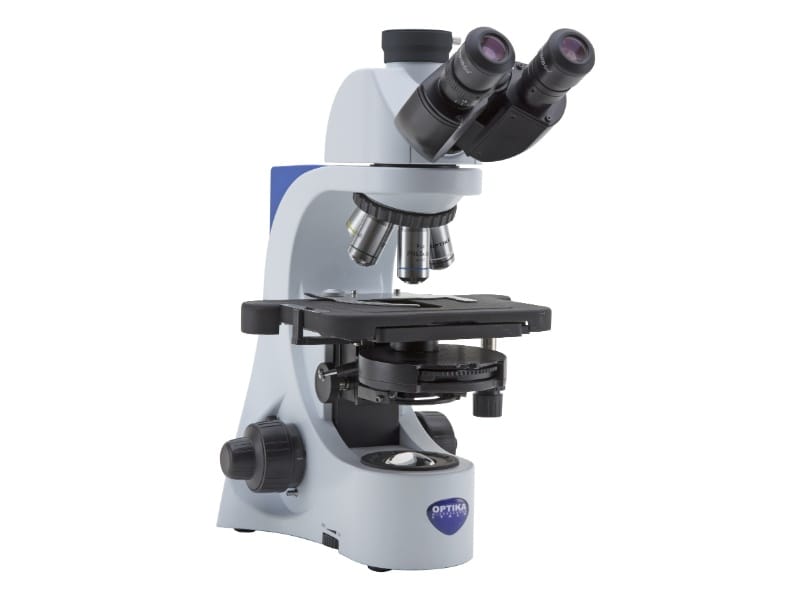
- Type: Phase contrast, trinocular
- Magnification: Up to 1000x
- Optics: IOS W-PLAN PH, infinity corrected
- Illumination: X-LED3
- Head: Trinocular, 30 degree inclined
€2.050,00 excl. VAT
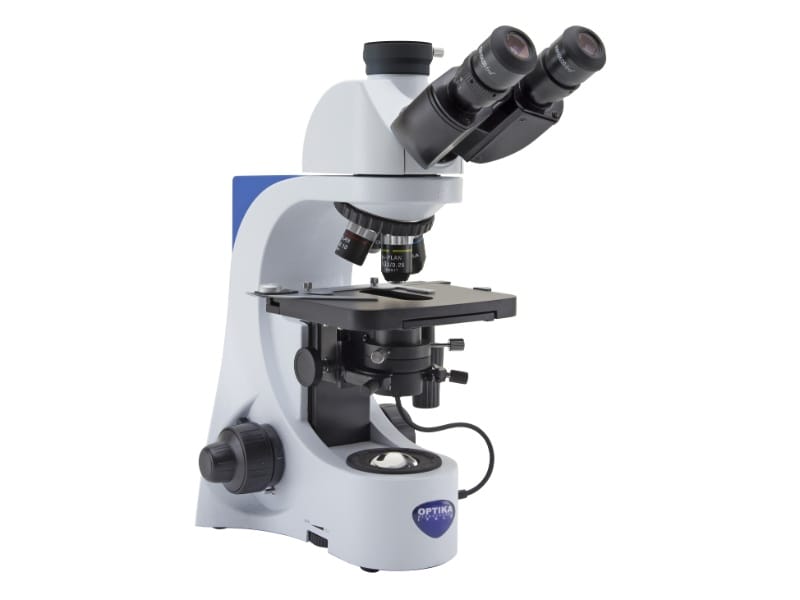
- Type: Darkfield, trinocular
- Magnification: Up to 1000x
- Optics: N-PLAN and W-PLAN objectives
- Illumination: X-LED3 built into darkfield condenser
- Head: Trinocular, 30 degree inclined
€1.874,00 excl. VAT
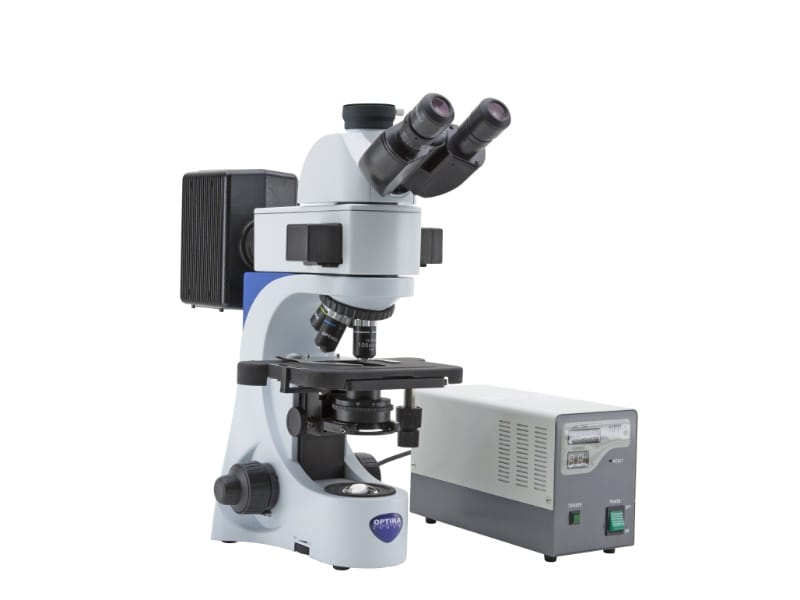
- Type: HBO fluorescence, trinocular
- Magnification: Up to 1000x
- Optics: IOS N-PLAN objectives
- Illumination: HBO 100W mercury, X-LED3 transmitted
- Head: Trinocular, 30 degree inclined
€3.485,00 excl. VAT
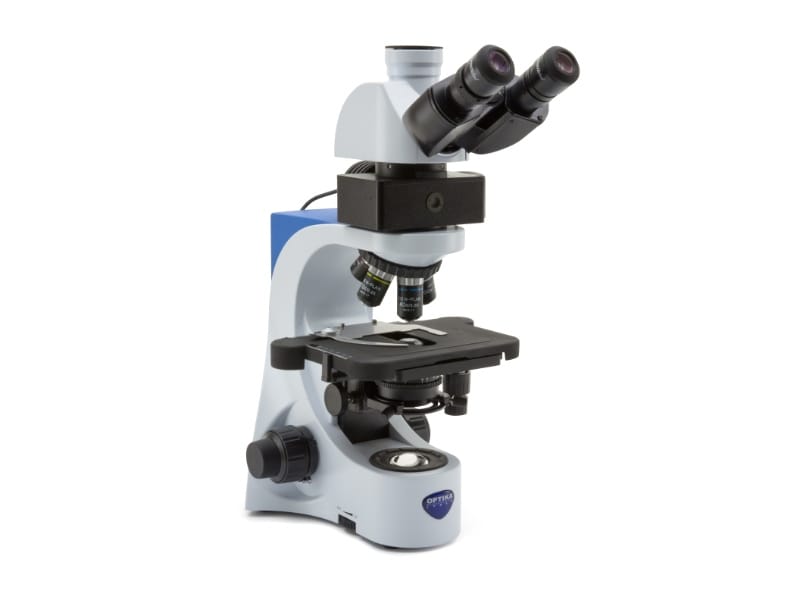
- Type: LED fluorescence, trinocular
- Magnification: Up to 1000x
- Optics: IOS N-PLAN objectives
- Illumination: Blue LED epi-fluorescence, X-LED3
- Head: Trinocular, 30 degree inclined
€2.067,00 excl. VAT
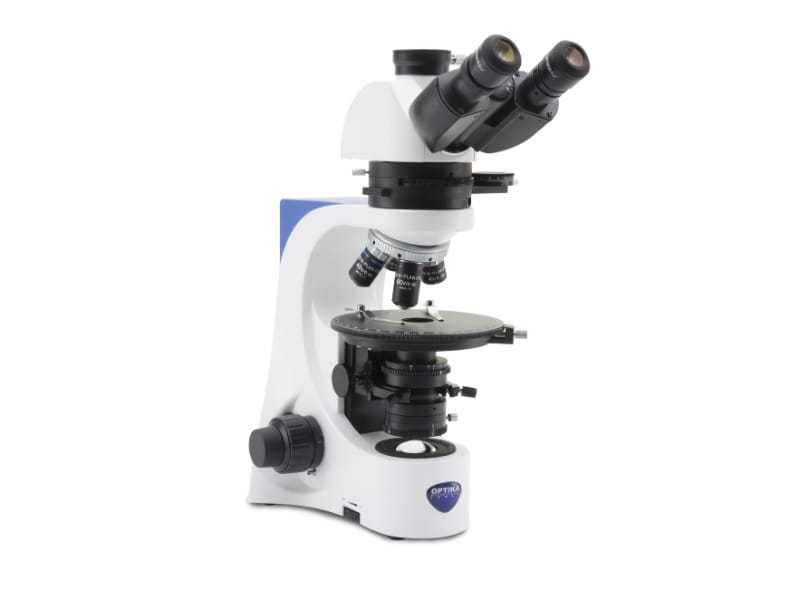
- Type: Polarizing, trinocular
- Magnification: Up to 600x
- Optics: IOS N-PLAN POL, infinity corrected
- Illumination: X-LED3
- Head: Trinocular, 30 degree inclined
€2.436,00 excl. VAT
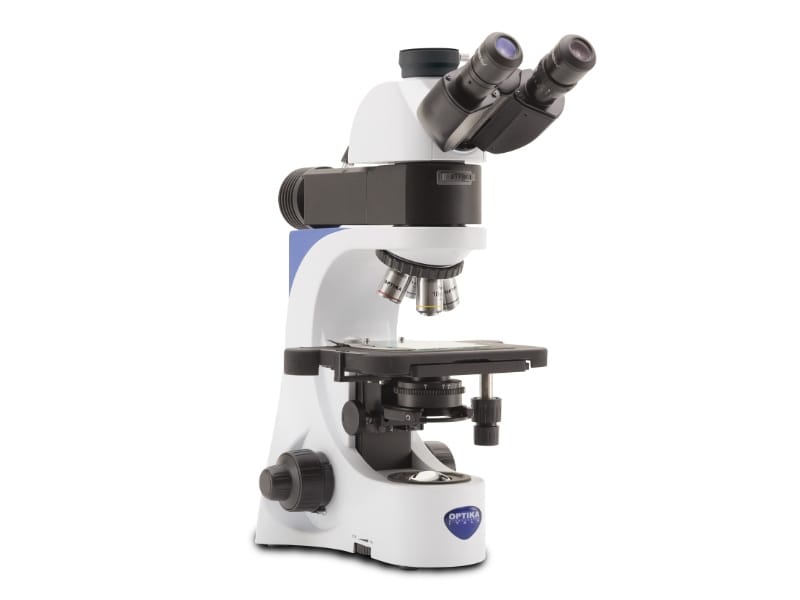
- Type: Metallurgical, trinocular
- Magnification: Up to 500x
- Optics: IOS W-PLAN MET, no cover glass
- Illumination: X-LED3, transmitted and incident
- Head: Trinocular, 30 degree inclined
€2.249,00 excl. VAT
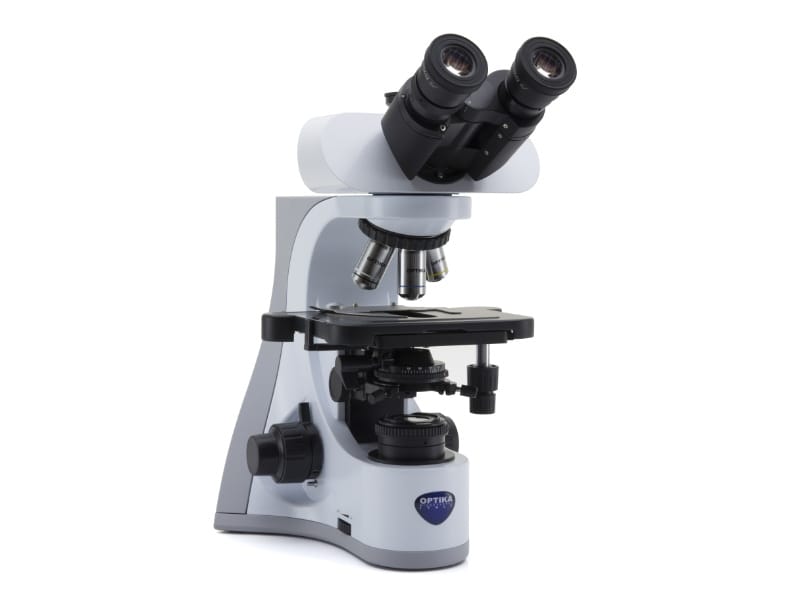
- Type: Brightfield, trinocular
- Magnification: Up to 1000x
- Optics: IOS W-PLAN, infinity corrected
- Illumination: X-LED3, full Kohler
- Head: Trinocular, 30 degree inclined
€1.478,00 excl. VAT
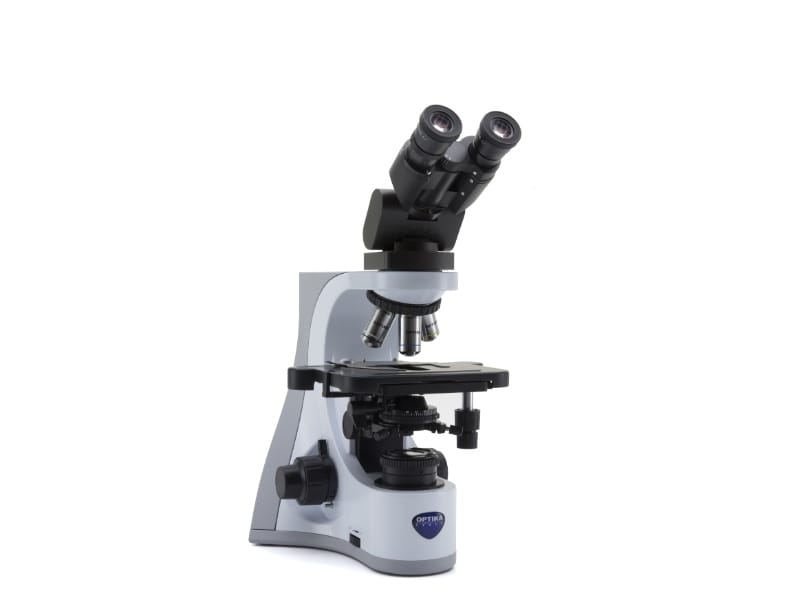
- Type: Brightfield, binocular ERGO
- Magnification: Up to 1000x
- Optics: IOS W-PLAN, infinity corrected
- Illumination: X-LED3, full Kohler
- Head: Binocular ERGO, 30-60 degree variable
€1.659,00 excl. VAT
Comparing Upright Microscope Techniques
| Technique | Best suited for | Typical magnification | Key optical feature |
|---|---|---|---|
| Brightfield | Stained or fixed samples, routine screening | 40x-1000x | Standard transmitted illumination |
| Darkfield | Live blood analysis, unstained specimens | 40x-1000x | Immersion darkfield condenser |
| Phase contrast | Unstained, transparent cell structures | 100x-1000x | Phase contrast condenser and objectives |
| Polarized light | Birefringent minerals, crystals, fibers | 40x-600x | Rotating stage, Bertrand lens, tint plates |
| Fluorescence | Immunofluorescence, fluorochrome staining | 40x-1000x | HBO or LED epi-fluorescence attachment |
| Metallurgical | Opaque metal, ceramic, and ore samples | 50x-1000x | Incident (reflected) illumination |
Five Series, One Optical Standard
Optika structures its upright range by application depth rather than by technique, so laboratories can pick the series that matches their budget and workflow, then choose the observation technique within it.
| Series | Positioning | Field number | Illumination | Best suited for |
|---|---|---|---|---|
| B-290 | Entry level | 20 mm | X-LED3, 3.6 W | Secondary school, higher education, routine teaching |
| B-380 | Mid-range | 20 mm | X-LED3, 3.6 W, ALC on select models | Routine laboratory work needing IOS optics and Automatic Light Control |
| B-510 | Advanced routine | 22 mm | X-LED3, 3.6 W, full Kohler | Life science and materials laboratories needing research-grade routine performance |
| B-810 | Modular, configurable | 22 mm | X-LED3, 3.6 W | Laboratories that want to build a microscope from separately chosen heads, stages, and condensers |
| B-1000 | Flagship, fully modular | 24 mm | X-LED8, 8 W (comparable to a 100 W halogen bulb) | Demanding clinical and research labs needing motorized options and multi-head teaching setups |
B-290: Best Value-for-Money Entry Point
The B-290 series suits secondary schools, higher education, and routine laboratories that need a flexible, durable microscope at an accessible price. It carries N-PLAN objectives with a 20 mm field number and a rackless moving stage, and the B-290TB variant adds a built-in 3 MP camera with a 10.1 inch touchscreen tablet for one-click documentation and open discussion in class.
B-380: Mid-Range with Automatic Light Control
The B-380 series adds IOS infinity-corrected optics alongside N-PLAN options, still on a 20 mm field number, with a fully centerable condenser and planachromatic optics correcting for over 90% flat field. Select B-380 models (B-382PL-ALC, B-382PLi-ALC, B-382PH-ALC, B-382PHi-ALC) include Automatic Light Control, an Optika exclusive that keeps brightness constant automatically when the objective, diaphragm, or specimen changes.
B-510: Advanced Routine Performance
The B-510 series widens the field number to 22 mm and standardizes on IOS W-PLAN objectives with full Kohler illumination, giving research-grade image quality for demanding routine work in life science and materials laboratories. Optional multi-head observation lets up to 5 people view the same image simultaneously, with a three-colour pointer for teaching and training.
B-810: Build Your Own Configuration
The B-810 series is a modular platform: you choose the main body, head, nosepiece, objectives, stage, and condenser separately to build the exact microscope your laboratory needs, with the option to upgrade any component later. A universal 5-position condenser covers brightfield, phase contrast, and darkfield from one accessory.
B-1000: The Flagship Modular Platform
The B-1000 series is Optika’s most capable upright platform, built around the X-LED8 illumination source at 8 W, comparable to a 100 W halogen bulb, with a 24 mm field number. It scales from basic manual controls to a fully motorized version with motorized nosepiece, stage, and focus, remote-controllable through dedicated software. B-1000 also configures as a multi-head discussion microscope for up to 10 simultaneous viewers, with an RGB LED pointer for the main observer to highlight details for the group.
Why Choose Optika
Across all five series, Optika positions itself as the accessible alternative to premium microscope brands, without compromising on infinity-corrected optics or illumination quality. Every Optika upright microscope carries a 10-year mechanical and optical warranty plus a lifetime warranty on the X-LED illumination source, and the shared IOS optical platform means accessories and objectives carry across models within a series.
Related Microscope Categories
Upright microscopes cover six observation techniques, each with its own dedicated category. Go directly to compound brightfield microscopes for routine stained samples, darkfield microscopes for live blood analysis, phase contrast microscopes for unstained cell structures, polarized light microscopes for birefringent minerals and crystals, upright fluorescence microscopes for immunofluorescence work, or upright metallurgical microscopes for opaque metal and ceramic samples.
If your samples need to stay in their culture vessel during observation, an inverted microscope is usually the better fit. For low-magnification, three-dimensional viewing of bulk samples, see our stereo microscopes. For the full overview of our optical microscope range, see light microscopes.