
Upright fluorescence microscopes
Fluorescence microscopy detects specimens labeled with fluorescent dyes or proteins, which absorb light at one wavelength and emit it at another, letting researchers visualize specific structures, proteins, or organisms against a dark background with high specificity. Optika’s upright fluorescence range spans the entry-level B-290 series with LED illumination, the B-380 series with both LED and traditional HBO mercury lamp options, and the B-510 series adding Semi-Apochromatic optics and modular, configurable filter platforms for research use.
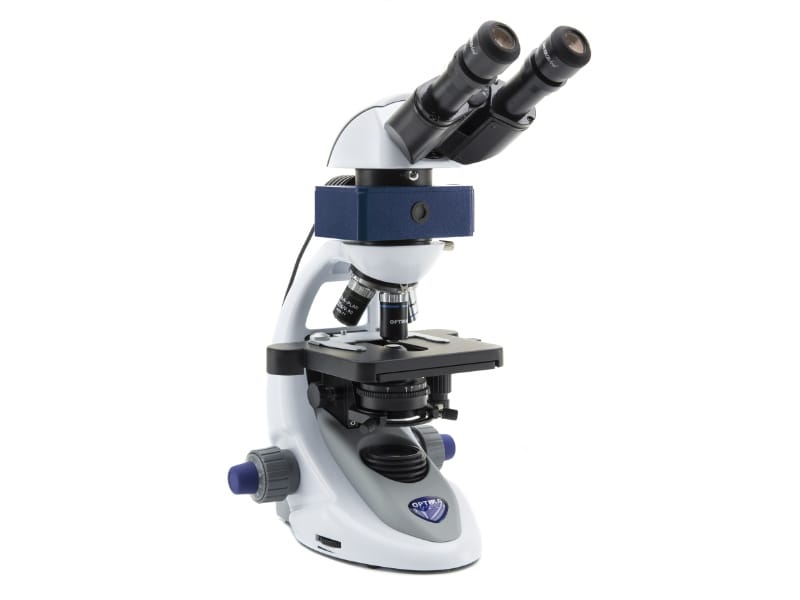
- Type: LED fluorescence microscope
- Magnification: 100x – 500x
- Optics: IOS N-PLAN / W-PLAN
- Illumination: 3.6 W X-LED3
- Head: Binocular, 30 degrees inclined, 360 degrees rotating
€1.500,00 excl. VAT
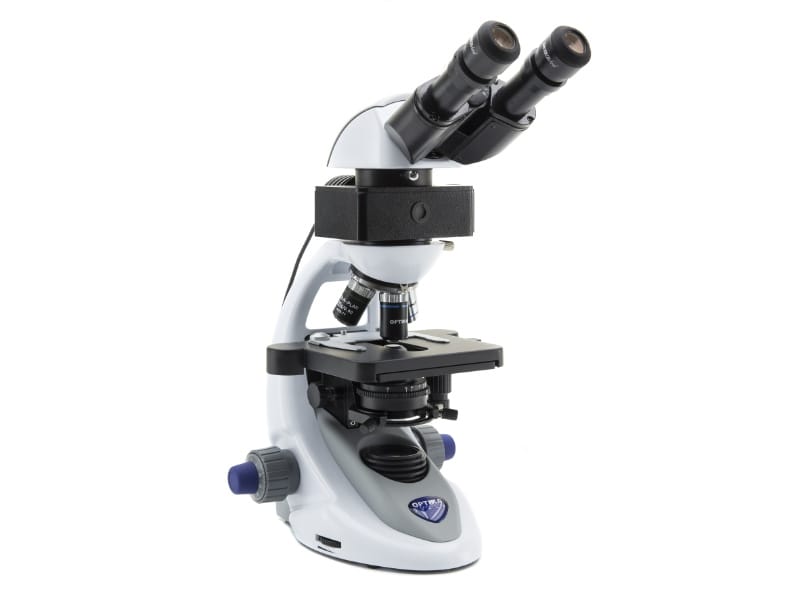
- Type: LED fluorescence microscope
- Magnification: 100x – 1000x
- Optics: IOS N-PLAN / W-PLAN
- Illumination: 3.6 W X-LED3
- Head: Binocular, 30 degrees inclined, 360 degrees rotating
€1.824,00 excl. VAT
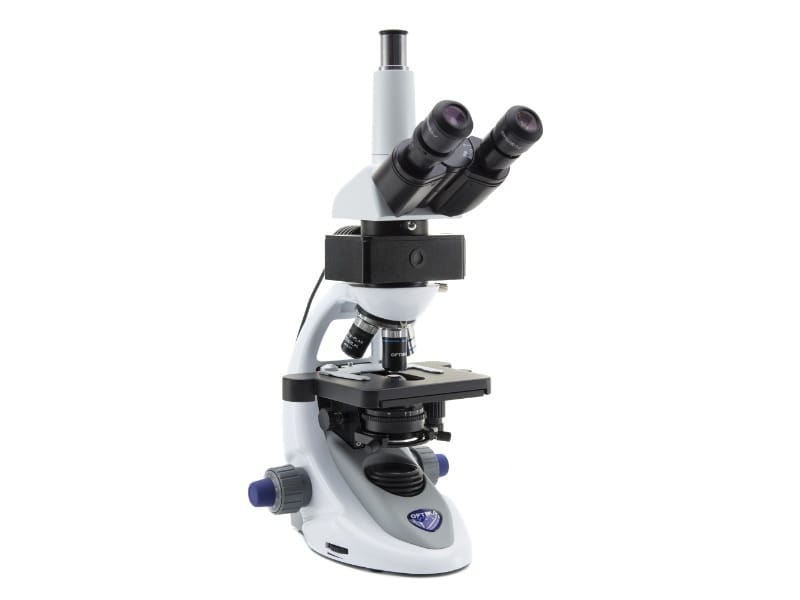
- Type: LED fluorescence microscope
- Magnification: 100x – 500x
- Optics: IOS N-PLAN / W-PLAN
- Illumination: 3.6 W X-LED3
- Head: Trinocular, 30 degrees inclined, 360 degrees rotating
€1.579,00 excl. VAT
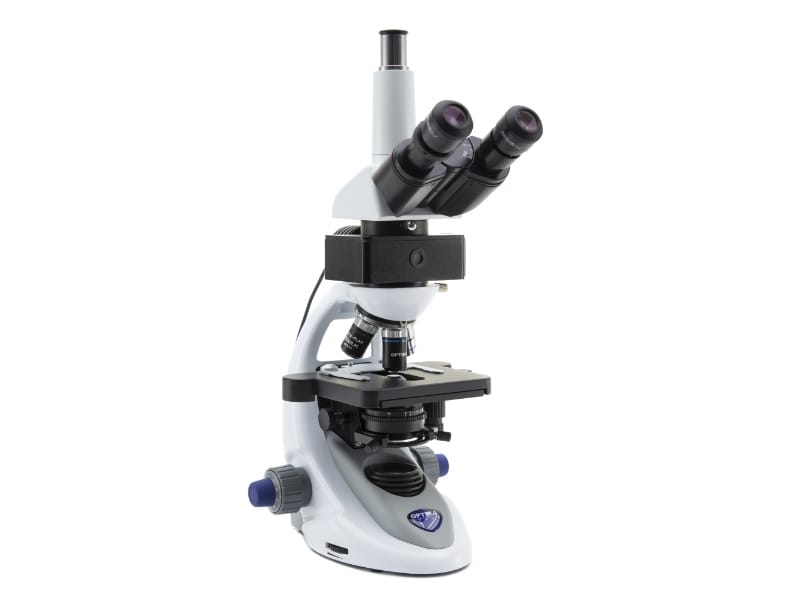
- Type: Brightfield/LED fluorescence, trinocular
- Magnification: 100x to 1000x
- Optics: IOS N-PLAN / W-PLAN, infinity corrected
- Illumination: X-LED3 transmitted, LED fluorescence 465 nm
- Head: Trinocular, 30 degree inclined
€1.903,00 excl. VAT
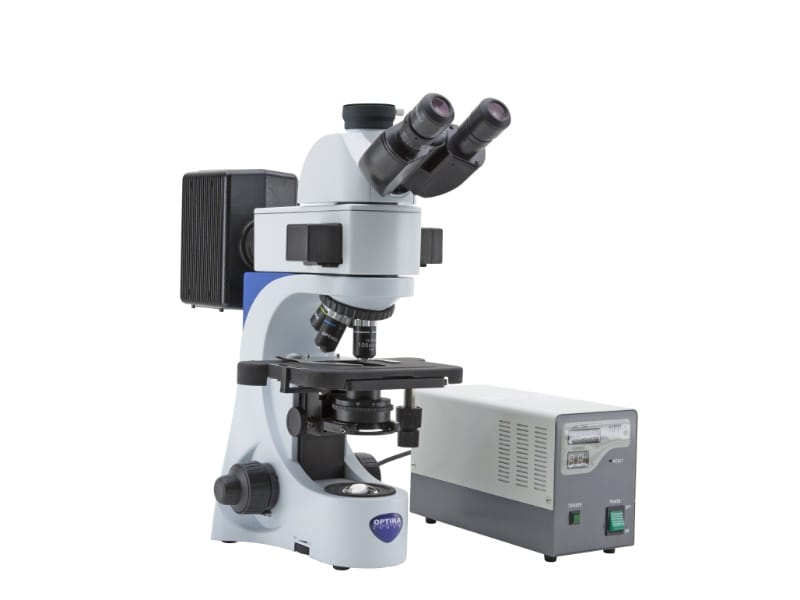
- Type: HBO fluorescence, trinocular
- Magnification: Up to 1000x
- Optics: IOS N-PLAN objectives
- Illumination: HBO 100W mercury, X-LED3 transmitted
- Head: Trinocular, 30 degree inclined
€3.485,00 excl. VAT
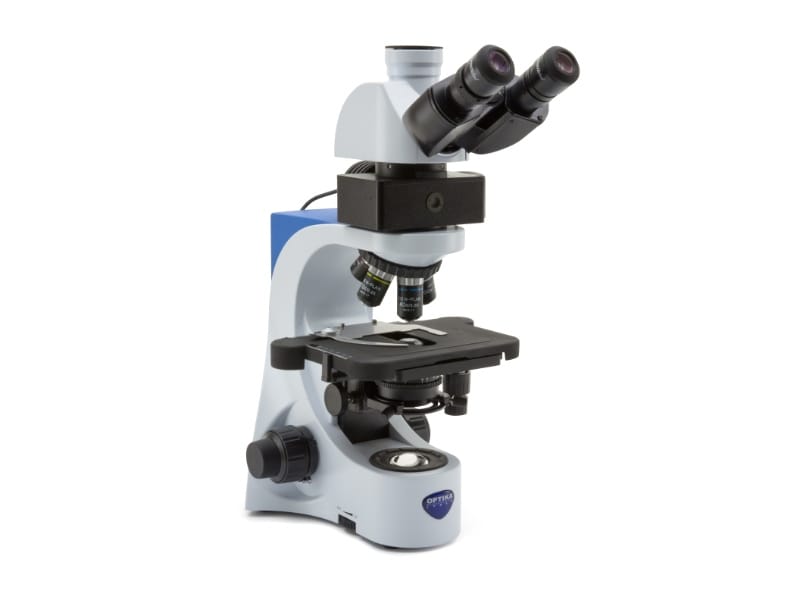
- Type: LED fluorescence, trinocular
- Magnification: Up to 1000x
- Optics: IOS N-PLAN objectives
- Illumination: Blue LED epi-fluorescence, X-LED3
- Head: Trinocular, 30 degree inclined
€2.067,00 excl. VAT
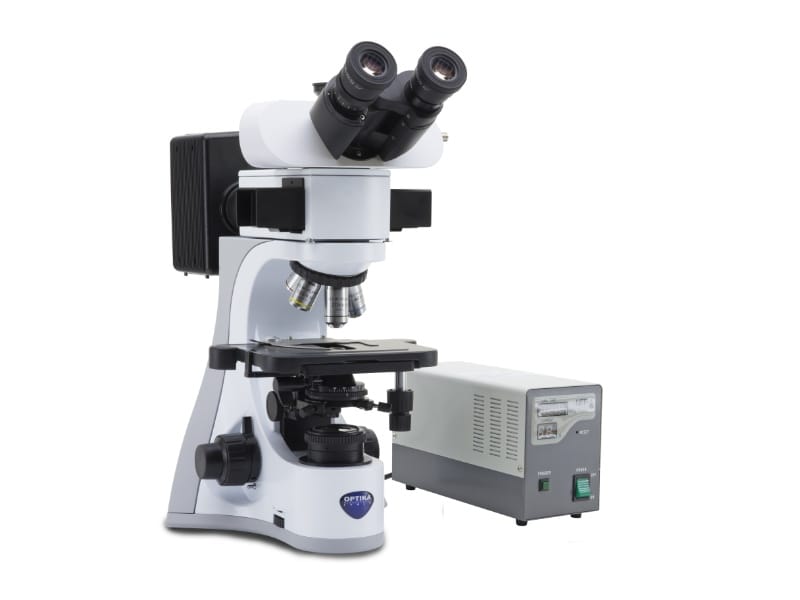
- Type: HBO fluorescence, trinocular
- Magnification: Up to 400x
- Optics: IOS W-PLAN F Semi-Apochromatic
- Illumination: HBO 100W, X-LED3 transmitted
- Head: Trinocular, 30 degree inclined
€5.137,00 excl. VAT
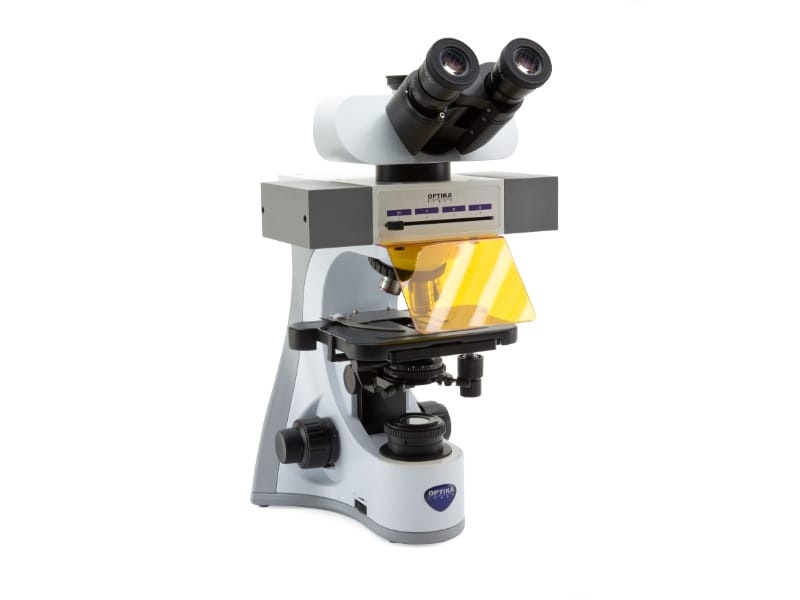
- Type: LED fluorescence, trinocular
- Magnification: Up to 1000x
- Optics: IOS W-PLAN, infinity corrected
- Illumination: Modular LED cubes, X-LED3 transmitted
- Head: Trinocular, 30 degree inclined
€2.472,00 excl. VAT
- Type: LED fluorescence, trinocular
- Magnification: Up to 1000x
- Optics: IOS W-PLAN F Semi-Apochromatic
- Illumination: Modular LED cubes, X-LED3 transmitted
- Head: Trinocular, 30 degree inclined
€3.744,00 excl. VAT
Comparing Optika Upright Fluorescence Models
| Model | Series | Head | Light source | Filter configuration |
|---|---|---|---|---|
| B-292LD1 | B-290 | Binocular | LED | 1 position, blue filter set |
| B-292LD1.50 | B-290 | Binocular | LED | 1 position, blue filter set, 500x |
| B-293LD1.50 | B-290 | Trinocular | LED | 1 position, blue filter set, 500x |
| B-383FL | B-380 | Trinocular | HBO 100 W mercury | 2 positions, blue and green filter sets included |
| B-383LD | B-380 | Trinocular | LED | 1 position, blue filter set |
| B-510FL | B-510 | Trinocular | HBO 100 W mercury | 4 positions, blue and green filter sets included, Semi-Apo optics |
| B-510LD4 | B-510 | Trinocular | LED | 4 positions, ships empty, configurable |
| B-510LD4-SA | B-510 | Trinocular | LED | 4 positions, ships empty, Semi-Apo optics |
How Fluorescence Microscopy Works
A fluorescence microscope illuminates the specimen with light at a specific excitation wavelength, using a filter set matched to the fluorochrome in use. The fluorochrome absorbs this light and re-emits it at a longer wavelength, which passes through a dichroic mirror and emission filter to reach the eyepiece or camera, so only the fluorescent signal is visible against a dark background. Different filter sets (commonly labeled blue, green, UV, or V) excite different fluorochromes, and the illumination source is either a traditional HBO mercury lamp or an LED, each with different trade-offs in brightness, running cost, and warm-up time.
Common Applications
The most common application is immunofluorescence, where fluorescently labeled antibodies bind to specific proteins or antigens to reveal their location and expression within cells and tissues, widely used in cell biology, drug development, and clinical diagnostics. Fluorescence microscopy is also used in microbiology for fluorochrome-based detection of pathogens, including auramine staining for tuberculosis screening, in cytogenetics for chromosome and nuclear studies with DAPI or Hoechst counterstains, and in materials science for autofluorescence and fluorochrome-tagged studies of polymers and fibers.
LED or HBO: Choosing an Illumination Source
LED fluorescence sources give instant-on operation, no warm-up or cool-down delay, and a lifetime of over 65,000 hours without lamp replacement, at the cost of a narrower range of excitation wavelengths per installed filter or cube. Traditional HBO mercury lamps deliver a brighter, broader-spectrum source that remains the most widely used method for research applications, at the cost of a roughly 300-hour bulb lifetime and warm-up time before use. Optika offers both across its range, so laboratories can choose based on their fluorochrome needs and usage pattern.
Choosing Between the Series
The B-290 series brings LED fluorescence to an entry-level binocular or trinocular platform with a single blue filter set, suited to routine screening with common fluorochromes such as FITC and GFP. The B-380 series offers both a traditional HBO model (B-383FL) with blue and green filter sets for the widest fluorochrome compatibility, and an LED model (B-383LD) for convenient, low-maintenance routine fluorescence. The B-510 series moves to a 22 mm field of view (400x on the HBO model) with Semi-Apochromatic IOS W-PLAN F objectives for enhanced resolution and contrast, and includes modular LED platforms (B-510LD4, B-510LD4-SA) with 4 empty filter positions that the laboratory configures with its own choice of LED Fluorescence Cubes.
Differences Within Each Series
B-292LD1 is the standard B-290 binocular fluorescence model at 1000x; B-292LD1.50 and B-293LD1.50 are 500x variants in binocular and trinocular form respectively, suited where lower magnification is sufficient. In the B-380 series, B-383FL uses the traditional HBO 100 W mercury lamp with blue and green filter sets included, while B-383LD replaces this with a single-position LED cube for routine use without lamp maintenance. In the B-510 series, B-510FL is the HBO research model with Semi-Apochromatic optics and a 4-position filter slider; B-510LD4 is the modular LED platform with standard IOS W-PLAN optics and 4 empty positions for custom LED cubes, while B-510LD4-SA pairs the same modular LED platform with Semi-Apochromatic optics for higher resolution fluorescence work.
Related Microscope Categories
If fluorescence is not the right technique for your sample, see compound brightfield microscopes for stained routine samples, darkfield microscopes for live blood analysis, phase contrast microscopes for unstained cell structures, polarized light microscopes for birefringent minerals and crystals, or upright metallurgical microscopes for opaque metal and ceramic samples.
If you need to observe live cell cultures with fluorescence from below, see our inverted fluorescence microscopes. For the full upright range overview, see upright microscopes.