
Compound brightfield microscopes
Brightfield microscopy is the most widely used observation technique in laboratory and educational settings. Light passes through the specimen from below, and the sample appears as a dark image against a bright, evenly lit background, with contrast created by staining or by the specimen’s own pigmentation. Optika’s brightfield range runs from the entry-level B-290 series through the mid-range B-380, the advanced routine B-510, and the fully modular B-810 platform, so laboratories can match the model to their budget and required magnification, head type, and optical correction.
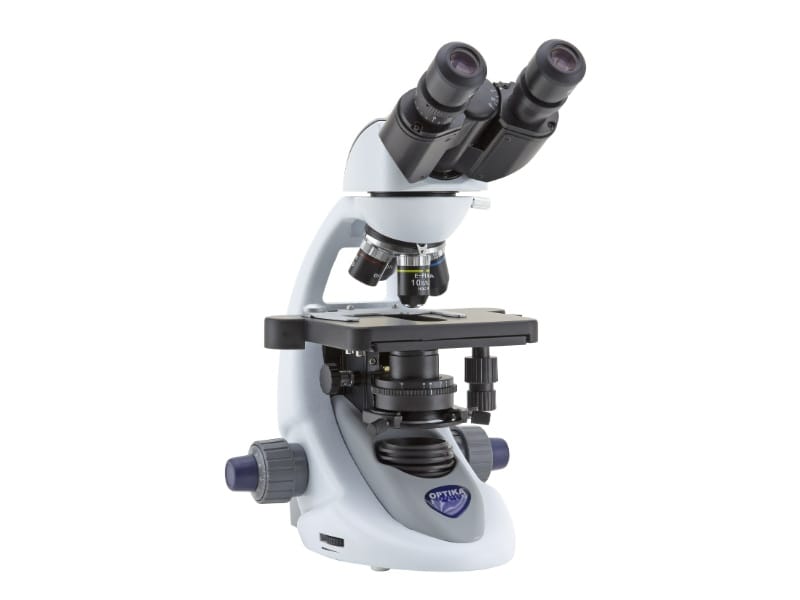
- Type: Brightfield microscope
- Magnification: 40x – 1000x
- Optics: N-PLAN
- Illumination: 3.6 W X-LED3
- Head: Binocular, 30 degrees inclined, 360 degrees rotating
€701,00 excl. VAT
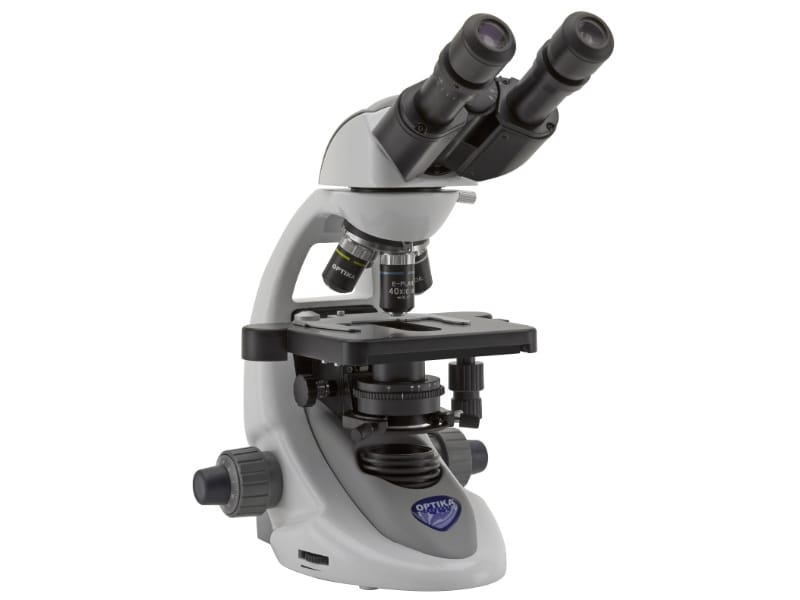
- Type: Brightfield microscope
- Magnification: 40x – 1000x
- Optics: IOS N-PLAN
- Illumination: 3.6 W X-LED3
- Head: Binocular, 30 degrees inclined, 360 degrees rotating
€742,00 excl. VAT
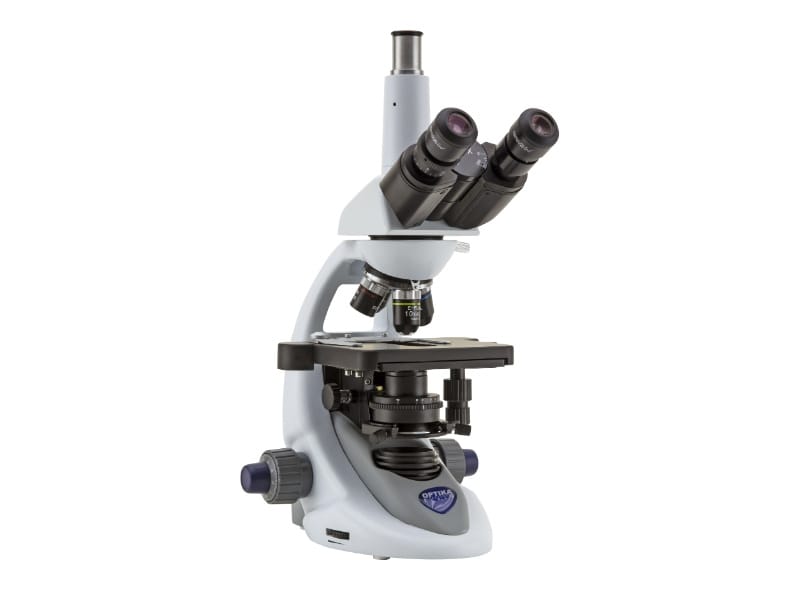
- Type: Brightfield microscope
- Magnification: 40x – 1000x
- Optics: N-PLAN
- Illumination: 3.6 W X-LED3
- Head: Trinocular, 30 degrees inclined, 360 degrees rotating
€789,00 excl. VAT
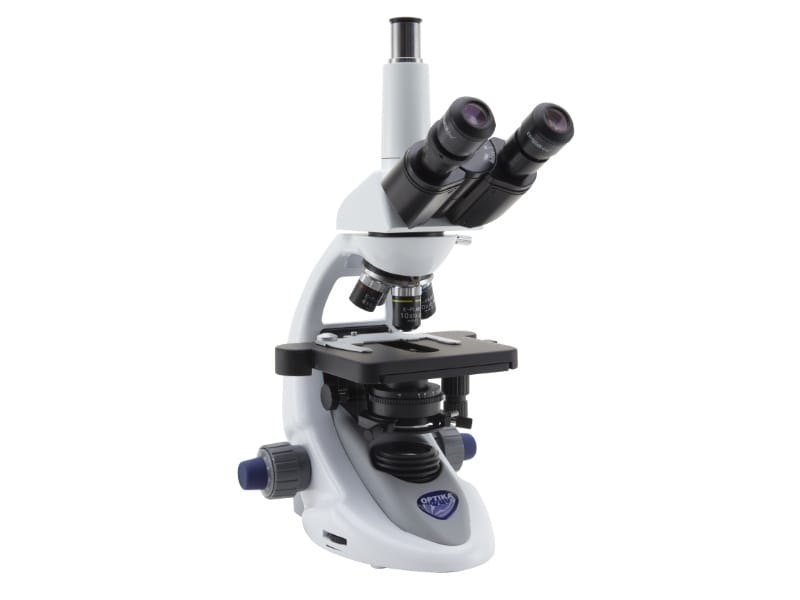
- Type: Brightfield microscope
- Magnification: 40x – 1000x
- Optics: IOS N-PLAN
- Illumination: 3.6 W X-LED3
- Head: Trinocular, 30 degrees inclined, 360 degrees rotating
€843,00 excl. VAT
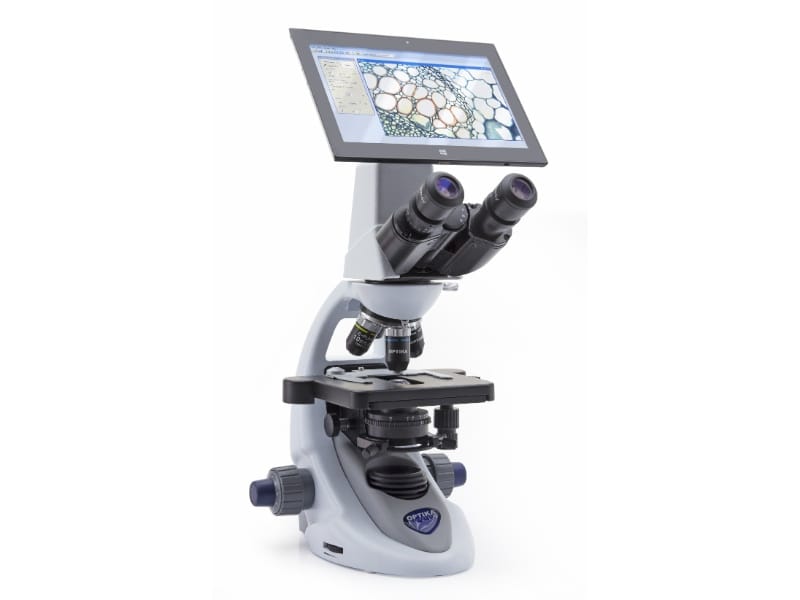
- Type: Digital brightfield microscope
- Magnification: 40x – 1000x
- Optics: N-PLAN
- Illumination: 3.6 W X-LED3
- Head: Binocular, 30 degrees inclined, 360 degrees rotating
€1.574,00 excl. VAT
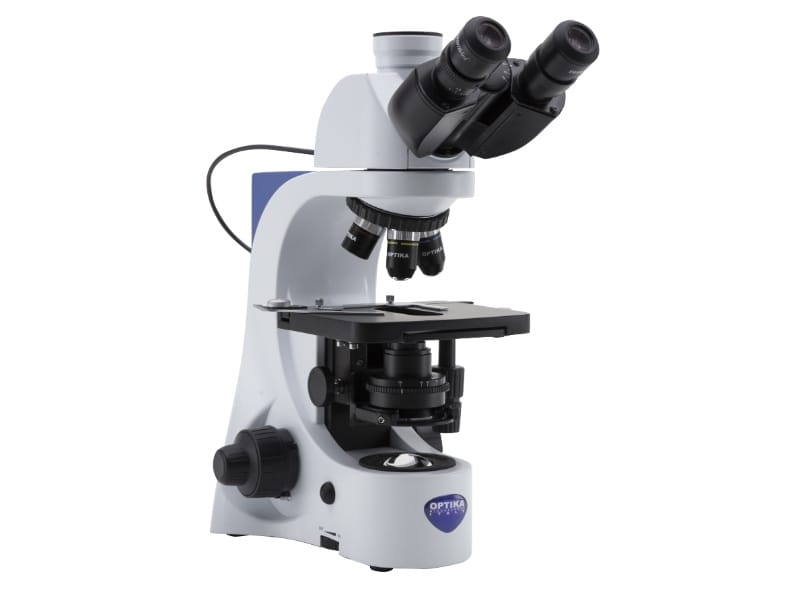
- Type: Brightfield, binocular
- Magnification: Up to 1000x
- Optics: N-PLAN objectives
- Illumination: X-LED3 with ALC
- Head: Binocular, 30 degree inclined
€1.070,00 excl. VAT
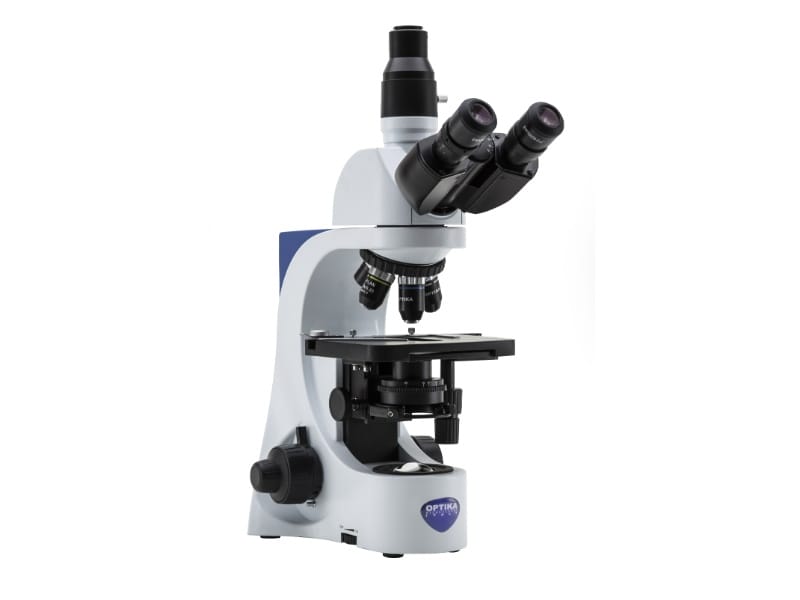
- Type: Brightfield, trinocular
- Magnification: Up to 1000x
- Optics: N-PLAN objectives
- Illumination: X-LED3
- Head: Trinocular, 30 degree inclined
€980,00 excl. VAT
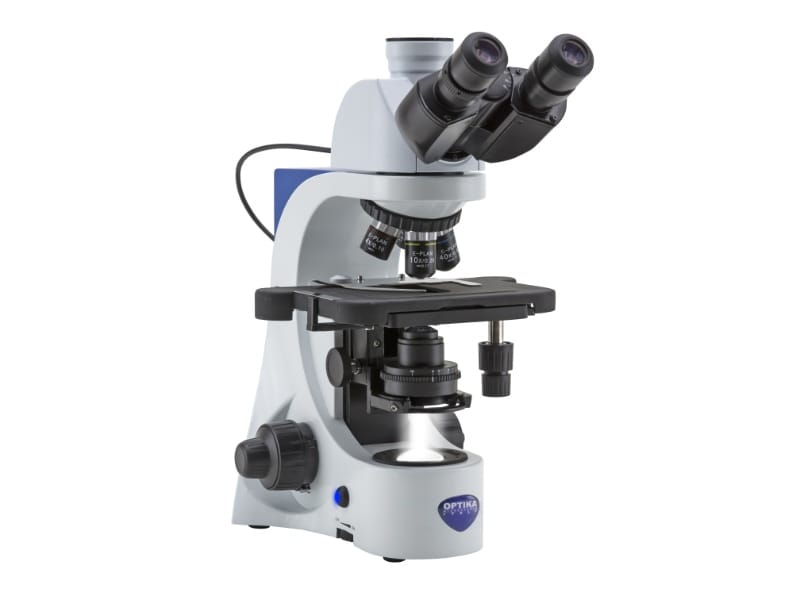
- Type: Brightfield, binocular
- Magnification: Up to 1000x
- Optics: IOS N-PLAN, infinity corrected
- Illumination: X-LED3 with ALC
- Head: Binocular, 30 degree inclined
€1.156,00 excl. VAT
- Type: Brightfield, trinocular
- Magnification: Up to 1000x
- Optics: IOS N-PLAN, infinity corrected
- Illumination: X-LED3
- Head: Trinocular, 30 degree inclined
€1.072,00 excl. VAT
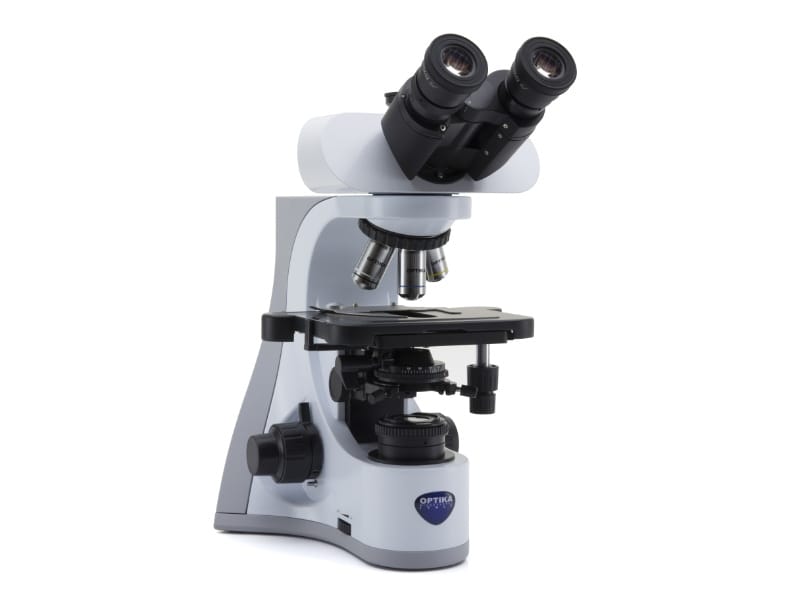
- Type: Brightfield, trinocular
- Magnification: Up to 1000x
- Optics: IOS W-PLAN, infinity corrected
- Illumination: X-LED3, full Kohler
- Head: Trinocular, 30 degree inclined
€1.478,00 excl. VAT
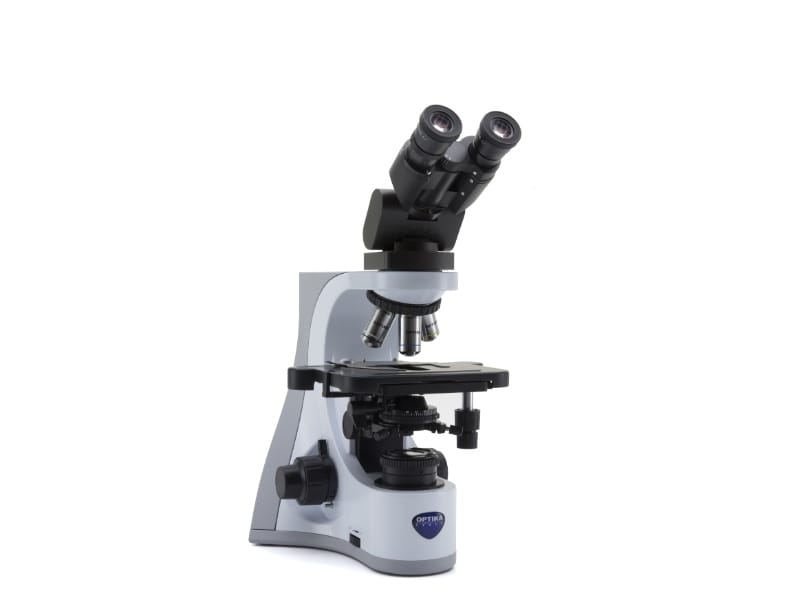
- Type: Brightfield, binocular ERGO
- Magnification: Up to 1000x
- Optics: IOS W-PLAN, infinity corrected
- Illumination: X-LED3, full Kohler
- Head: Binocular ERGO, 30-60 degree variable
€1.659,00 excl. VAT
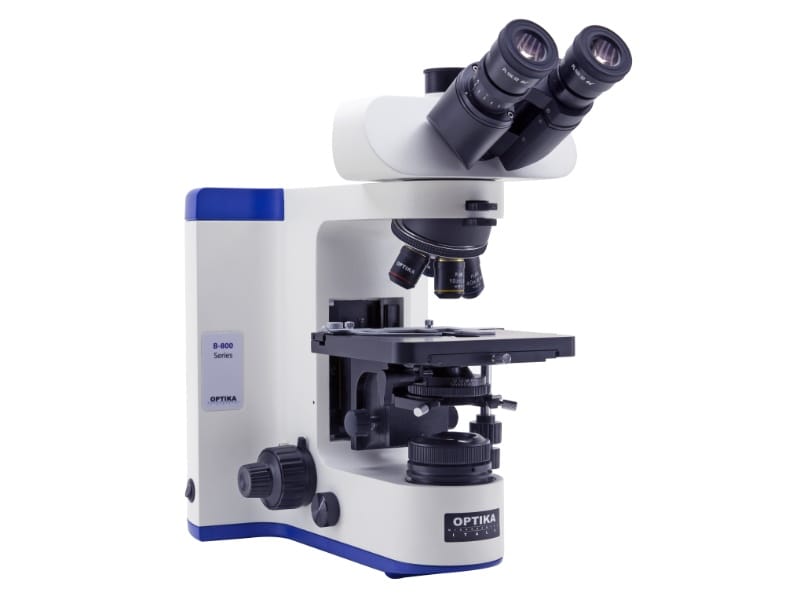
- Type: Modular main body
- Magnification: Depends on configuration
- Optics: IOS W-PLAN series, sold separately
- Illumination: X-LED3
- Head: Sold separately, multiple options
€1.111,00 excl. VAT
Comparing Optika Brightfield Models
| Model | Series | Head | Optics | Notable feature |
|---|---|---|---|---|
| B-292 | B-290 | Binocular | N-PLAN, finite | Entry-level, 20 mm field number |
| B-293 | B-290 | Trinocular | N-PLAN, finite | Camera port for documentation |
| B-292PLi | B-290 | Binocular | IOS N-PLAN, infinity | Infinity optics, upgradable to IOS accessories |
| B-293PLi | B-290 | Trinocular | IOS N-PLAN, infinity | Infinity optics with camera port |
| B-290TB | B-290 | Binocular with digital unit | N-PLAN, finite | Built-in 3 MP camera and 10.1 inch touchscreen tablet |
| B-382PL-ALC | B-380 | Binocular | N-PLAN, finite | Automatic Light Control |
| B-382PLi-ALC | B-380 | Binocular | IOS N-PLAN, infinity | Automatic Light Control, infinity optics |
| B-383PL | B-380 | Trinocular | N-PLAN, finite | Camera port for documentation |
| B-383PLi | B-380 | Trinocular | IOS N-PLAN, infinity | Infinity optics with camera port |
| B-510BF | B-510 | Trinocular | IOS W-PLAN, infinity | 22 mm field number, full Kohler illumination |
| B-510ERGO | B-510 | Binocular ERGO | IOS W-PLAN, infinity | Variable 30-60 degree inclination for shared use |
| M-1187 | B-810 | Configurable | IOS W-PLAN series, sold separately | Modular main body, build your own configuration |
How Brightfield Microscopy Works
A brightfield microscope illuminates the specimen with a uniform beam of transmitted light from below. Denser or stained regions of the sample absorb more light and appear darker, while the surrounding field stays bright, which is where the technique gets its name. Because most biological samples are naturally transparent, brightfield work usually involves staining with dyes such as hematoxylin and eosin (H&E), Gram stain, or methylene blue to create visible contrast between structures.
Common Applications
Brightfield microscopes are the standard tool in histopathology for examining stained tissue sections, in hematology for blood smears, and in clinical microbiology for identifying bacteria and other pathogens after Gram or other staining. They are also used for urine sediment and sputum smear examination, plant tissue and botany sections, quality control in cell culture facilities, food and beverage contamination testing, and general biology teaching, where their simplicity makes them the standard first microscope for students.
Choosing Between the Series
The B-290 series is Optika’s entry-level brightfield range, built for secondary schools, higher education, and routine laboratories that need a durable, flexible microscope at an accessible price, with N-PLAN objectives and a 20 mm field number. The B-380 series adds IOS infinity-corrected optics and, on select models, Automatic Light Control (ALC), which keeps brightness constant automatically as you change objectives or diaphragm settings. The B-510 series widens the field number to 22 mm and standardizes on IOS W-PLAN objectives with full Kohler illumination, giving research-grade image quality for demanding routine work. The B-810 series is a modular platform: instead of a fixed configuration, you choose the head, nosepiece, objectives, stage, and condenser separately to build the exact microscope your laboratory needs, with the option to upgrade any component later. Optika’s flagship B-1000 series extends this modularity further with the more powerful X-LED8 illumination and a 24 mm field number, for laboratories that need the highest-end configurable brightfield platform.
Differences Within Each Series
Within B-290 and B-380, models split along two lines: binocular (B-292, B-382PL-ALC) versus trinocular heads with a camera port (B-293, B-383PL), and finite N-PLAN optics (B-292, B-293) versus infinity-corrected IOS N-PLAN optics (B-292PLi, B-293PLi), which stay compatible with future IOS accessories. The B-382PL-ALC and B-382PLi-ALC add Automatic Light Control to the binocular B-380 line. The B-290TB replaces the standard head with a built-in 3 MP camera and a 10.1 inch touchscreen tablet for one-click documentation. In the B-510 series, B-510BF is the standard trinocular configuration, while B-510ERGO adds a variable 30 to 60 degree inclination head for shared workstations and long observation sessions.
Related Microscope Categories
If brightfield is not the right technique for your sample, see darkfield microscopes for live blood analysis, phase contrast microscopes for unstained cell structures, polarized light microscopes for birefringent minerals and crystals, upright fluorescence microscopes for immunofluorescence work, or upright metallurgical microscopes for opaque metal and ceramic samples.
If your samples need to stay in their culture vessel during observation, see our inverted microscopes. For the full upright range overview, see upright microscopes.