
Miele Laboratory Dishwashers in Belgium
Labman Instruments is the official distributor of Miele laboratory dishwashers in Belgium.

Miele Professional and the advantages of the ExpertLine laboratory dishwashers
Why choose Miele laboratory dishwashers?
Miele laboratory dishwashers combine German quality with innovation, safety, and efficiency. They deliver reliable and reproducible cleaning of glassware. Thanks to the EasyLoad system, every item is automatically positioned correctly, ensuring maximum time savings.
Strong Belgian service and local support
A major advantage is the strong Belgian Miele service team. Fast response times and local support ensure maximum operational reliability. This means your laboratory benefits not only from a high-quality machine, but also from long-term service close to home.
Robust construction and proven quality
Miele laboratory dishwashers are known for their long service life and proven reliability. The seamlessly welded stainless steel wash chamber guarantees optimal hygiene, while the innovative drying systems ensure glassware is ready for immediate use.
Choose the right Miele laboratory dishwasher for your needs
Selecting a Miele laboratory dishwasher is typically based on budget, the required drying system, and process monitoring requirements. For every laboratory, there is a suitable model: from entry-level units for educational environments to advanced systems with active drying and conductivity monitoring for validated processes.
New to the range are models with glass doors, offering a direct visual overview of the running cycle. This allows Miele to combine flexibility with transparency and process security.
Thanks to the broad portfolio and renowned Miele quality, every laboratory can find a solution that perfectly matches its daily operational needs.

- Drying: None
- Conductivity monitoring: No
- Door: Stainless steel
- Max washing temperature: 70°C
- EasyLoad system: Yes
Price on request
- Drying: EcoDry (passive drying)
- Conductivity monitoring: No
- Door: Stainless steel
- Max washing temperature: 93°C
- EasyLoad system: Yes
Price on request
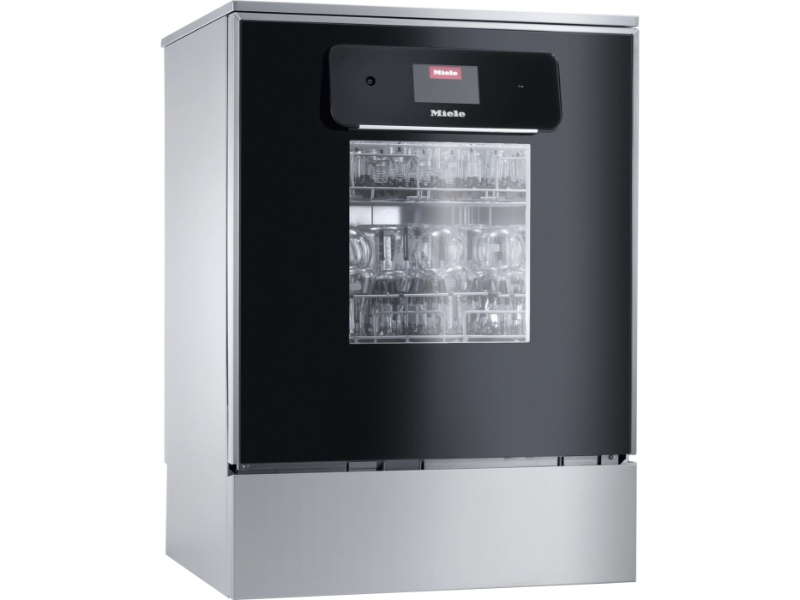
- Drying: EcoDry (passive drying)
- Conductivity monitoring: No
- Door: Glass door
- Max washing temperature: 93°C
- EasyLoad system: Yes
Price on request

- Drying: DryPlus (HEPA filtered hot air)
- Conductivity monitoring: No
- Door: Stainless steel
- Max washing temperature: 93°C
- EasyLoad system: Yes
Price on request
- Drying: DryPlus (HEPA filtered hot air)
- Conductivity monitoring: Yes
- Door: Stainless steel
- Max washing temperature: 93°C
- EasyLoad system: Yes
Price on request
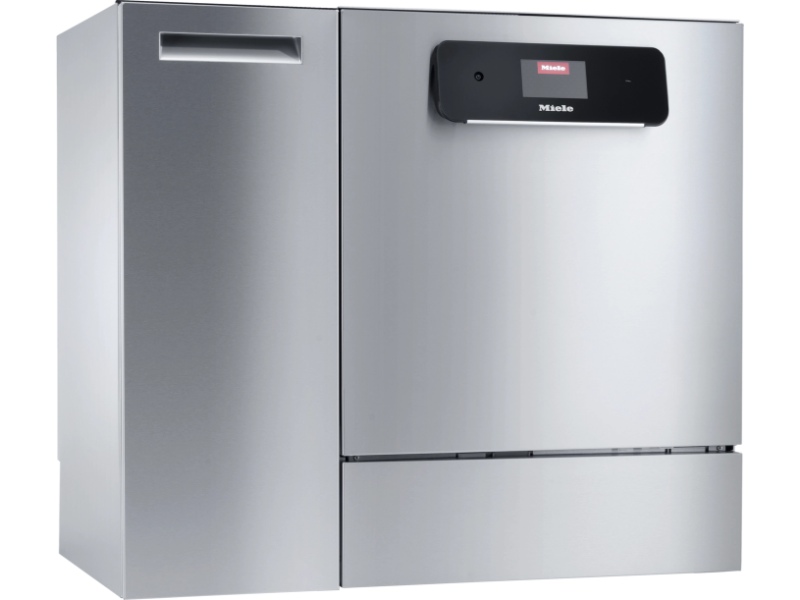
- Drying: DryPlus (HEPA filtered hot air)
- Conductivity monitoring: Yes
- Door: Glass door
- Max washing temperature: 93°C
- EasyLoad system: Yes
Price on request

- Drying: DryPlus (HEPA filtered hot air)
- Conductivity monitoring: Yes
- Door: Glass door
- Max washing temperature: 93°C
- EasyLoad system: Yes
Price on request
Miele OIL laboratory dishwashers for oil- and grease-containing samples
Miele OIL models are specifically developed for the reliable cleaning of laboratory glassware that comes into contact with oil, grease, or heavily contaminated samples. They are equipped with specially designed rubber seals (oil-resistant seals) that withstand solvents and oil-based residues, ensuring durable and safe operation even under intensive use in demanding environments.
Thanks to dedicated programs with extended pre-wash and rinse phases and higher temperatures, these units completely remove even the most stubborn contaminants. They are widely used in chemical laboratories, the petrochemical sector, and food research, where standard dishwashers fall short.
- Drying: EcoDry (passive drying)
- Conductivity monitoring: No
- Door: Stainless steel
- Max washing temperature: 93°C
- EasyLoad system: Yes
Price on request
- Drying: DryPlus (HEPA filtered hot air)
- Conductivity monitoring: No
- Door: Stainless steel
- Max washing temperature: 93°C
- EasyLoad system: Yes
Price on request
- Drying: DryPlus (HEPA filtered hot air)
- Conductivity monitoring: Yes
- Door: Stainless steel
- Max washing temperature: 93°C
- EasyLoad system: Yes
Price on request
Lower baskets for maximum flexibility in the laboratory
Selecting the right Miele lower basket determines how efficiently and flexibly a laboratory dishwasher can be used. The A 150 lower basket is by far the most commonly used solution, as it can be combined with both injector modules and baskets. Thanks to the standard integrated spray arm at the base of the unit, this basket is suitable for most laboratory applications, from narrow-neck glassware to classic items such as graduated cylinders and test tubes.
For more specific situations, alternative options are available: the A 151 lower basket is mainly used in environments where beakers or similar glassware are cleaned. The A 200 lower basket is designed for cleaning large pipettes that cannot be placed vertically in the dishwasher, offering a solution for more specialized laboratories.

The Miele A 151 lower basket is designed for inserts and DIN mesh trays. It provides a flexible solution for loading different laboratory items. Ideal for applications without injector modules, it ensures efficient and adaptable cleaning configurations.
€337,00 excl. VAT

The Miele A 150 lower basket is designed to hold up to 2 injector modules or inserts. It forms the base for flexible laboratory cleaning configurations. With automatic connection closing, it ensures safe and efficient operation during cleaning cycles.
€517,00 excl. VAT

The Miele A 200 mobile unit is designed for cleaning up to 38 pipettes in laboratory dishwashers. It features a structured layout for different pipette volumes. This unit ensures stable positioning and efficient cleaning of pipettes in a single cycle.
€2.080,00 excl. VAT
Upper baskets for flexible loading in Miele laboratory dishwashers
In the upper baskets of Miele laboratory dishwashers, caps, small test tubes, and beakers are typically placed. The A 101 upper basket is the standard choice in most laboratories. When additional loading height is required, the A 102 upper basket is used (up to 220 mm instead of 135 mm).
For cleaning small narrow-neck glassware, the A 100 for injector modules is also available.

The Miele A 101 upper basket is designed for loading inserts with adjustable height. It offers a loading height of 160 mm with ±30 mm adjustment for flexible configurations. With an integrated spray arm, it ensures efficient cleaning of laboratory glassware and utensils.
€438,00 excl. VAT

The Miele A 102 upper basket is designed for loading inserts with increased height clearance. It offers a loading height of 205 mm with ±30 mm adjustment for larger glassware. With an integrated spray arm, it ensures efficient cleaning of laboratory items.
€439,00 excl. VAT
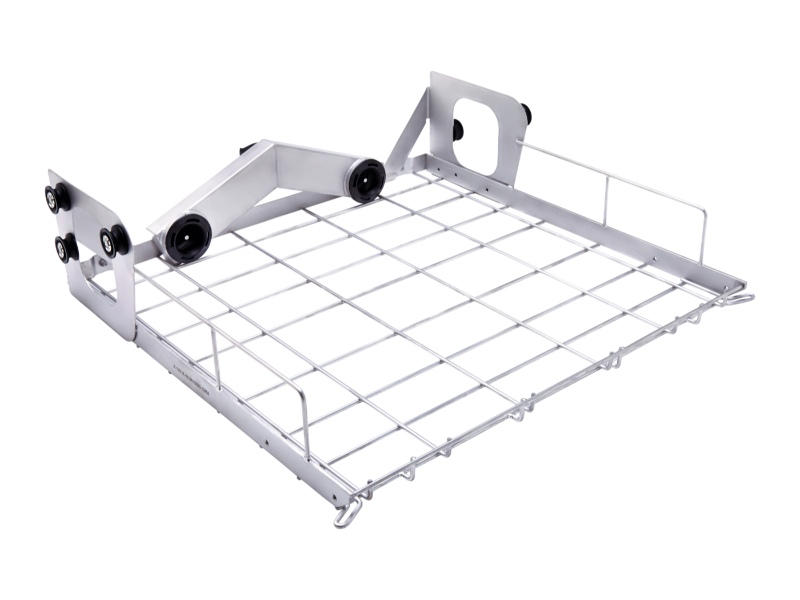
The Miele A 100 upper basket is designed to hold up to 2 injector modules or inserts. It allows flexible configuration for different laboratory applications. With automatic connection closing, it ensures efficient and safe operation during cleaning cycles.
€593,00 excl. VAT
Injector modules for safe and efficient cleaning of glassware
The Miele injector modules (A 300/3, A 301/5 and A 302/3) form the core of cleaning narrow-neck glassware such as Erlenmeyer flasks, round-bottom flasks, and bottles. The choice of the right model is always based on the volume range of the glassware, ensuring optimal and validated cleaning results.
Compatible racks make loading faster and easier: they ensure that the glassware is automatically centered on the injector and help prevent glass breakage. Thanks to the EasyLoad system, the glassware can rest directly on the injector without requiring adjustments to the base.
All injector modules are interchangeable with other modules for maximum flexibility and can be loaded both inside and outside the dishwasher. This allows Miele to guarantee a combination of safety, efficiency, and ease of use in every laboratory.
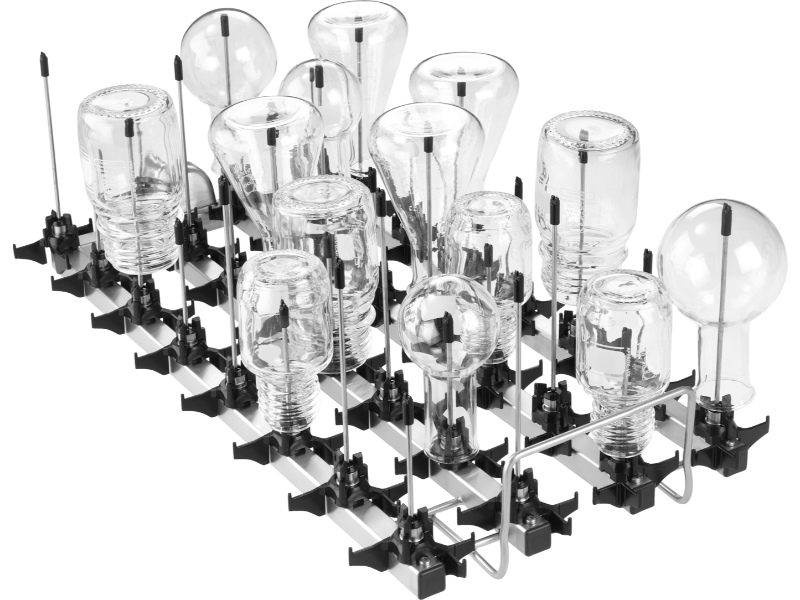
The Miele A 302/3 injector module is designed for laboratory glassware in the 25–100 ml range. It holds up to 32 flasks, offering maximum capacity. Part of the EasyLoad system, it ensures efficient and high-throughput internal cleaning.
€638,00 excl. VAT
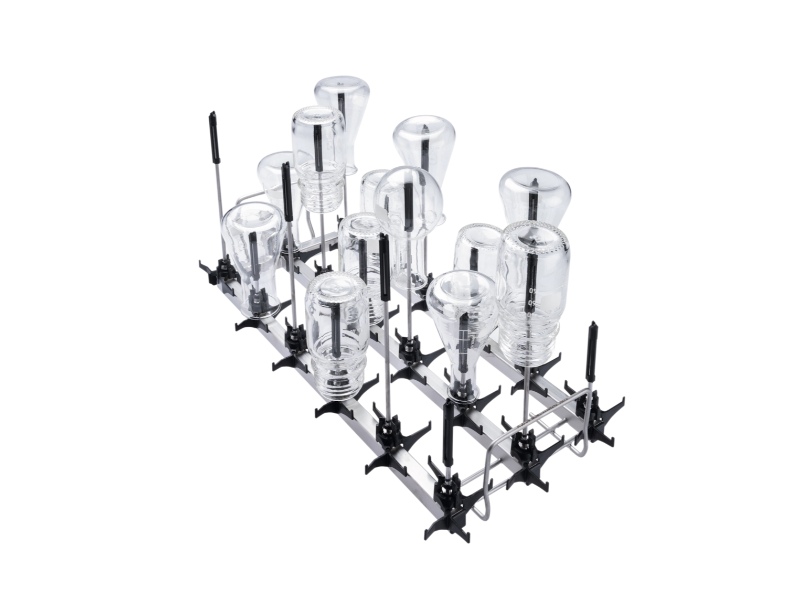
The Miele A 301/5 injector module is designed for laboratory glassware in the 50–250 ml range. It holds up to 18 flasks, offering a balance between capacity and spacing. Part of the EasyLoad system, it ensures efficient and reliable internal cleaning.
€532,00 excl. VAT
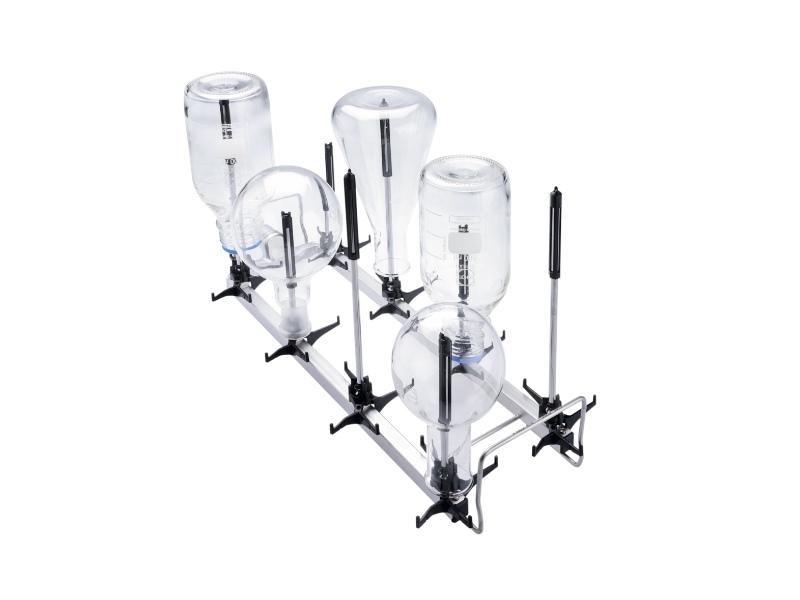
The Miele A 300/3 injector module is designed for laboratory glassware in the 250–1000 ml range. It holds up to 8 flasks, providing more space for larger items. Part of the EasyLoad system, it ensures efficient and reliable internal cleaning.
€339,00 excl. VAT

The Miele A 861 holder rack is designed for use with the A 301/5 injector module. It provides structured positioning of laboratory glassware. With 18 compartments, it ensures stable placement and consistent cleaning results.
€258,00 excl. VAT

The Miele A 862 holder rack is designed for use with the A 302/3 injector module. It provides structured positioning of laboratory glassware. With 32 compartments, it ensures stable placement and efficient high-density cleaning.
€193,00 excl. VAT
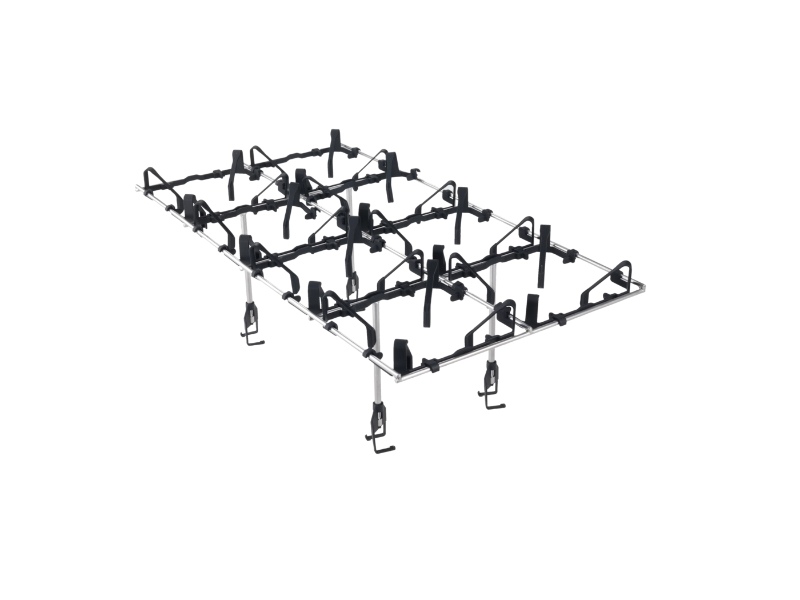
The Miele A 860 holder rack is designed for use with the A 300/3 injector module. It provides structured positioning of laboratory glassware during cleaning. With 8 compartments, it ensures stable placement and improved cleaning reliability.
€190,00 excl. VAT
Modules for large laboratory glassware
For large glassware, Miele offers modules that ensure safe positioning and optimal cleaning. The A 306/1 is ideal for large graduated cylinders, while the A 313 injector module can be combined with racks: A 846 for large bottles and round-bottom flasks, A 847 for Erlenmeyer flasks, and A 848 for graduated cylinders.
With these modules, glassware up to 10 liters can be cleaned reliably. For even larger volumes, up to 50 liters, the Miele PLW 7111 offers a solution.
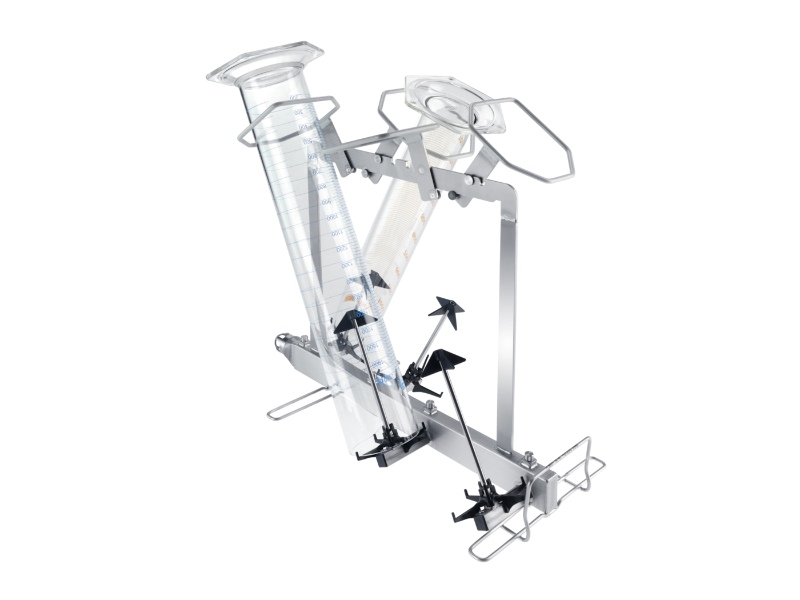
The Miele A 306/1 module is designed for cleaning large measuring cylinders in laboratory dishwashers. It is suitable for cylinders up to 500 mm length and ensures stable positioning during cleaning. Used in A 150 baskets, it allows safe and efficient reprocessing.
€1.972,00 excl. VAT

The Miele A 313 module is designed for cleaning large-volume laboratory glassware. It is suitable for flasks, round-bottom flasks and measuring cylinders up to 10 litres. With multiple injector positions, it ensures efficient and reliable internal cleaning. Ideal for laboratories working with larger vessels.
€785,00 excl. VAT
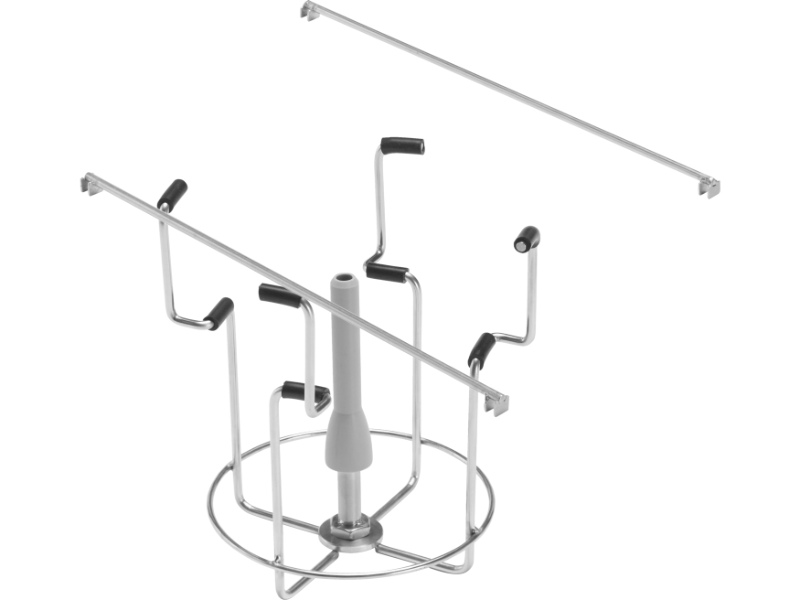
The Miele A 846 injector nozzle is designed for cleaning laboratory bottles and round flasks. It is suitable for bottles up to 10 litres and round flasks up to 6 litres. Used with A 313 and A 612 modules, it ensures stable positioning and efficient internal cleaning.
€493,00 excl. VAT

The Miele A 847 injector nozzle is designed for cleaning Erlenmeyer flasks in laboratory dishwashers. It is suitable for flasks up to 5 litres and ensures reliable internal cleaning. Used with A 313 and A 612 modules, it provides stable positioning and efficient rinsing.
€473,00 excl. VAT
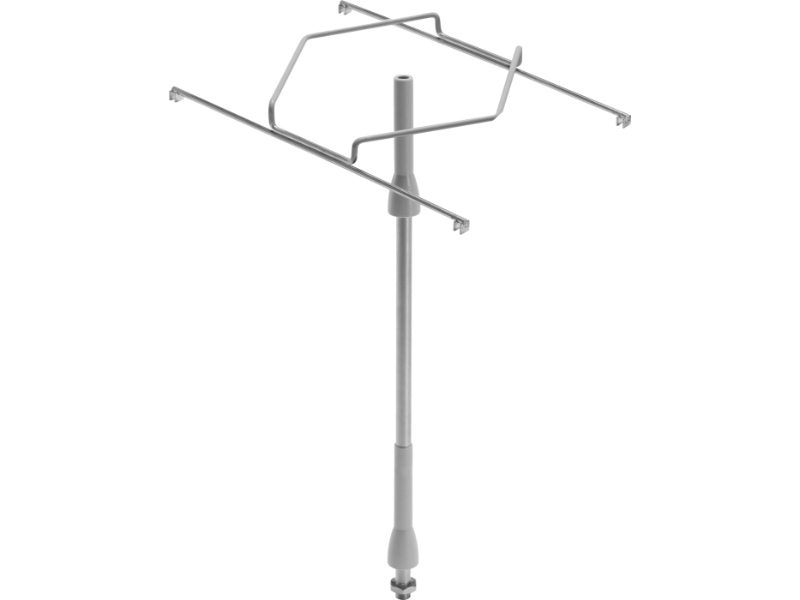
The Miele A 848 injector nozzle is designed for cleaning measuring cylinders in laboratory dishwashers. It is suitable for cylinders up to 5 litres and ensures reliable internal cleaning. Used with A 313 and A 612 modules, it provides stable positioning and efficient rinsing.
€455,00 excl. VAT
Insert racks and baskets for spray arm cleaning
For laboratory glassware without a narrow neck, Miele offers a range of insert racks and baskets specifically designed for spray arm cleaning. The most commonly used solution is the AK 12/1, suitable for cleaning beakers, bottle caps, and similar accessories. In addition, there are insert baskets for test tubes and other smaller items. Thanks to their robust stainless steel construction and compatibility with various upper and lower baskets, these inserts provide a reliable and flexible addition to Miele laboratory dishwashers.
They are therefore the ideal choice for all glassware and accessories that can be efficiently cleaned using spray arms.

The Miele E 105/1 insert is designed for cleaning test tubes up to 12 × 165 mm. It allows loading of up to 200 tubes per cycle, ensuring high capacity. Supplied with lid, it provides secure positioning and efficient cleaning of longer test tubes.
€299,00 excl. VAT
The Miele E 139/1 insert is designed for cleaning test tubes up to 12 × 200 mm. It allows loading of up to 200 tubes per cycle, ensuring high capacity. Supplied with lid, it provides secure positioning and efficient cleaning of very long test tubes.
€292,00 excl. VAT

The Miele E 104/1 insert is designed for cleaning test tubes up to 12 × 105 mm. It allows loading of up to 200 tubes per cycle, ensuring high capacity. Supplied with lid, it provides secure positioning and efficient cleaning of longer test tubes.
€254,00 excl. VAT
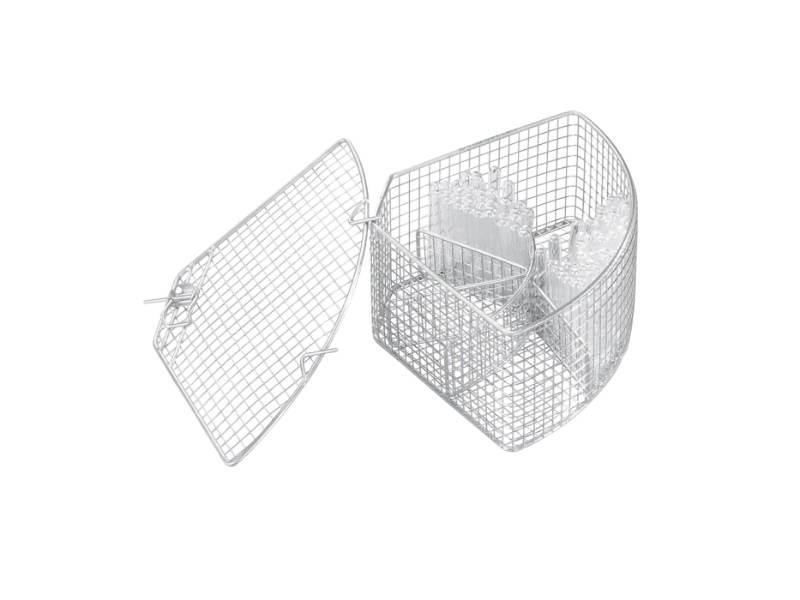
The Miele E 103/1 insert is designed for cleaning test tubes up to 12 × 75 mm. It allows loading of up to 200 tubes per cycle, ensuring maximum capacity. Supplied with lid, it provides secure positioning and efficient cleaning of high volumes.
€244,00 excl. VAT
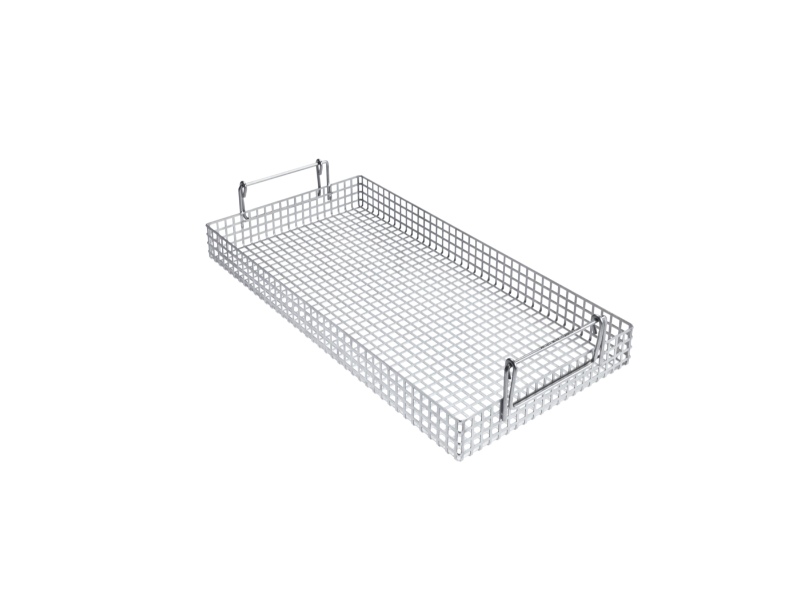
The Miele AK 12/1 insert is designed for cleaning beakers, funnels and laboratory utensils. It allows flexible loading of different items in one cycle. Compatible with upper and lower baskets, it provides a versatile solution for mixed laboratory loads.
€105,00 excl. VAT

The Miele A 14/1 lid is designed to secure delicate laboratory items during cleaning. Made from stainless steel, it prevents movement and protects fragile glassware. Used with compatible inserts, it ensures safe and stable positioning throughout the cleaning cycle.
€62,00 excl. VAT
Injector modules for specialized laboratory glassware
In addition to the standard modules for Erlenmeyer flasks, bottles, and graduated cylinders, Miele also offers injector modules for specific types of glassware. The A 304 is ideal for volumetric pipettes, the A 303 is suitable for narrow test tubes and delicate items, and the A 312 is designed for narrow, tall cylinders and specialized laboratory applications.
These modules use optimized injectors tailored to the shape and dimensions of the respective glassware. This ensures thorough internal cleaning without the risk of damage.
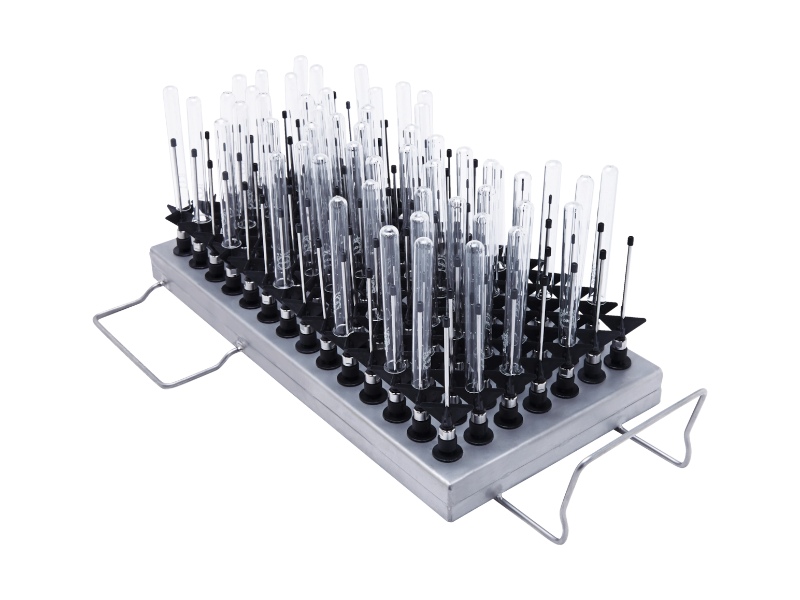
The Miele A 304 module is designed for cleaning test tubes, vials and centrifuge tubes. It allows loading of up to 98 items per cycle, ensuring efficient use of space. Compatible with A 100, A 150 and APLW 106 baskets, it supports high-throughput laboratory workflows.
€1.650,00 excl. VAT
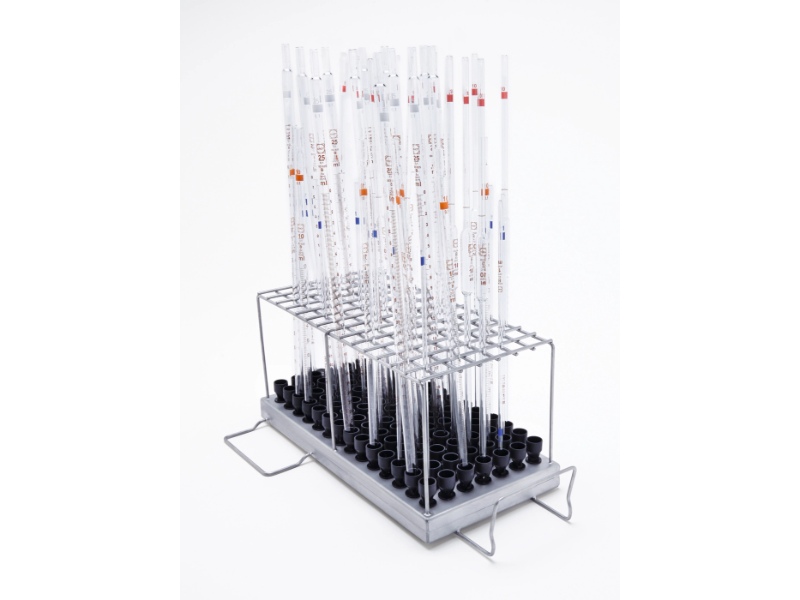
The Miele A 303 module is designed for cleaning pipettes in laboratory dishwashers. It allows loading of up to 98 pipettes per cycle, ensuring efficient use of space. Compatible with A 150 and APLW 106 baskets, it supports high-throughput laboratory workflows.
€1.138,00 excl. VAT
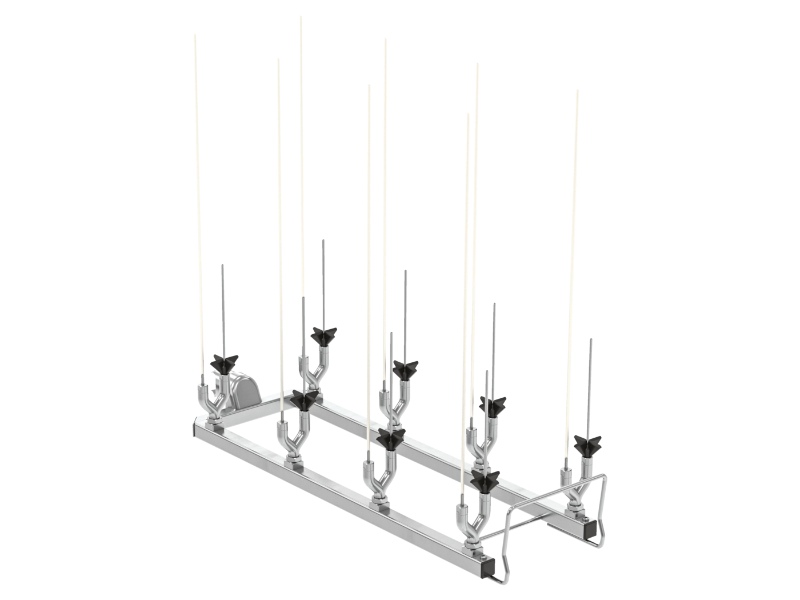
The Miele A 312 injector module is designed for cleaning viscometers. It holds up to 8 instruments and ensures precise internal cleaning. Equipped with dedicated injectors, it provides reliable and reproducible results.
€749,00 excl. VAT
Miele ProCare detergents
For validated and safe cleaning, the right detergents and neutralization agents are essential for your Miele laboratory dishwasher. With Miele ProCare Lab products, you are assured of optimal removal of both organic and inorganic contaminants, as well as a pH-neutral finish. These specially developed products are perfectly matched to the programs of Miele machines and ensure consistent, reproducible results.

The Miele ProCare Lab 30 C neutralisation agent is designed to remove alkaline residues and limescale. It ensures spot-free drying and protects sensitive materials. Used after alkaline cleaning, it completes the laboratory washing process.
€70,00 excl. VAT

The Miele ProCare Lab 10 AP alkaline detergent is designed for removing oils, grease and organic residues. It ensures reliable cleaning of laboratory glassware and equipment. Specially developed for Miele systems, it supports consistent and reproducible results.
€56,00 excl. VAT

The Miele ProCare Universal 61 regeneration salt is designed to protect laboratory dishwashers against limescale. It ensures optimal regeneration of the internal water softener. This helps maintain consistent cleaning performance and extends machine lifetime.
€50,00 excl. VAT
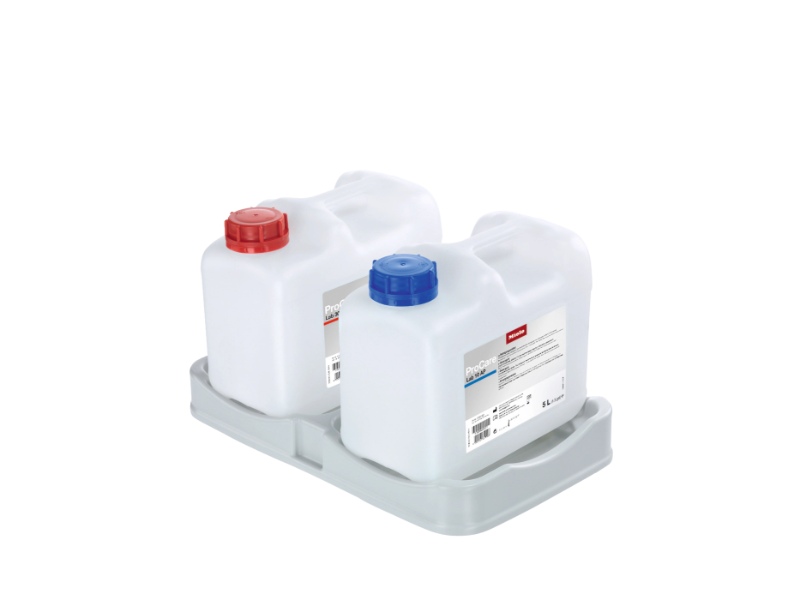
The Miele DTD 2 drip tray is designed for safe placement of ProCare chemical canisters. It holds up to 2 containers and prevents spills. The angled base ensures optimal emptying of 5L and 10L jerrycans.
€45,00 excl. VAT
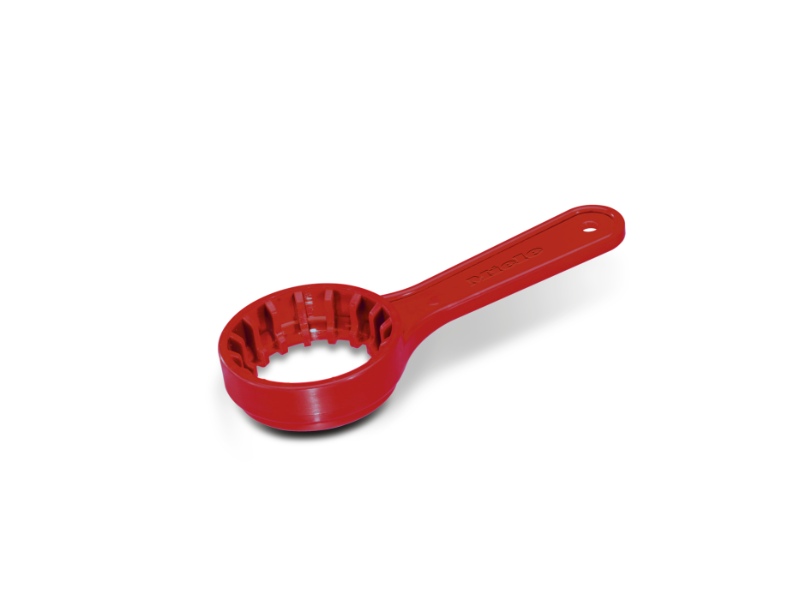
The Miele CK DIN 51 canister opener is designed for easy opening of ProCare chemical containers. It is compatible with 5L, 10L and 20L jerrycans. Durable and ergonomic, it ensures safe and effortless handling of laboratory detergents.
€30,00 excl. VAT
Water purification systems for laboratory dishwashers
For a validated final rinse process, Miele laboratory dishwashers require high-quality demineralized water. That is why we also distribute Neptec water purification systems, offering a reliable and cost-effective solution for every laboratory.
The most common choice is the Neptec Proteus 40: a compact reverse osmosis system with a production capacity of 40 liters per hour, an integrated 80-liter tank, booster pump, and full process monitoring via touchscreen. This system allows you to run 3–4 cycles per day without issues, with consistent water quality in accordance with ASTM and DIN standards.
For laboratories looking for a budget-friendly alternative, there are the ion exchangers IE 2500, IE 2800, IE 3600, and IE 6000. These pressure-resistant stainless steel cartridges, filled with high-quality mixed-bed resin, produce demineralized water with a conductivity of 0.1–20 µS/cm and are ideal for applications where the initial investment cost needs to remain low.
This way, every laboratory—depending on usage intensity and budget—can rely on a sustainable and suitable demineralized water solution for the optimal performance of their Miele laboratory dishwasher.

- Product: ultra high-capacity mixed-bed ion exchanger for laboratory deionized water
- Feed: tap water / potable water
- Flow rate: up to 2400 L/h
- Capacity: approx. 15000 L at 300 µS/cm feed water
- Water quality: 0.1–20 µS/cm demineralized water
€3.245,00 excl. VAT
- Product: high-capacity mixed-bed ion exchanger for laboratory deionized water
- Feed: tap water / potable water
- Flow rate: up to 2400 L/h
- Capacity: approx. 11000 L at 300 µS/cm feed water
- Water quality: 0.1–20 µS/cm demineralized water
€2.982,00 excl. VAT
- Product: high-capacity mixed-bed ion exchanger for laboratory deionized water
- Feed: tap water / potable water
- Flow rate: up to 2400 L/h
- Capacity: approx. 8400 L at 300 µS/cm feed water
- Water quality: 0.1–20 µS/cm demineralized water
€2.606,00 excl. VAT
- Product: mixed-bed ion exchanger for laboratory deionized water
- Feed: tap water / potable water
- Flow rate: up to 1800 L/h
- Capacity: approx. 6000 L at 300 µS/cm feed water
- Water quality: 0.1–20 µS/cm demineralized water
€2.014,00 excl. VAT
- Product: mixed-bed ion exchanger for laboratory deionized water
- Feed: tap water / potable water
- Flow rate: up to 1000 L/h
- Capacity: approx. 3600 L at 300 µS/cm feed water
- Water quality: 0.1–20 µS/cm demineralized water
€1.324,00 excl. VAT
- Product: mixed-bed ion exchanger for laboratory deionized water
- Feed: tap water / potable water
- Flow rate: up to 600 L/h
- Capacity: approx. 2800 L at 300 µS/cm feed water
- Water quality: 0.1–20 µS/cm demineralized water
€1.035,00 excl. VAT
- Product: mixed-bed ion exchanger for laboratory deionized water
- Feed: tap water / potable water
- Flow rate: up to 500 L/h
- Capacity: approx. 2500 L at 300 µS/cm feed water
- Water quality: 0.1–20 µS/cm demineralized water
€896,00 excl. VAT

Even more solutions for your laboratory
Have you not found what you were looking for? The range of Miele laboratory dishwashers and accessories is exceptionally extensive, with solutions for every type of glassware, specialized applications, and validation requirements. In addition to the machines, racks, and modules shown here, many other options are available.
Explore the full Miele catalog for a complete overview and get inspired by the wide range of configurations and accessories that perfectly match the needs of your laboratory.
Frequently asked questions about Miele laboratory dishwashers
What is the difference between a Miele laboratory dishwasher and a household appliance?
A Miele laboratory dishwasher is specifically designed for validated cleaning and disinfection of laboratory glassware and differs fundamentally from a household appliance.
The main differences are:
Injector modules: laboratory models are equipped with dedicated injector modules, allowing narrow-neck glassware (such as Erlenmeyer flasks, graduated cylinders, and bottles) to be thoroughly cleaned internally.
Chemical cleaning: the units operate with both alkaline and acidic detergents. This ensures efficient removal of different types of contamination, including organic and inorganic residues. At the end of the cycle, the pH is neutralized.
Final rinse with demineralized water: in the final rinse phase, demineralized water is used. This also removes contaminants present in tap water, ensuring a residue-free result.
Materials: the chamber is made of 316 stainless steel, providing high chemical resistance against aggressive cleaning agents and long-term use.
Temperature and programs: laboratory dishwashers reach higher temperatures and are equipped with specific programs for laboratory applications, in accordance with international guidelines.
In summary: a Miele laboratory dishwasher combines specialized technology and durable materials to guarantee reliable, reproducible, and safe cleaning results—something that cannot be achieved with a household appliance.
What is the successor to the Miele PG 8583 laboratory dishwasher?
The Miele PLW 8683 is the direct successor to the PG 8583 and the G 7883. This model offers active drying, advanced process monitoring, and a modern EasyLoad system for faster and safer loading.
Which models are suitable replacements for the older G 7883 and PG 8583 CD?
The models from the Miele PLW 8683 CD series are the successors to the G 7883 CD and PG 8583 CD. They are equipped with conductivity monitoring, glass door options, and full process traceability.
Which accessories are available for a Miele laboratory dishwasher?
Miele offers a wide range of lower baskets, upper baskets, injector modules, and insert baskets, tailored to different types of glassware such as Erlenmeyer flasks, pipettes, graduated cylinders, and bottle caps. Thanks to this modular system, every laboratory can configure a setup that perfectly matches its daily workflow.
What is EasyLoad and how does it help in the lab?
Miele’s EasyLoad system allows glassware to be positioned quickly and automatically on the injectors. This makes loading easier, reduces the risk of glass breakage, and better ensures validated cleaning. The EasyLoad injector modules are easily interchangeable with other modules and can be loaded outside the dishwasher.
Are there specific models for oil- and grease-containing samples?
Yes, Miele offers OIL versions of laboratory dishwashers, such as the PLW 8683 OIL and PLW 8693 OIL. These feature specialized oil-resistant seals and programs designed to safely and reproducibly remove stubborn oil and grease residues.
What water quality is required for the final rinse in laboratory dishwashers?
For a validated result in a Miele laboratory dishwasher, high-quality demineralized water is required in the final rinse phase. There are several solutions, each with their own characteristics:
Reverse osmosis (RO water / Type III water): this is the most common and recommended solution. It has the lowest cost of ownership, delivers consistent quality, and achieves a reduction of approximately 99% of all contaminants (ions, organic matter, microorganisms, particles, and endotoxins). This also removes contaminants originating from tap water used in the earlier stages of the program.
Ion exchangers: these systems only reduce inorganic contaminants (ions). They are attractive due to the lower initial investment cost, but the water quality is not consistent, as conductivity/resistivity decreases as the resin becomes saturated. With intensive use, the cost of resin replacement can increase significantly.
Type II EDI water: in some laboratories, especially inorganic labs or where central EDI water is available, this type of water is also used for the final rinse.
In summary: for most laboratories, RO water / Type III water offers the best balance between cost, reliability, and water quality for the final rinse process.
What drying options are available for Miele laboratory dishwashers?
Depending on the model, there are three options:
No drying (for entry-level models),
EcoDry (the door opens automatically after the cycle at temperatures below 70°C),
DryPlus active drying (with HEPA filtration, ideal for difficult-to-dry items).
Can Miele provide IQ/OQ validation services in Belgium?
Yes. Through Miele Professional and the Belgian service team, an IQ/OQ (Installation Qualification / Operational Qualification) validation service can be carried out. This ensures that the installation and operation of the laboratory dishwasher are fully validated in accordance with GMP and GLP guidelines.
How extensive is the range of Miele laboratory dishwashers?
The range varies from compact models such as the PLW 8604 (an economical solution for schools) to the advanced PLW 8683 and PLW 8693 series with full process monitoring and various drying options. In addition, Miele also offers the large-chamber PLW 7111 for glassware up to 50 liters.
Contact us today for a quotation or advice and discover how a Miele laboratory dishwasher can support your lab in Belgium with reliable and validated cleaning processes.