
Ultrasonicators
Scientz ultrasonicators are designed for laboratories, R&D teams and industrial users who need reliable ultrasonic processing for cell disruption, homogenization, emulsification, extraction, nanoparticle dispersion and process scale-up. The portfolio ranges from compact portable sonicators and focused laboratory ultrasonicators to multi-channel systems, industrial ultrasonic homogenizers, continuous-flow processors and dedicated ultrasonic dispersers.
Scientz has specialised in ultrasonic processing technology since 1989 and combines a broad product portfolio with strong scientific validation. With more than 100,000 systems installed worldwide and over 20,000 peer-reviewed publications referencing Scientz instruments, Scientz offers a proven and cost-effective alternative for laboratories looking for professional ultrasonic processing equipment.
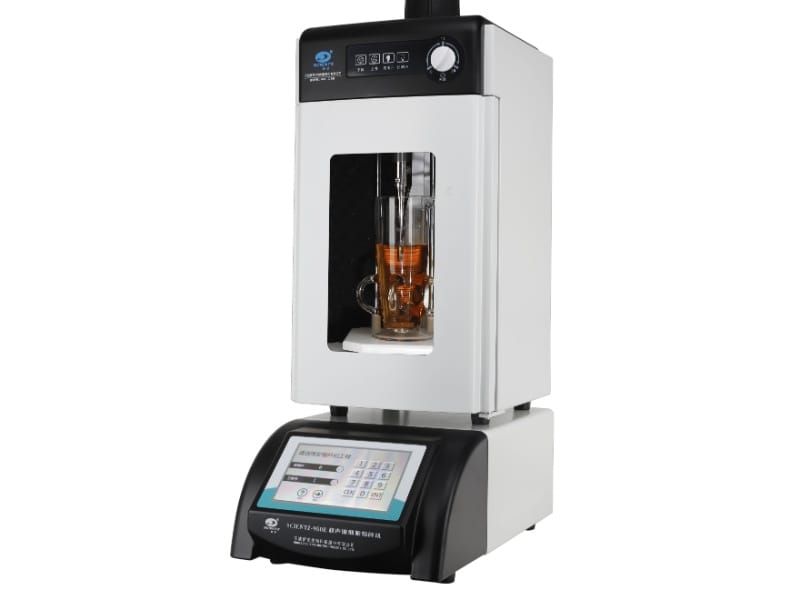
- Sample Volume: 100 µl–500 ml
- Ultrasonic Power: 650 W
- Standard Probe: Ø6 mm
- Probe Options: Ø2, Ø3, Ø10 and Ø12 mm
- Key Advantage: Network-controlled ultrasonicator with remote communication interface
€6.175,00 excl. VAT
- Sample Volume: 100 µl–600 ml
- Ultrasonic Power: 950 W
- Standard Probe: Ø6 mm
- Probe Options: Ø2, Ø3, Ø10, Ø12 and Ø15 mm
- Key Advantage: Network-controlled ultrasonicator for larger sample volumes
€6.656,00 excl. VAT
- Sample Volume: 50 ml–1200 ml
- Ultrasonic Power: 1200 W
- Standard Probe: Ø20 mm
- Probe Options: Ø15 mm and Ø25 mm
- Key Advantage: Network-controlled ultrasonicator for large-volume processing
€7.379,00 excl. VAT
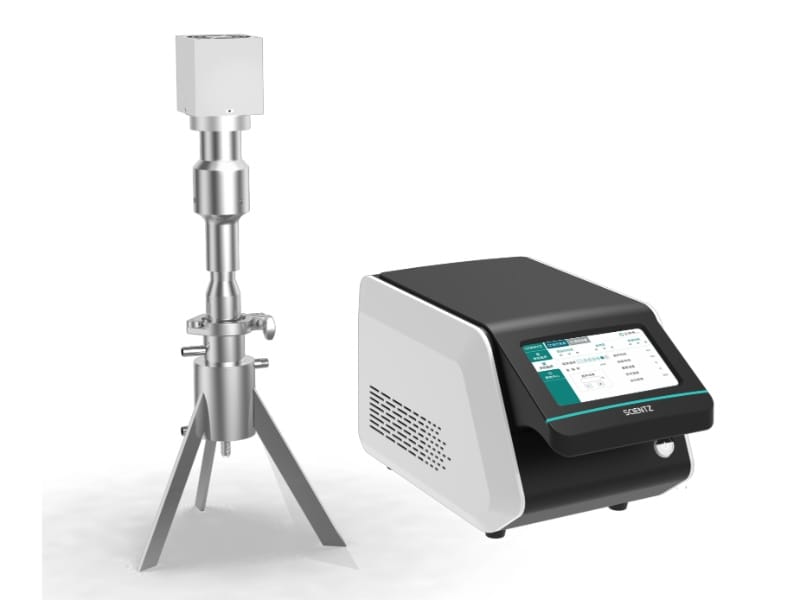
- Processing Volume: 5–50 L/h
- Ultrasonic Power: 750 W
- Reactor Volume: 150 ml
- Probe Type: Focused ultrasonic probe
- Key Advantage: Continuous flow ultrasonic homogenizer for production-scale processing
€12.520,00 excl. VAT
- Processing Volume: 5–100 L/h
- Ultrasonic Power: 750 W
- Reactor Volume: 200 ml
- Probe Type: Omnidirectional dispersing probe
- Key Advantage: Continuous flow ultrasonic disperser for nanomaterials and emulsions
€12.520,00 excl. VAT
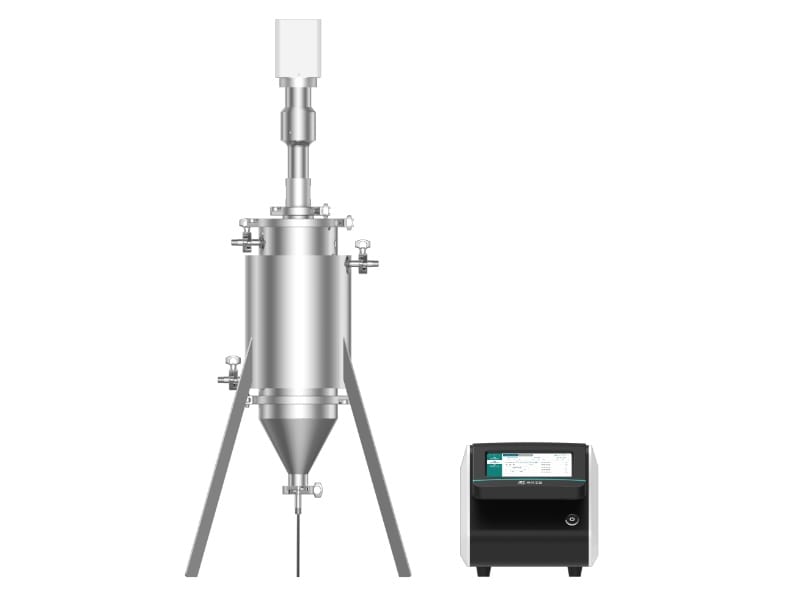
- Processing Volume: Large-scale continuous processing
- Ultrasonic Power: 3000 W
- Reactor Volume: Approximately 5 L
- Probe Diameter: Ø50 mm
- Key Advantage: Industrial-scale continuous flow ultrasonic homogenizer
€19.692,50 excl. VAT
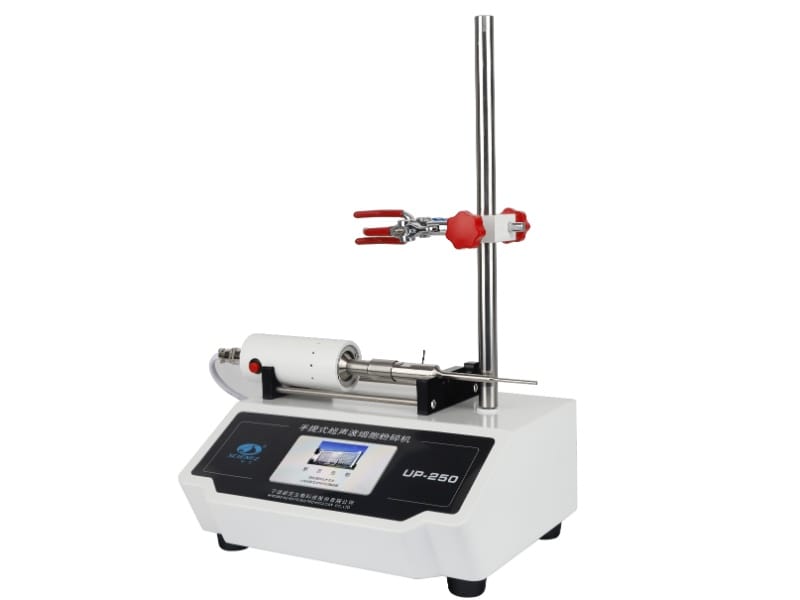
- Sample Volume: 100 µl–10 ml
- Ultrasonic Power: 250 W
- Standard Tip: Ø3 mm
- Battery Operation: Up to 4 hours
- Key Advantage: Portable battery-powered handheld ultrasonic homogenizer
€5.091,00 excl. VAT
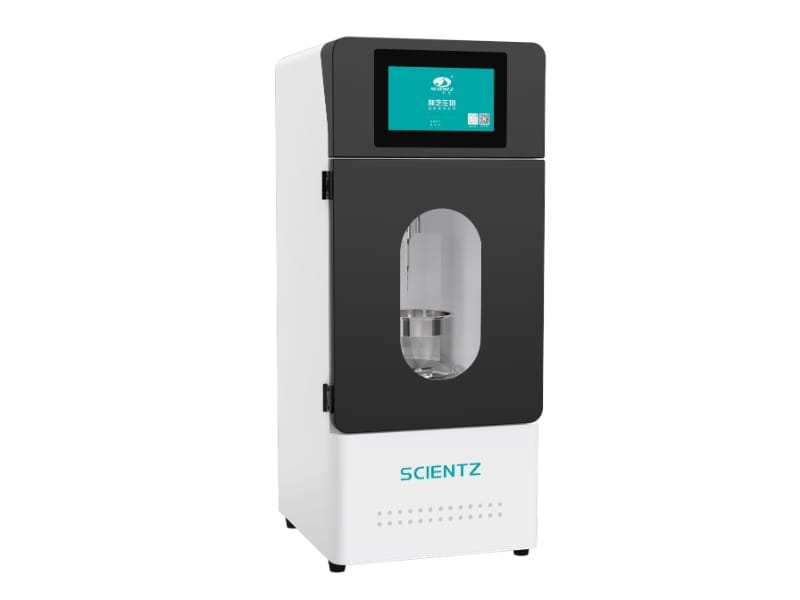
- Sample Volume: 100 µl–100 ml
- Ultrasonic Power: 2450 W
- Sonication Modes: Contact & Non-Contact
- Temperature Control: Integrated chiller included
- Key Advantage: Horn cup ultrasonicator for DNA shearing applications
€15.179,00 excl. VAT
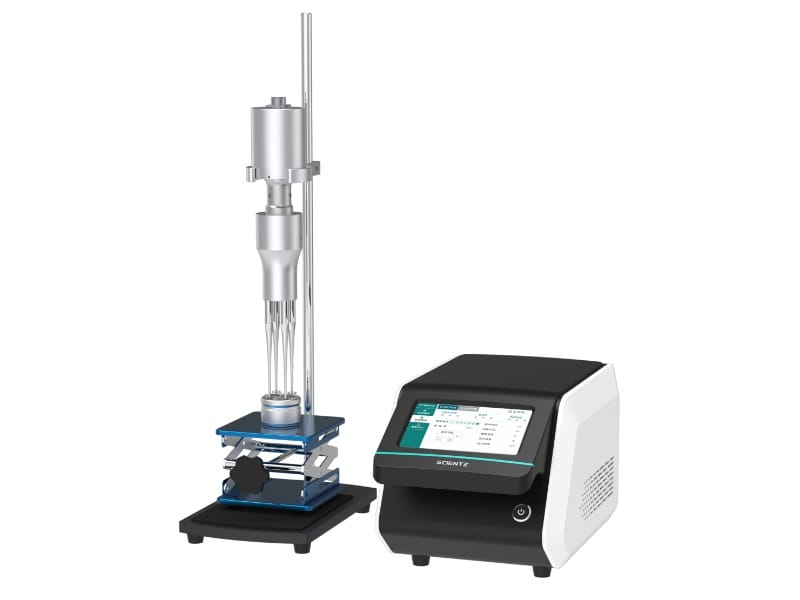
- Channels: 4 probes
- Sample Volume: 1–20 ml per sample
- Ultrasonic Power: 2400 W
- Standard Tip Diameter: Ø6 mm
- Key Advantage: Simultaneous processing of 4 samples
€11.968,33 excl. VAT
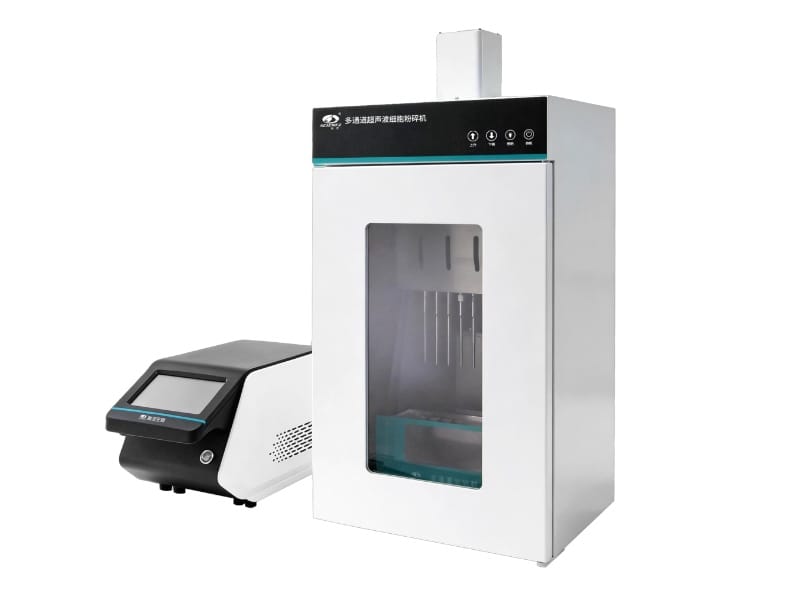
- Channels: 6 probes
- Sample Volume: 1–50 ml per sample
- Ultrasonic Power: 2400 W
- Standard Tip Diameter: Ø6 mm
- Key Advantage: Simultaneous processing of 6 samples
€13.423,00 excl. VAT
- Channels: 8 probes
- Sample Volume: 1–20 ml per sample
- Ultrasonic Power: 2400 W
- Standard Tip Diameter: Ø6 mm
- Key Advantage: Simultaneous processing of 8 samples
€14.439,17 excl. VAT
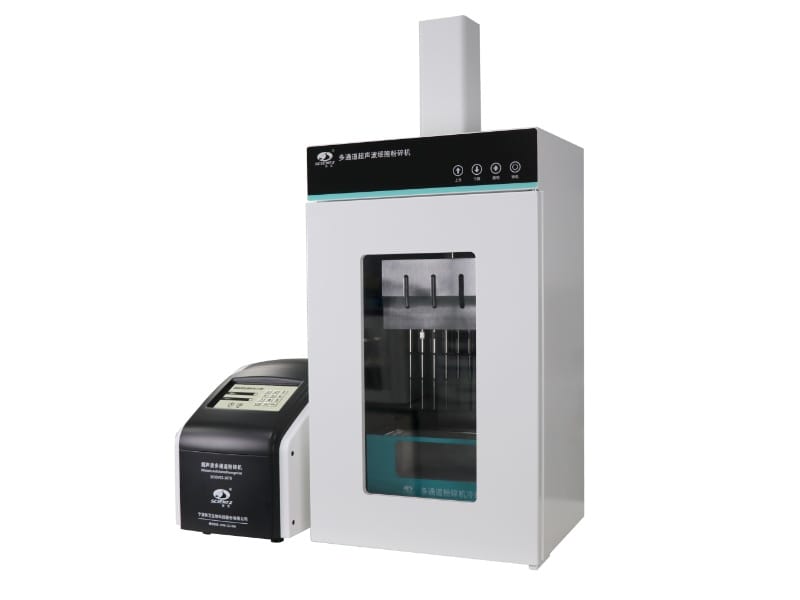
- Channels: 16 probes
- Sample Volume: 1–20 ml per sample
- Ultrasonic Power: 2400 W
- Standard Tip Diameter: Ø6 mm
- Key Advantage: Simultaneous processing of 16 samples
€15.931,66 excl. VAT
Scientz Ultrasonicator Category Comparison
| Category | Main Purpose | Typical Applications | Best Choice When |
|---|---|---|---|
| Focused ultrasonicators | High-intensity probe sonication | Cell disruption, protein extraction, DNA/RNA extraction, homogenization, emulsification | You need strong localized ultrasonic energy for laboratory samples. |
| Portable ultrasonicators | Mobile ultrasonic processing | Field testing, environmental monitoring, small-volume homogenization, mobile sample preparation | You need a compact or battery-powered system outside a fixed lab setup. |
| Multi-channel ultrasonicators | Simultaneous processing of multiple samples | Multi-well plates, high-throughput sample preparation, genomics, proteomics, screening | You need reproducible ultrasonic treatment across many samples at once. |
| Industrial ultrasonic homogenizers | Larger batch processing | Nanomaterials, natural compound extraction, chemical processing, cosmetic particles, environmental applications | You need to scale from laboratory volumes to larger batch volumes. |
| Continuous flow ultrasonicators | Inline ultrasonic processing | Vaccine production, antibody production, chemical synthesis, continuous emulsification, large-volume dispersion | You need continuous production, higher throughput or process integration. |
| Ultrasonic dispersers | Optimized dispersion of materials | Graphene, carbon nanotubes, silica, pigments, emulsions, suspensions, pharmaceutical formulations | Your main goal is dispersion rather than biological cell disruption. |
Scientz Ultrasonicators for Laboratory and Industrial Ultrasonic Processing
An ultrasonicator uses high-frequency ultrasonic energy to generate cavitation in liquids. This cavitation creates intense shear forces that can disrupt cells, homogenize samples, disperse nanoparticles, create emulsions, accelerate extraction and support chemical reactions. In laboratories, ultrasonicators are widely used for biological sample preparation, DNA and RNA extraction, protein extraction, microbiology, nanomaterials research, pharmaceutical formulation, food research and environmental analysis.
The Scientz portfolio covers a wide range of ultrasonic processing needs. Instead of offering only one type of probe sonicator, Scientz provides dedicated platforms for focused sonication, portable use, high-throughput multi-sample processing, industrial batch processing, continuous-flow production and ultrasonic dispersion. This makes it possible to select a system that matches the application, sample volume, throughput and future scale-up requirements.
Why Choose Scientz Ultrasonicators?
Scientz is one of the leading manufacturers of ultrasonic processing instruments. The company has been manufacturing life science instruments since 1989 and has built a strong international user base in research, biotechnology, pharmaceutical development, materials science and industrial processing.
Scientz instruments are referenced in more than 20,000 peer-reviewed scientific publications, including publications in Nature, Science and Cell. The installed base of more than 100,000 units worldwide demonstrates that Scientz ultrasonicators are not experimental alternatives, but proven instruments used by laboratories and companies across the world.
Advanced Digital Ultrasonic Technology
Many Scientz ultrasonicators use digital ultrasonic power supplies with automatic frequency tracking. This allows the system to adapt to the optimal working frequency of the probe in real time, supporting stable ultrasonic output and reducing the need for manual adjustment.
Depending on the model, Scientz systems can include touchscreen control, programmable methods, multi-stage processing, temperature monitoring, overload protection, soundproof enclosures, motorized probe lift systems, UV sterilization, internal lighting and network control. These features improve reproducibility, operator comfort and process control.
Focused Ultrasonicators
Focused ultrasonicators concentrate ultrasonic energy through a probe into a defined treatment zone. They are the most common choice for laboratory sample preparation and are typically used for cell disruption, microbial lysis, protein extraction, DNA and RNA extraction, homogenization, emulsification and nanoparticle dispersion.
This category includes the Scientz N-series and integrated models such as the Scientz-650J, Scientz-650L and Scientz-2000J. These systems are suitable for laboratories that require high energy density, reproducible sample processing and flexible probe options for different sample volumes.
Portable Ultrasonicators
Portable ultrasonicators are designed for users who need ultrasonic processing outside a fixed laboratory setup. They are compact, easy to move and suitable for small sample volumes. Battery-powered models are especially useful for field research, environmental monitoring, mobile laboratories and on-site quality control.
The Scientz UP-250 and UP-250S are suitable for small-volume homogenization, emulsification, extraction and dispersion applications where portability is an important requirement.
Multi-Channel Ultrasonicators
Multi-channel ultrasonicators process several samples at the same time. This improves throughput, reduces operator variation and ensures that multiple samples receive identical ultrasonic treatment conditions.
The Scientz TD series is available with 4, 6, 8, 16, 24, 48 and 96 probes. These systems are particularly useful for high-throughput laboratories, multi-well plate workflows, genomics, proteomics, cell disruption, pharmaceutical screening and standardized sample preparation.
Industrial Ultrasonic Homogenizers
Industrial ultrasonic homogenizers are designed for larger batch volumes and more demanding process conditions. They are used when laboratory-scale ultrasonicators no longer provide sufficient volume, power or throughput.
The Scientz-08 is positioned for pilot-scale and industrial batch applications, including nanomaterial processing, natural compound extraction, resin defoaming, cosmetic particle refining, polluted water degradation and chemical engineering applications.
Continuous Flow Ultrasonicators
Continuous-flow ultrasonicators are used when samples need to be processed in a continuous stream rather than in individual batches. The liquid is pumped through an ultrasonic reactor where it is exposed to controlled cavitation.
Continuous-flow ultrasonicators are suitable for process development, vaccine and antibody production, chemical synthesis, emulsification, dispersion of metal oxides, nanomaterials and larger-volume production workflows. They are the best choice when scalability, process control and integration into production lines are important.
Ultrasonic Dispersers
Ultrasonic dispersers are designed specifically for dispersion applications rather than general cell disruption. Their probe geometry and ultrasonic emission pattern are optimized for liquid-liquid, solid-liquid and gas-liquid systems.
The Scientz F-series is suitable for dispersing carbon nanotubes, graphene, silica, pigments, pharmaceutical suspensions, cosmetic emulsions and other difficult-to-disperse materials. For nanomaterials and formulation work, an ultrasonic disperser is often more appropriate than a focused ultrasonicator.
Choosing the Right Ultrasonicator
The best ultrasonicator depends on the application, sample volume, throughput, temperature sensitivity and future scale-up requirements. A small biological sample may require a focused probe sonicator, while a formulation project may be better served by an ultrasonic disperser. High-throughput laboratories may benefit from multi-channel systems, while production processes often require continuous-flow ultrasonicators or industrial ultrasonic homogenizers.
Labman Instruments helps laboratories and industrial users select the right Scientz ultrasonic processing system based on sample type, volume, application and process requirements.
Explore the Scientz Ultrasonicator Range
The Scientz portfolio is divided into several ultrasonic processing categories, each designed for a specific type of application. If you are not sure which system is best suited to your process, the category pages below help you compare the main technologies.
- Focused ultrasonicators are the standard choice for cell disruption, laboratory homogenization, extraction and high-intensity probe sonication.
- Continuous flow ultrasonicators are used for inline ultrasonic processing, larger volumes and production-oriented workflows.
- Industrial ultrasonic homogenizers are designed for larger batch volumes, pilot-scale processing and scale-up from laboratory methods.
- Multi-channel ultrasonicators allow simultaneous processing of multiple samples, including multi-well plate workflows.
- Portable ultrasonicators are compact systems for field research, mobile laboratories and small-volume sample preparation.
- Ultrasonic dispersers are optimized for nanomaterials, emulsions, suspensions, pigments and difficult dispersion applications.
If your goal is cleaning glassware, instruments or small components rather than processing a sample, you may be looking for an ultrasonic cleaner. Ultrasonic cleaners and ultrasonicators both use ultrasound, but they are designed for very different applications.