
Inverted metallurgical microscopes
An inverted metallurgical microscope examines opaque samples such as polished metals, ores, and ceramics from below, which is especially useful for large, heavy, or irregularly shaped pieces that can simply rest on the stage without needing to be mounted or turned over. Optika’s inverted metallurgical range spans IM-300METLD, a routine LED model for materials science and metallographic applications, and IM-5MET, a research-grade platform adding darkfield, polarized light, and DIC (Nomarski) technique for more demanding material characterization.
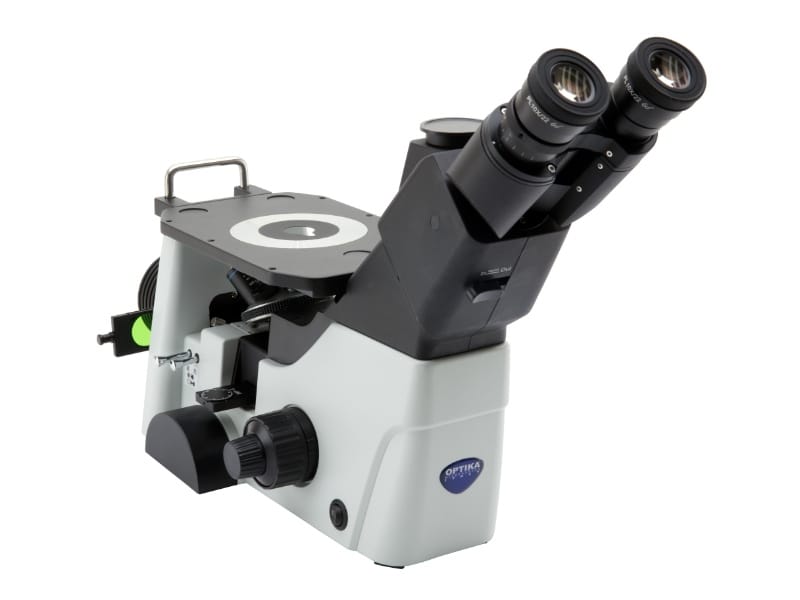
- Type: Inverted metallurgical, trinocular
- Magnification: Up to 500x
- Optics: IOS LWD U-PLAN MET
- Illumination: LED 18W incident
- Head: Trinocular, 45 degree inclined
€2.722,00 excl. VAT
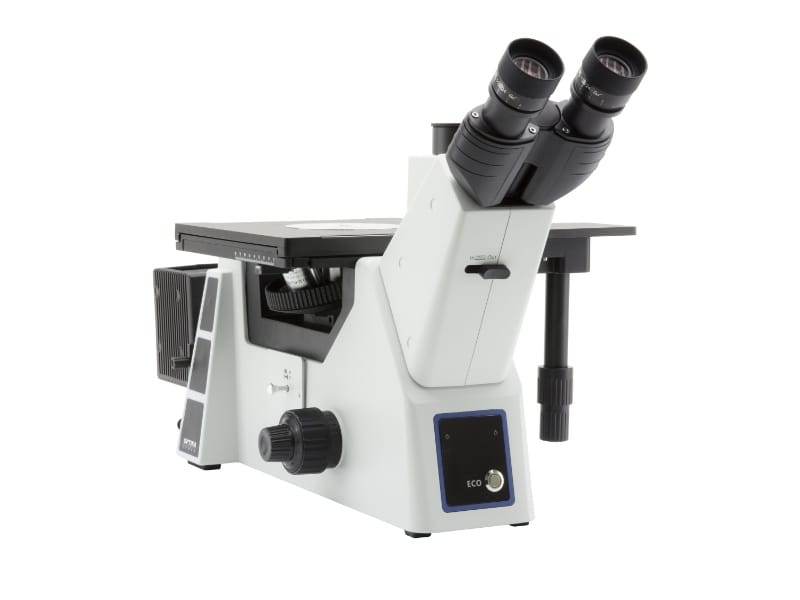
- Type: Inverted metallurgical, trinocular
- Magnification: Up to 1000x
- Optics: IOS LWD, configurable objective platform
- Illumination: Halogen 100W incident
- Head: Trinocular, 45 degree inclined
€7.386,00 excl. VAT
Comparing Optika Inverted Metallurgical Models
| Model | Techniques | Objectives | Notable feature |
|---|---|---|---|
| IM-300METLD | Brightfield, darkfield, simple polarized light | NCG IOS LWD U-PLAN MET (no cover glass), sold separately | Routine, compact, LED illumination |
| IM-5MET | Brightfield, darkfield, polarized light, DIC (Nomarski) | IOS LWD U-PLAN MET or U-PLAN F MET, sold separately | Widest field of view in category, DIC slot for surface topography |
Why Choose Inverted for Metallurgical Work
Reflected light microscopy of opaque samples usually works equally well upright or inverted, but the inverted configuration has a practical advantage: the sample rests directly on the stage from above, with no need to mount it upside down or hold it in place against gravity. This matters most for large, heavy, or irregularly shaped metallographic samples that would be awkward to secure on an upright stand, making inverted the natural choice for many industrial quality control and materials research applications.
Choosing the Right Model
IM-300METLD is Optika’s routine inverted metallurgical microscope, combining a sturdy yet compact structure with the dedicated components this field requires, including NCG (no cover glass) IOS LWD U-PLAN MET objectives designed to work without a cover slide, ideal for metallographic samples and other opaque specimens. Its simple, well-engineered optical design gives stable alignment and smooth, accurate movements for everyday brightfield, darkfield, and simple polarized light inspection with LED illumination.
IM-5MET is Optika’s research-grade metallurgical platform, bringing brightfield, darkfield, polarized light, and DIC (Nomarski) technique together in one instrument for high-end materials science work. It shares the IM-5 platform’s advantages, including the highest field of view available on an inverted microscope in its category and ergonomic, handy controls, with a DIC slot on the nosepiece for differential interference contrast observation of surface topography, and a choice of U-PLAN MET or U-PLAN F MET objectives depending on magnification and application needs.
Related Microscope Categories
If your sample is transparent rather than opaque, see inverted brightfield microscopes for routine live cell observation, inverted phase contrast microscopes for unstained cell structures, or inverted fluorescence microscopes for immunofluorescence work.
If your opaque sample is better suited to viewing from above, see our upright metallurgical microscopes. For the full inverted range overview, see inverted microscopes.