
Reciprocating shakers
Reciprocating shakers move the platform back and forth in a straight line rather than in a circular orbit, which some extraction, blotting, and mixing protocols call for specifically. Labman’s range is currently built on Edmund Buhler’s compact and universal platforms, in both analog and programmable digital versions, with capacities from 15 kg up to 30 kg. Additional brands will be added to this category over time.
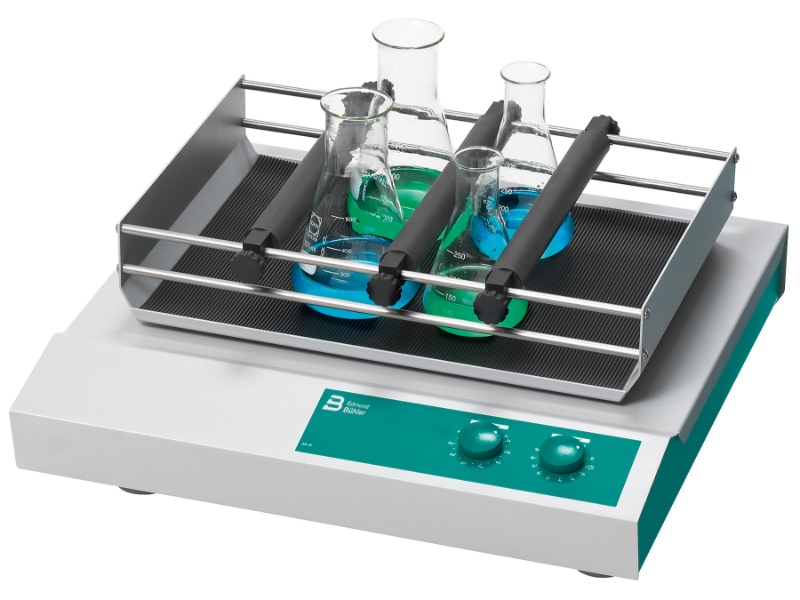
- Motion: reciprocating (horizontal)
- Shaking platform: 400 x 300 mm
- Max. load: 15 kg
- Shaking speed: 30 – 420 rpm, steplessly adjustable
- Stroke: 17 mm
€2.041,00 excl. VAT
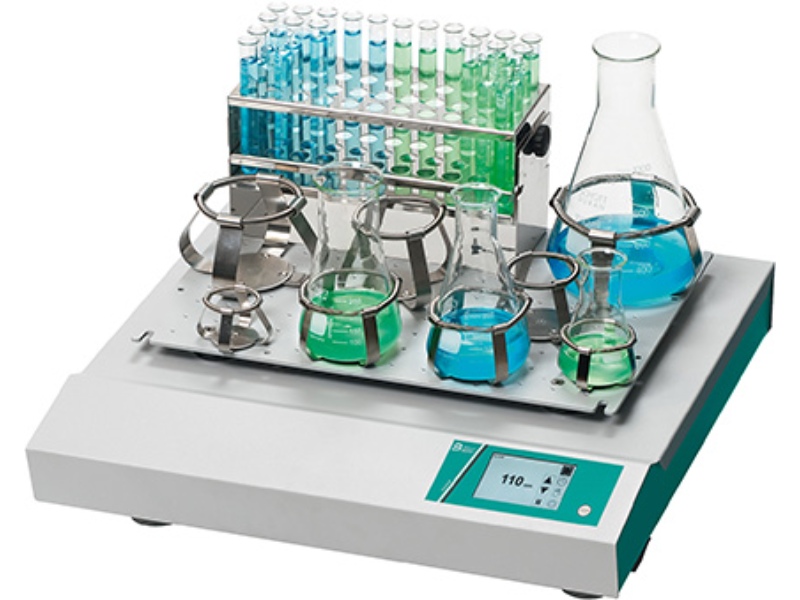
- Motion: reciprocating (horizontal)
- Shaking platform: 400 x 300 mm
- Max. load: 15 kg
- Shaking speed: 30 – 420 rpm, in steps of 5
- Stroke: 17 mm
€2.990,00 excl. VAT
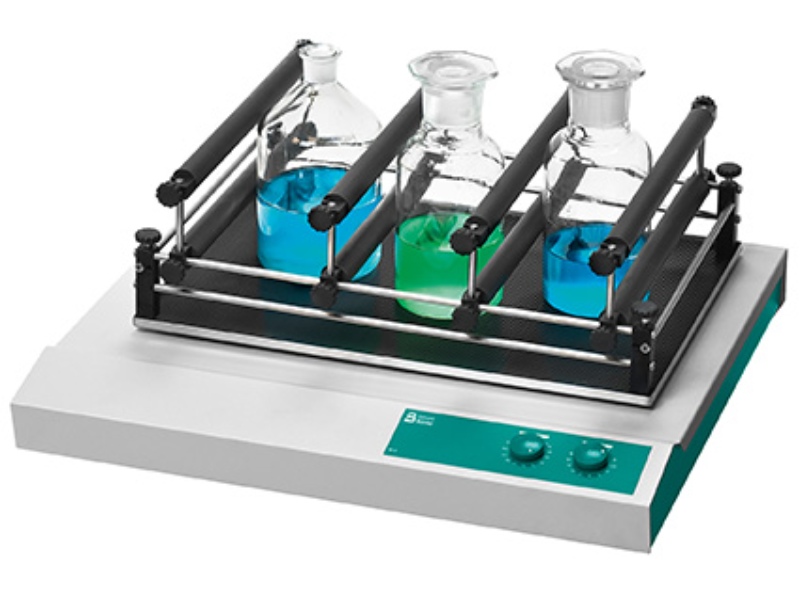
- Motion: reciprocating (horizontal)
- Shaking platform: 560 x 400 mm
- Max. load: 30 kg
- Shaking speed: 15 – 300 rpm, steplessly adjustable
- Stroke: 30 mm (option: 46 or 50 mm)
€3.238,00 excl. VAT
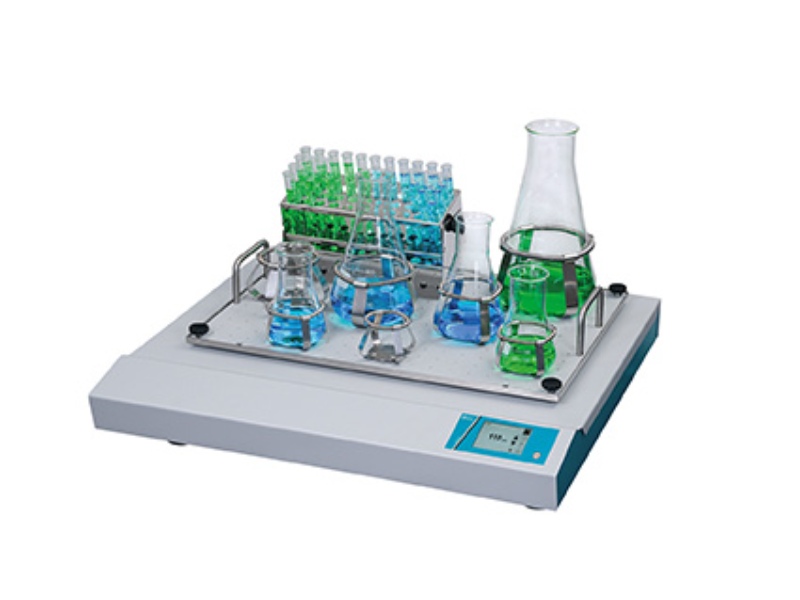
- Motion: reciprocating (horizontal)
- Shaking platform: 560 x 400 mm
- Max. load: 30 kg
- Shaking speed: 15 – 300 rpm, in steps of 5
- Stroke: 30 mm (option: 46 or 50 mm)
€4.372,00 excl. VAT
| Model | Brand | Speed Range | Max Load | Stroke | Control |
|---|---|---|---|---|---|
| KS 15 B | Buhler | 30-420 rpm | 15 kg | 17 mm | Analog |
| KS 15 B control | Buhler | 30-420 rpm | 15 kg | 17 mm | Programmable, touch screen |
| SM 30 B | Buhler | 15-300 rpm | 30 kg | 30 mm standard | Analog |
| SM 30 B control | Buhler | 15-300 rpm | 30 kg | 30 mm, 46 mm, or 50 mm | Programmable, touch screen |
Straight-line motion, and when it matters
A reciprocating shaker moves its platform horizontally back and forth along a single axis, instead of the circular path an orbital shaker uses. For most general mixing this distinction does not matter much, but some protocols specifically call for a linear motion, and a handful of vessel geometries and mixing patterns respond better to a back-and-forth motion than a circular one. Where a protocol does not specify a motion type, an orbital shaker is usually the more common default choice.
The Buhler KS 15 B and SM 30 B ranges
Edmund Buhler’s reciprocating range mirrors its orbital range on the same two platforms: the KS 15 B compact series, built for a 15 kg load on a 400 x 300 mm platform, and the SM 30 B universal series, built for a 30 kg load on a 560 x 400 mm platform. Both are available in analog form, or as a “control” version with a programmable touch screen, load sensing, and RS232 connectivity. The SM 30 B control also offers a modular stroke, adjustable from the standard 30 mm up to 46 mm or 50 mm, to match the motion amplitude to the protocol.
Who chooses a reciprocating shaker
Reciprocating shakers suit labs running a specific protocol that calls for linear motion, often alongside orbital shakers already in use for general work. Typical users include research and QC labs standardizing on documented methods, and any lab that has identified a specific need for straight-line agitation in an existing extraction or mixing protocol. Choose the KS 15 B for routine, lower-capacity work, or the SM 30 B range for larger loads or where a modular stroke and programmable control are needed.
Related shaker categories
For general flask culture and mixing work, our orbital shakers are the more common choice. For samples sensitive to shear or foam, see our rocking, tilting, and 3D shakers, or our roller mixers for the gentlest tube and bottle mixing. If you need a shaker sized to fit inside an incubator or fridge, see our CO2-incubator and miniature shakers, and for dedicated microplate work, see our microplate shakers. For loads above 30 kg, see our multi-flask and heavy-duty shakers. For an overview of the full range, see our laboratory shakers category. If your workflow also needs quick tube mixing, see our laboratory vortex mixers, or for combined shaking and incubation in one unit, see our shaking incubators.