
Laboratory Desiccators and Vacuum Desiccators
Labman Instruments is official distributor for Jeiotech desiccators and vacuum desiccators for Europe.

Secure and Controlled Sample Storage with Desiccators
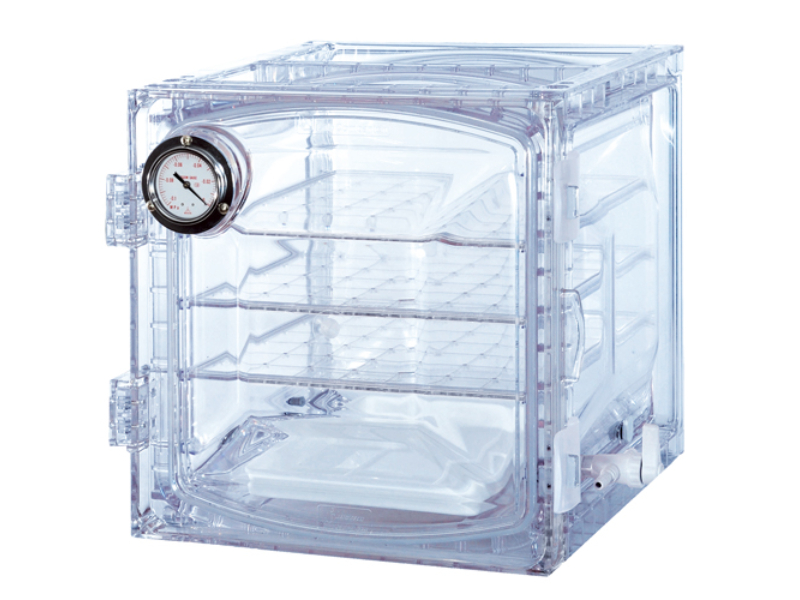
Desiccators are essential laboratory solutions for protecting moisture-sensitive materials under controlled storage conditions. By maintaining a dry internal environment, they prevent degradation, contamination, and instability caused by ambient humidity. Depending on the required level of humidity control and drying performance, laboratories can choose between standard atmospheric desiccators, vacuum desiccators for accelerated moisture removal under reduced pressure, or electronic auto-desiccator cabinets with active humidity regulation.
The Jeiotech portfolio offers reliable and durable solutions for research laboratories, quality control environments, electronics manufacturing, and industrial applications. These systems are suitable for the storage of electronic components, chemical reagents, optical instruments, reference standards, and other hygroscopic materials. With robust construction, transparent viewing panels, airtight sealing systems, and precise humidity management options, Jeiotech desiccators ensure stable, reproducible, and contamination-free storage environments for critical materials.
Vacuum Desiccators
Vacuum desiccators are the optimal solution for rapid moisture removal under reduced pressure. By evacuating air down to 1 Torr, samples can be efficiently dried and protected from humidity-sensitive degradation. These units are ideal for hygroscopic chemicals, electronic components and research samples requiring controlled vacuum conditions. Choose between round, cubic or cylindrical formats depending on capacity and workflow needs.
Round Vacuum Models
The VDR series features round-shaped vacuum desiccators with excellent visibility and durable vacuum sealing. Available in both standard and UV-blocking models, they are ideal for space-constrained labs requiring vacuum-sealed dry storage for small to mid-sized samples.
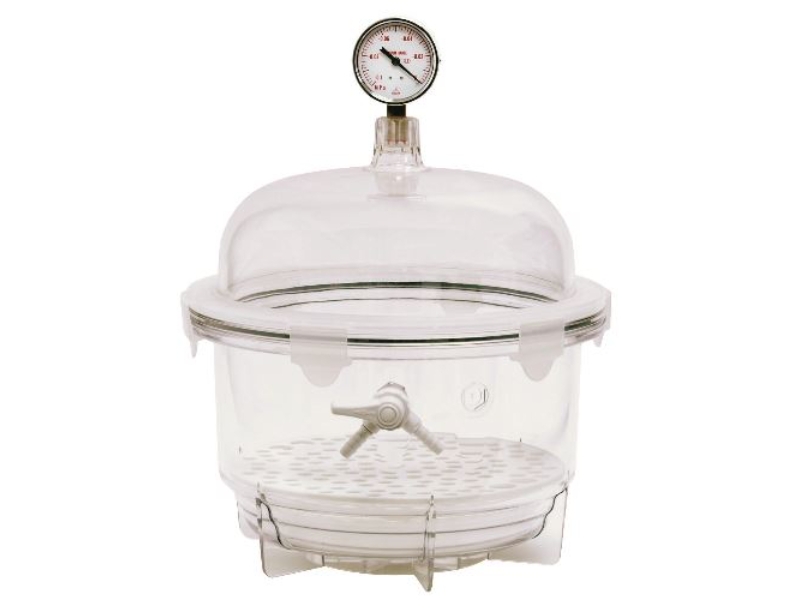
- Type: Clear, round
- Vacuum level: Up to 1 Torr for 72 hours
- Internal volume: 6 L
- Body material: Polycarbonate (transparent)
- Highlights: UV-blocking option, optional vacuum gauge
€388,00 excl. VAT
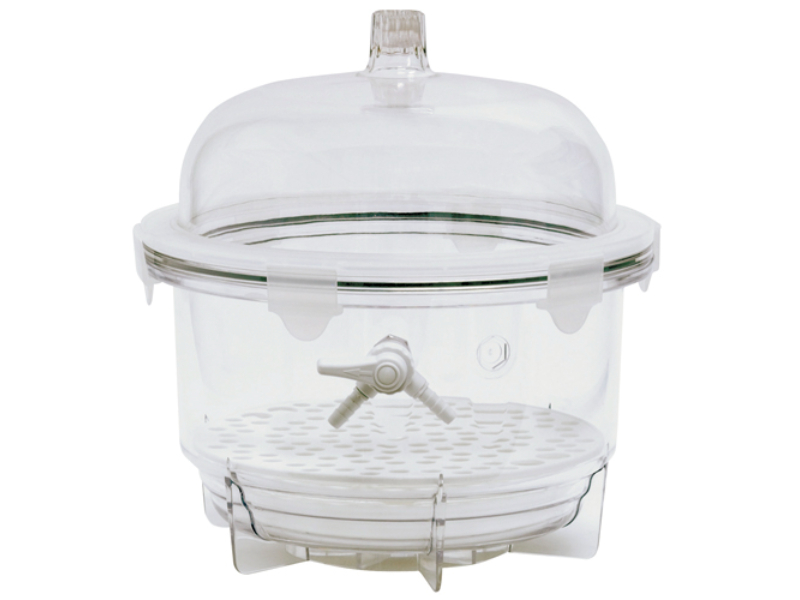
- Type: Clear, round
- Vacuum level: Up to 1 Torr for 72 hours
- Internal volume: 10 L
- Body material: Polycarbonate (transparent)
- Highlights: UV-blocking option, optional vacuum gauge
€432,00 excl. VAT
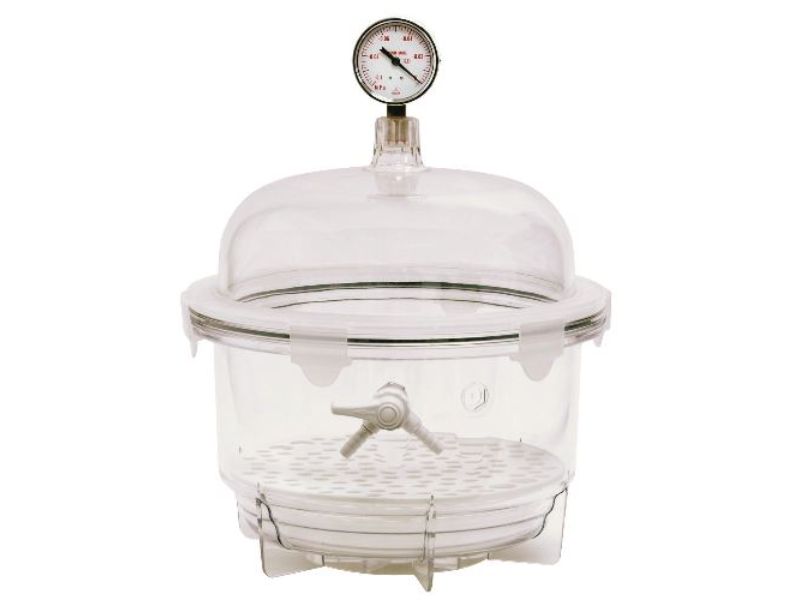
- Type: Clear, round
- Vacuum level: Up to 1 Torr for 72 hours
- Internal volume: 6 L
- Body material: Polycarbonate (transparent)
- Highlights: Analog gauge, UV-blocking option
€480,00 excl. VAT
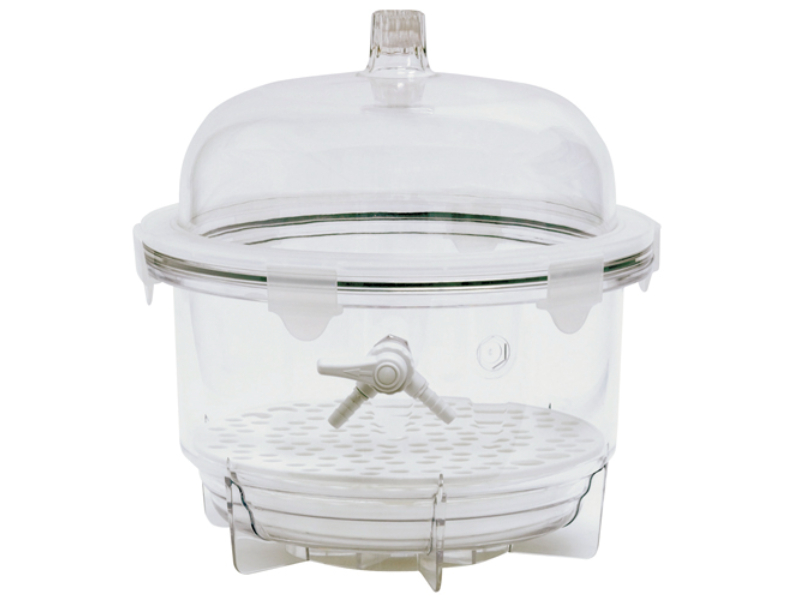
- Type: Clear, round
- Vacuum level: Up to 1 Torr for 72 hours
- Internal volume: 20L
- Body material: Polycarbonate (transparent)
- Highlights: UV-blocking option, optional vacuum gauge
€500,00 excl. VAT
- Type: Clear, round
- Vacuum level: Up to 1 Torr for 72 hours
- Internal volume: 10 L
- Body material: Polycarbonate (transparent)
- Highlights: Analog gauge, UV-blocking option
€525,00 excl. VAT
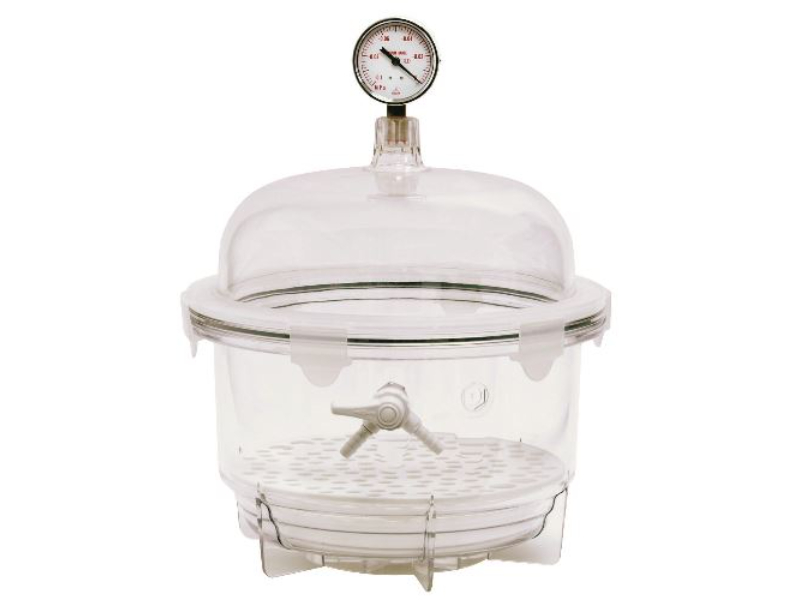
- Type: Clear, round
- Vacuum level: Up to 1 Torr for 72 hours
- Internal volume: 20 L
- Body material: Polycarbonate (transparent)
- Highlights: Analog gauge, UV-blocking option
€600,00 excl. VAT
Cubic Vacuum Models
These square-type vacuum desiccators provide adjustable shelving and sturdy vacuum sealing for long-term storage of hygroscopic materials. The standard VDC models are perfect for environments where visibility and internal configuration flexibility are key.
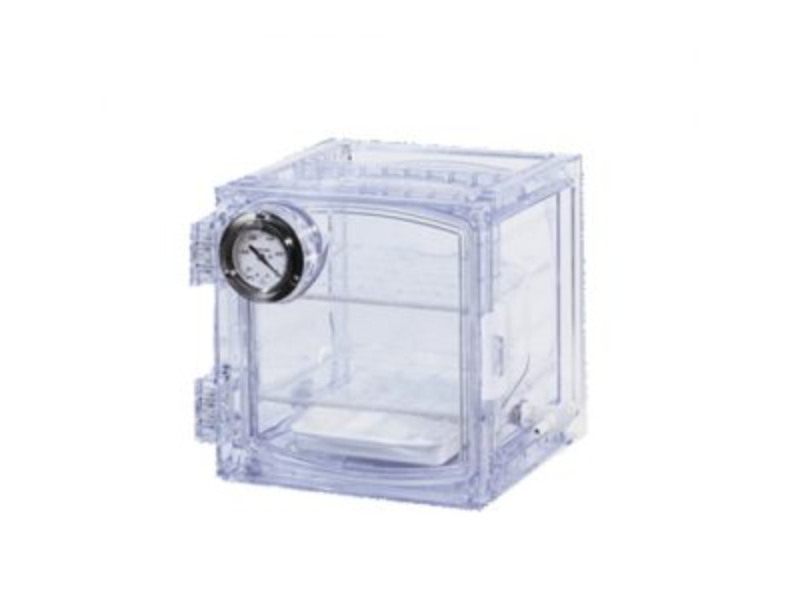
- Type: Clear, cubic
- Vacuum level: Up to 1 Torr for 72 hours
- Internal volume: 11 L
- Body material: Clear PMMA
- Highlights: Analog gauge, safety locker
€1.014,00 excl. VAT
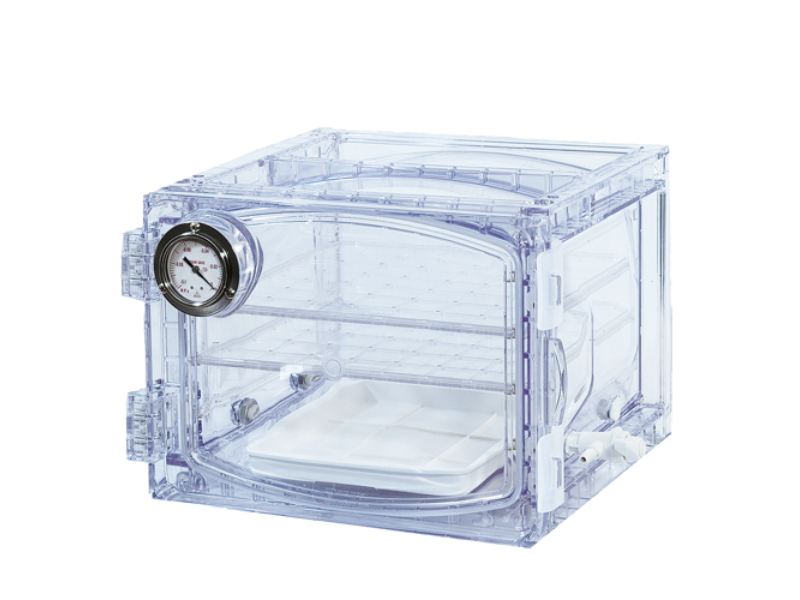
- Type: Clear, cubic
- Vacuum level: Up to 1 Torr for 72 hours
- Internal volume: 23 L
- Body material: Clear PMMA
- Highlights: Analog gauge, safety locker
€1.304,00 excl. VAT
- Type: Clear, cubic
- Vacuum level: Up to 1 Torr for 72 hours
- Internal volume: 35 L
- Body material: Clear PMMA
- Highlights: Analog gauge, safety locker
€1.610,00 excl. VAT
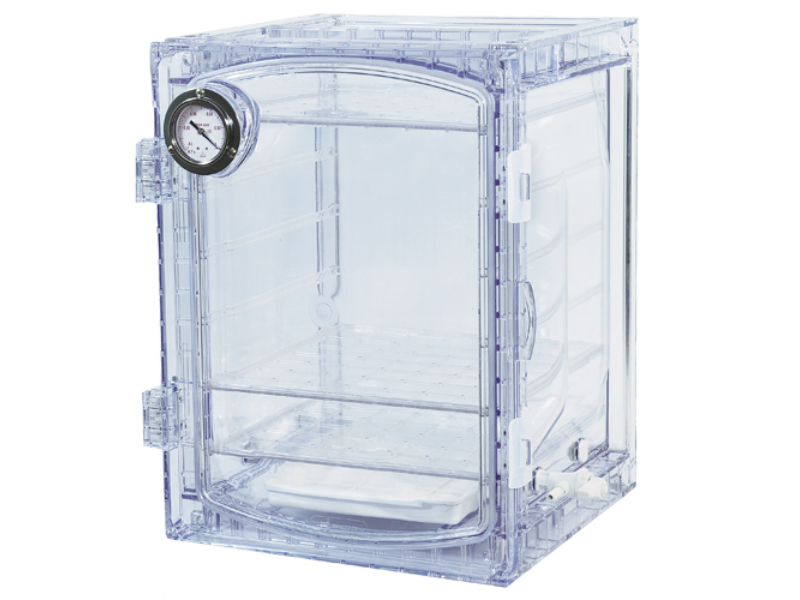
- Type: Clear, cubic
- Vacuum level: Up to 1 Torr for 72 hours
- Internal volume: 45 L
- Body material: Clear PMMA
- Highlights: Analog gauge, safety locker
€2.056,00 excl. VAT
UV-Blocking Cubic Models
Designed for safe storage of light-sensitive substances, the VDC-U series feature UV-blocking polycarbonate windows and strong vacuum retention. With 3-way valves and adjustable shelving, they offer maximum protection and lab-grade functionality in a cubic format.
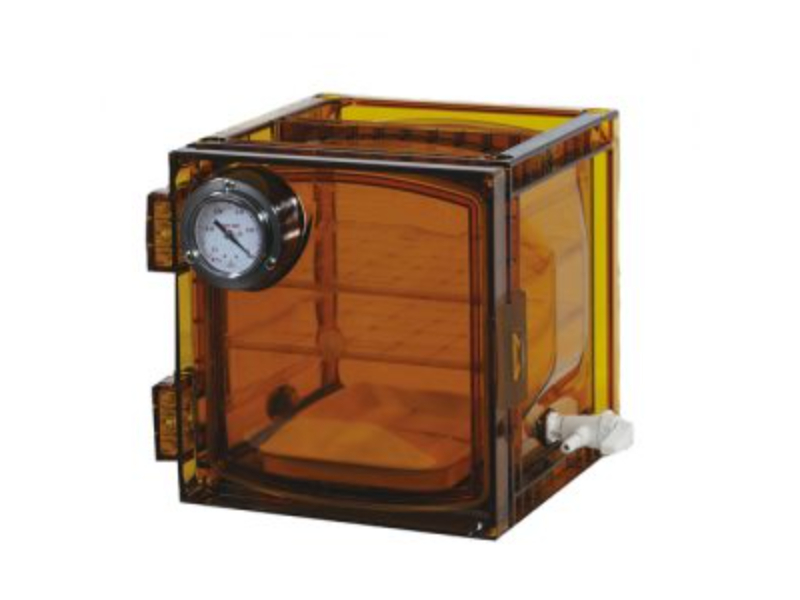
- Type: UV-blocking, cubic
- Vacuum level: Up to 1 Torr for 72 hours
- Internal volume: 11 L
- Body material: UV-blocking PMMA
- Highlights: UV protection, compact size
€1.072,00 excl. VAT
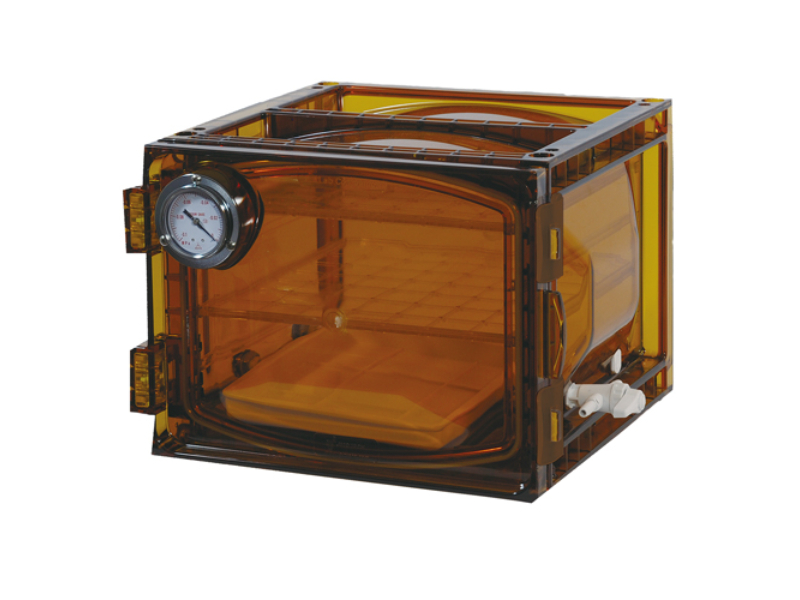
- Type: UV-blocking, cubic
- Vacuum level: Up to 1 Torr for 72 hours
- Internal volume: 23 L
- Body material: UV-blocking PMMA
- Highlights: UV protection, safety locker
€1.326,00 excl. VAT
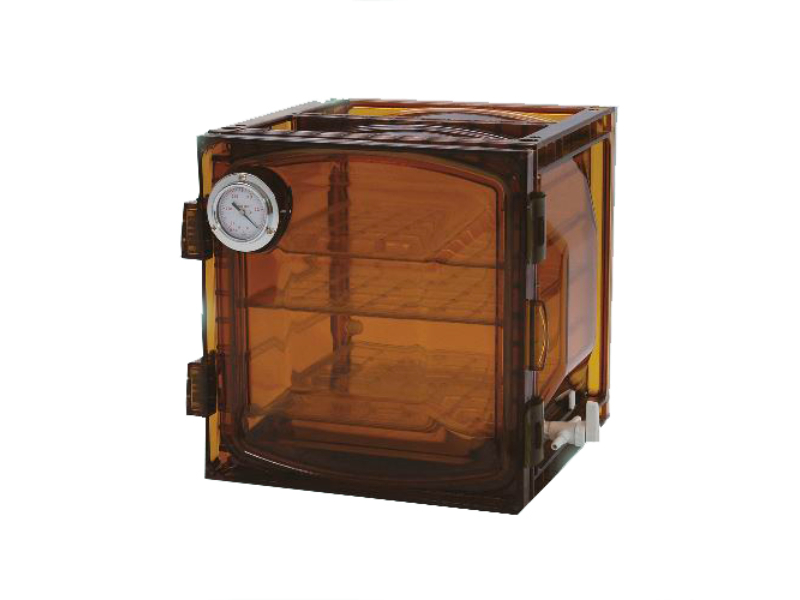
- Type: UV-blocking, cubic
- Vacuum level: Up to 1 Torr for 72 hours
- Internal volume: 35 L
- Body material: UV-blocking PMMA
- Highlights: UV protection, safety locker
€1.682,00 excl. VAT
Cylindrical Vacuum Models
The VDP series combine vertical access with a robust vacuum seal, making them ideal for organized storage of moisture-sensitive samples. Featuring perforated shelves and optional vacuum gauges, these models offer functionality and visual clarity for any quality control or research lab.
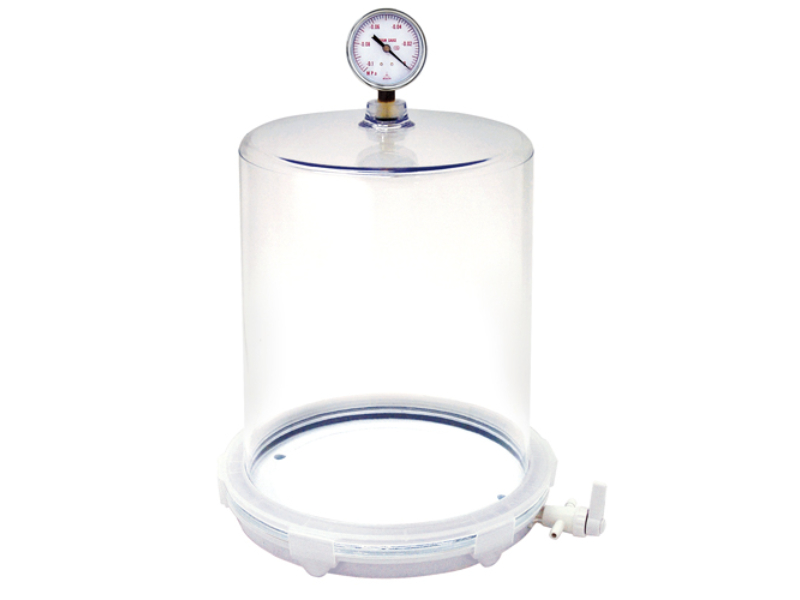
- Type: Clear, cylinder
- Vacuum level: Up to 1 Torr for 72 hours
- Internal volume: 16 L
- Body material: Clear PMMA
- Highlights: Analog gauge, flexible shelving
€630,00 excl. VAT
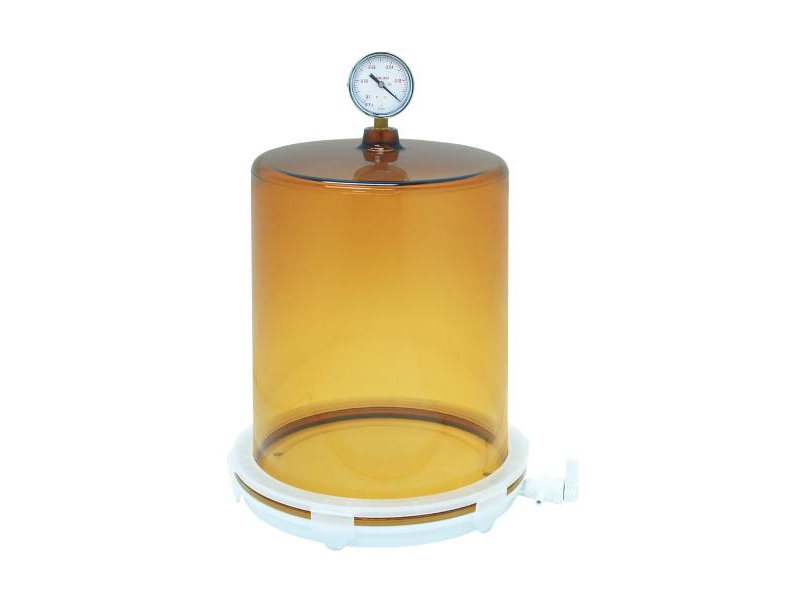
- Type: UV-blocking, cylinder
- Vacuum level: Up to 1 Torr for 72 hours
- Internal volume: 16 L
- Body material: UV-blocking PMMA
- Highlights: Analog gauge, flexible shelf setup
€652,00 excl. VAT
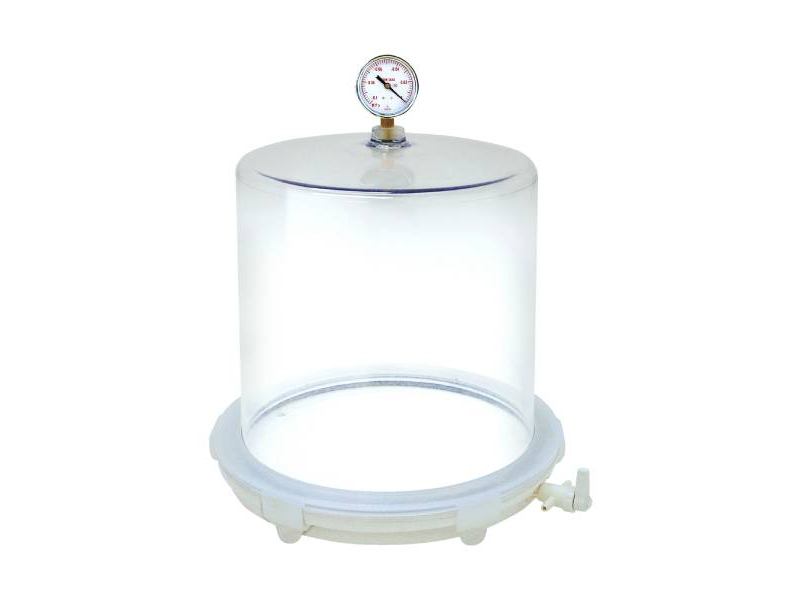
- Type: Clear, cilinder
- Vacuum level: Up to 1 Torr for 72 hours
- Internal volume: 24.9 L
- Body material: Clear PMMA
- Highlights: Analog gauge, flexible shelving
€840,00 excl. VAT
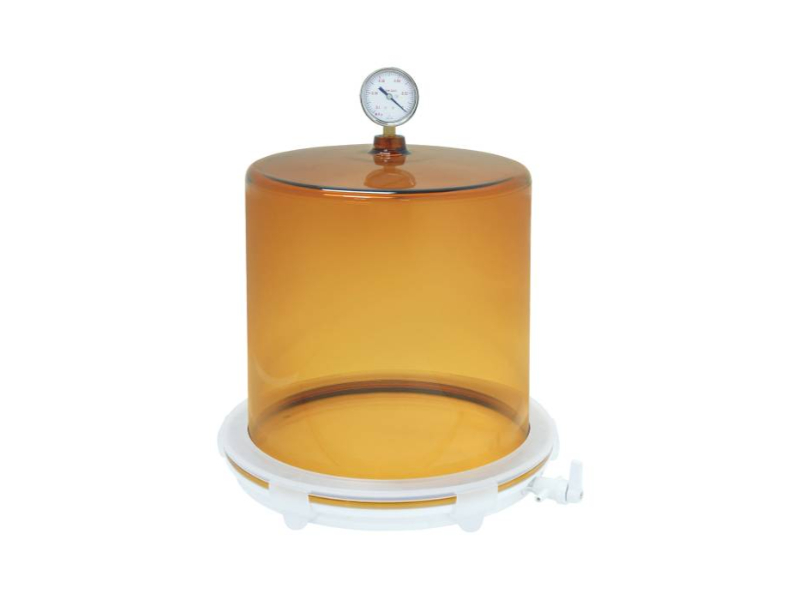
- Type: UV-blocking, cylinder
- Vacuum level: Up to 1 Torr for 72 hours
- Internal volume: 24.9 L
- Body material: UV-blocking PMMA
- Highlights: Analog gauge, flexible shelving
€890,00 excl. VAT
Atmospheric Desiccators
Atmospheric desiccators provide dry storage at ambient pressure using desiccants such as silica gel. They are ideal for routine laboratory storage of moisture-sensitive materials where vacuum is not required. These models offer a simple, cost-effective solution for maintaining a low-humidity environment. Compared to vacuum desiccators, they are easier to operate and require no pump system, making them well suited for daily laboratory use and sample protection.
Cubic desiccators
Our standard SDC range offers a practical solution for the dry storage of sensitive materials. Built from durable transparent polycarbonate, these models include optional UV protection and built-in hygrometers for real-time humidity monitoring. Ideal for general laboratory use, sample protection, and safe reagent storage without vacuum.
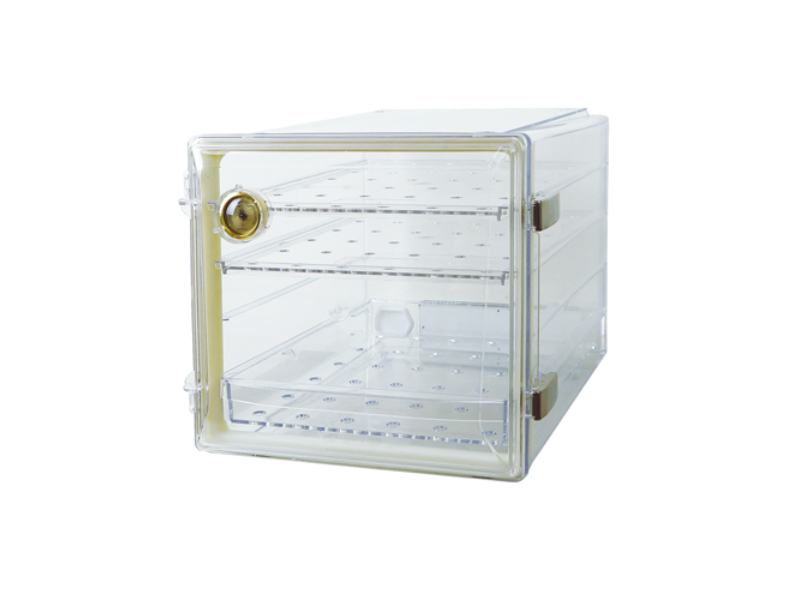
- Type: Clear, cubic
- Internal volume: 35 L
- Drawers: 2 standard, up to 4 total
- Material: Clear PMMA
- Highlights: Hygrometers, desiccant tray
€888,00 excl. VAT
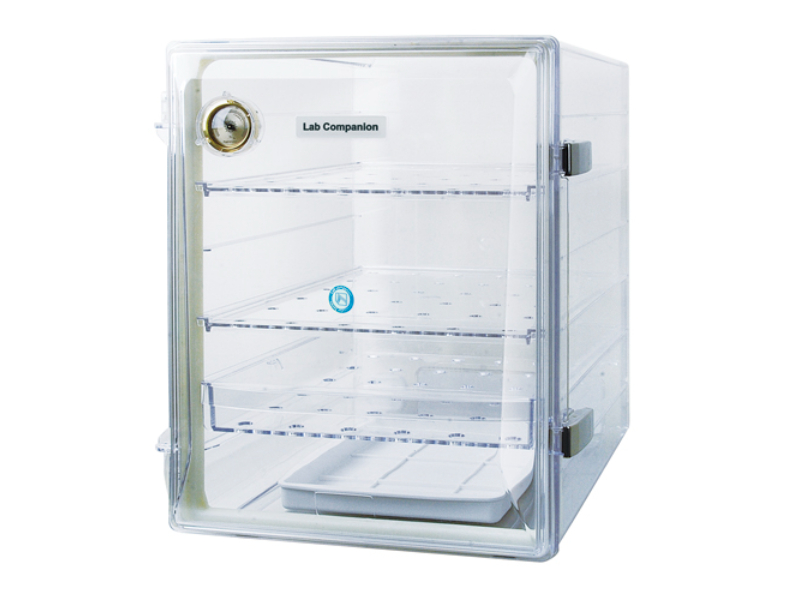
- Type: Clear, cubic
- Internal volume: 50 L
- Drawers: 3 standard, up to 6 total
- Material: Clear PMMA
- Highlights: Hygrometers, desiccant tray
€960,00 excl. VAT
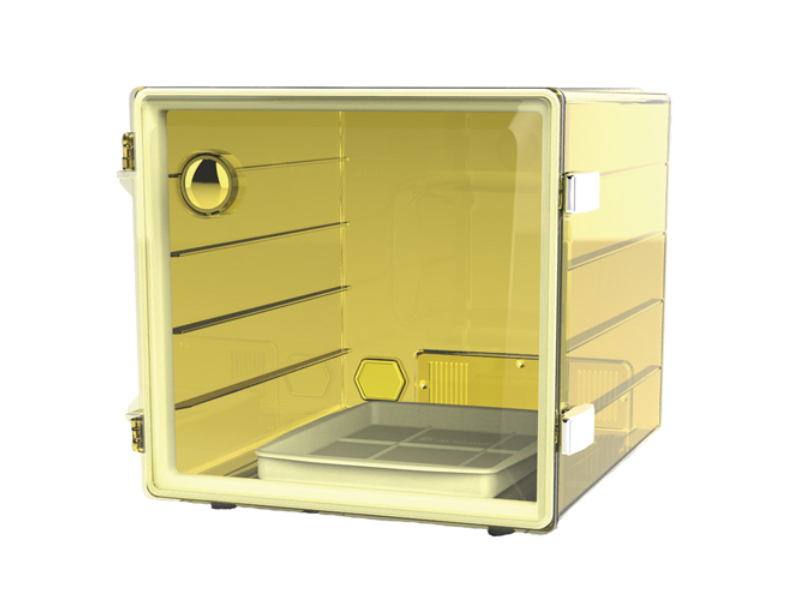
- Type: UV-protected, cubic
- Internal volume: 35 L
- Drawers: 2 standard, up to 4 total
- Material: UV-blocking PMMA
- Highlights: Hygrometers, desiccant tray
€1.000,00 excl. VAT
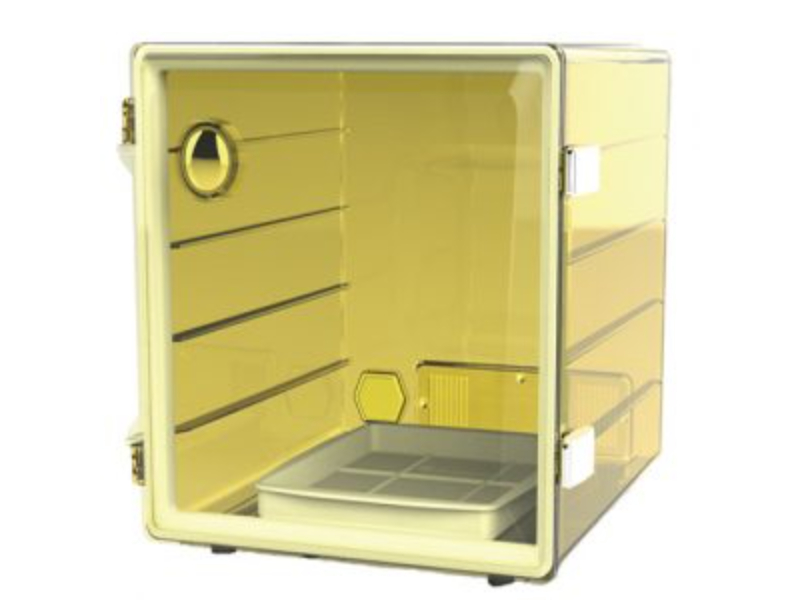
- Type: UV-protected, cubic
- Internal volume: 50 L
- Drawers: 3 standard, up to 6 total
- Material: UV-blocking PMMA
- Highlights: Hygrometers, desiccant tray
€1.080,00 excl. VAT
Auto Desiccators
Need stable humidity without a vacuum pump? Jeiotech DC2 auto-desiccators actively regulate the cabinet humidity to a setpoint, helping protect moisture-sensitive samples day after day. They’re ideal for routine storage of hygroscopic materials, reference standards, and opened reagent containers where “desiccant only” is too unstable. Choose your volume and humidity range, and store with confidence.
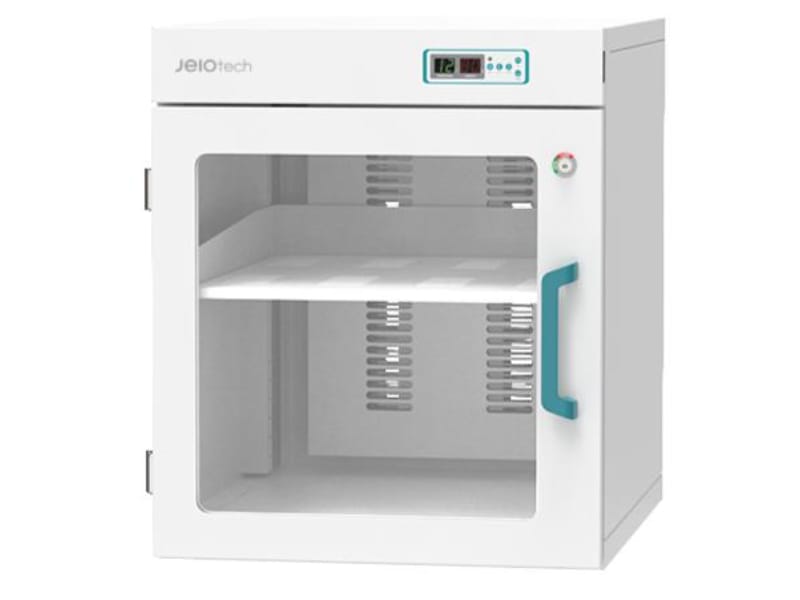
- 120 L internal volume
- 20–60% RH humidity setting (1% resolution)
- Compact and stackable design
- 2 shelves standard (max. 4)
- Optional anti-static (ESD) version
€2.196,00 excl. VAT
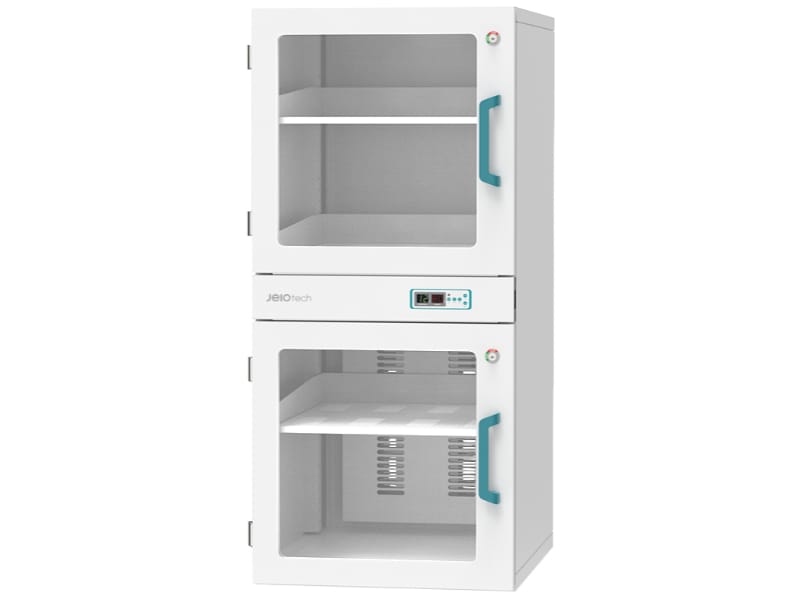
- 240 L internal volume
- 20–60% RH humidity setting (1% resolution)
- Dual-door configuration
- 4 shelves standard (max. 8)
- Optional anti-static (ESD) version
€2.934,00 excl. VAT
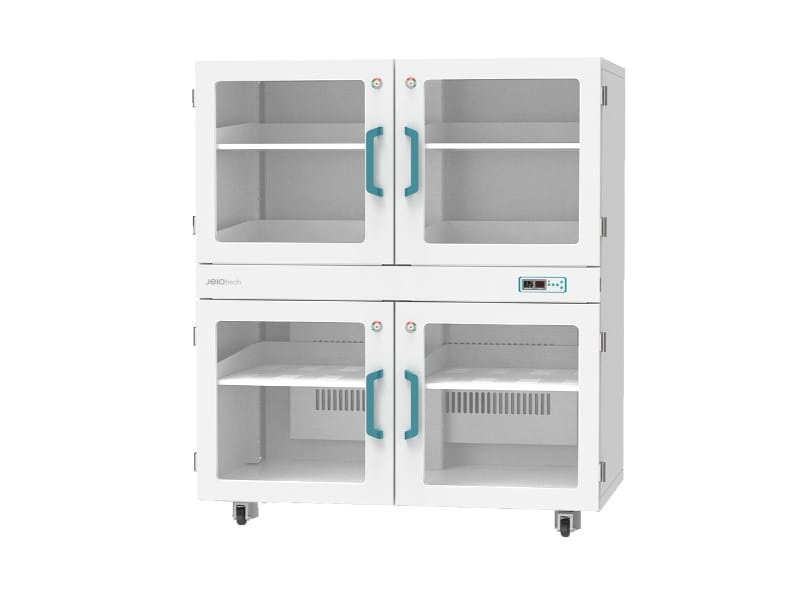
- 480 L internal volume
- 20–60% RH humidity setting (1% resolution)
- 4-door large capacity cabinet
- 8 shelves standard (max. 16)
- Optional anti-static (ESD) version
€4.536,00 excl. VAT
Which Desiccator Type Should You Choose?
Selecting the right desiccator depends on the required moisture protection level, drying speed, and application environment. Below you will find a structured comparison between standard desiccators, vacuum desiccators, and electronic auto-desiccator cabinets to help determine the most suitable solution for your laboratory or technical storage application.
1. Standard Desiccators (Atmospheric Pressure)
Best for: Routine storage of slightly to moderately moisture-sensitive materials.
- Operates at atmospheric pressure
- No vacuum pump required
- Uses desiccant (e.g., silica gel)
- Transparent polycarbonate construction
- Stackable, space-saving design
- Optional UV-blocking models available
Typical applications: Biological and chemical compound storage, medical device storage, general laboratory drying, optical components, QA/QC environments.
Choose this type when: You need simple and reliable moisture protection without vacuum or electronic humidity control.
2. Vacuum Desiccators (VDC, VDR, VDP Series)
Best for: Faster drying and highly moisture-sensitive or reactive materials.
- Maintains vacuum up to 1 Torr (1.33 × 10⁻⁴ MPa)
- Greaseless airtight silicone gasket
- Built-in or optional vacuum gauge (model dependent)
- Enhanced drying speed under reduced pressure
- Gas substitution possible
- Available in cubic, round, and cylindrical designs
Typical applications: Vacuum drying, defoaming processes, liposome production drying, storage of reactive substances, general vacuum experiments.
Choose this type when: Drying speed, oxygen sensitivity, or controlled vacuum conditions are critical.
3. Auto-Desiccator Cabinets (DC / DCL Series)
Best for: Controlled humidity storage without desiccant replacement or vacuum systems.
- Built-in electronic dry unit
- Adjustable humidity range (20–60% RH or 1–10% RH depending on model)
- No desiccant replacement required
- Steel cabinet construction
- Large storage volumes (150–600 L)
- Designed for long-term humidity stabilization
Typical applications: Semiconductor storage, PCB and electronic components, micro-electronics, optical instruments, laboratory reagents.
Choose this type when: Stable, controlled relative humidity is required over extended periods without manual intervention.
Quick Comparison Overview
| Feature | Standard Desiccator | Vacuum Desiccator | Auto-Desiccator Cabinet |
|---|---|---|---|
| Pressure control | No | Yes (up to 1 Torr) | No |
| Humidity control | Passive (desiccant) | Passive + vacuum | Active electronic control |
| Drying speed | Moderate | Fast | Controlled stabilization |
| Maintenance | Replace desiccant | Pump maintenance | Minimal |
| Best suited for | Routine storage | Critical drying | Long-term humidity control |
Related Drying & Environmental Conditioning Solutions
Desiccators are ideal for moisture control and dry storage, but some applications require temperature treatment or combined environmental control. Explore these complementary laboratory solutions:
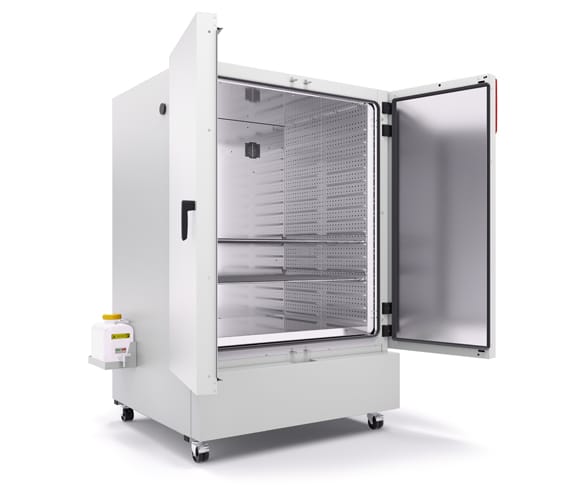
Laboratory Ovens – For temperature-based drying, curing and heat treatment at controlled elevated temperatures.
Vacuum Ovens – Combine heat and reduced pressure for efficient drying of heat-sensitive or solvent-containing samples.
Incubators – Provide stable, gentle temperature environments for conditioning or low-intensity drying applications.
Constant Climate Chambers – Precisely control both humidity and temperature for environmental conditioning and stability testing.
Choosing the right solution depends on whether your focus is moisture removal, temperature drying, or controlled humidity and temperature conditioning.
Frequently asked questions about desiccators
What is the difference between a desiccator and a vacuum desiccator?
A standard desiccator maintains a low-humidity environment using desiccant material, while a vacuum desiccator uses a vacuum pump to remove air and moisture completely. Vacuum desiccators offer more effective protection for highly sensitive samples.
What is the difference between a vacuum desiccator and an auto desiccator?
A vacuum desiccator removes moisture by evacuating air and creating reduced pressure, making it ideal for rapid drying or solvent removal. An auto desiccator, by contrast, does not use a vacuum pump. Instead, it actively regulates the internal humidity to a defined setpoint (for example 20–60% RH), making it better suited for long-term controlled storage of moisture-sensitive samples. Vacuum models are typically used for process drying, while auto desiccators are designed for stable, repeatable humidity control.
Which desiccator is best for storing light-sensitive samples?
UV-blocking models such as the VDR-UG, VDP-UG, or VDC-U series are designed for light-sensitive materials. They feature UV-resistant polycarbonate windows that prevent light degradation during storage.
How long can vacuum be maintained in these desiccators?
Jeiotech vacuum models can maintain a vacuum of 1 Torr for up to 72 hours, thanks to their high-quality sealing and leak-resistant construction.
Do I need a vacuum pump to use a vacuum desiccator?
Yes, an external vacuum pump is required to evacuate air from the chamber. Some models also support inert gas purging via a 3-way valve system.
Are your desiccators stackable?
Yes, many models such as the VDR and VDC series feature stackable designs, which save bench space and increase storage capacity in compact labs.
Can I monitor humidity levels inside the desiccator?
Standard non-vacuum models (SDC series) are equipped with built-in hygrometers. Vacuum models can also be fitted with optional vacuum gauges or external sensors.
When should I choose an auto desiccator instead of a standard desiccator cabinet?
A standard desiccator cabinet relies on passive desiccants such as silica gel, which require regular replacement and do not provide precise humidity control. An auto desiccator electronically controls and maintains the internal humidity, offering greater stability and reduced maintenance. It is recommended when consistent humidity levels are critical, such as for electronic components, reference standards, hygroscopic chemicals, or long-term laboratory storage.
Request a Quote or Technical Recommendation
Tell us your humidity range, capacity needs, and application details, and we will recommend the optimal desiccator solution for your laboratory or industrial environment.