
Glass bead sterilizer
Glass bead sterilizers are compact bench-top devices used for the rapid sterilization of small metal and glass laboratory instruments. They are ideal for forceps, scissors, needles, scalpels and inoculating loops that need to be sterilized frequently during routine laboratory work.
The GBS300 series offers two models: the compact GBS300-L with 150 g glass bead capacity and the taller GBS300-H with 300 g capacity for longer instruments.
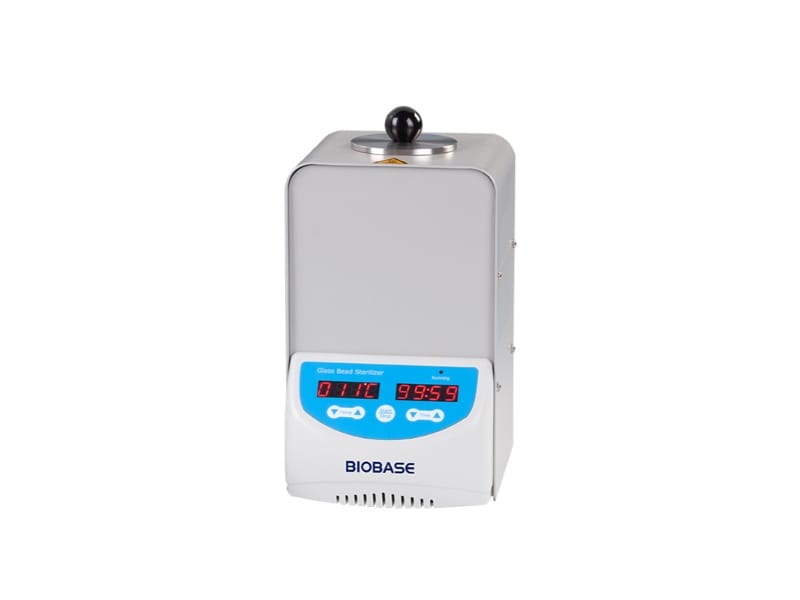
- Glass Beads Capacity: 300 g
- Chamber Size: Ø40 × 140 mm
- Temp. Range: 100–300 °C
- Temp. Accuracy: ±5 °C
- Temp. Precision: 1 °C
€620,00 excl. VAT
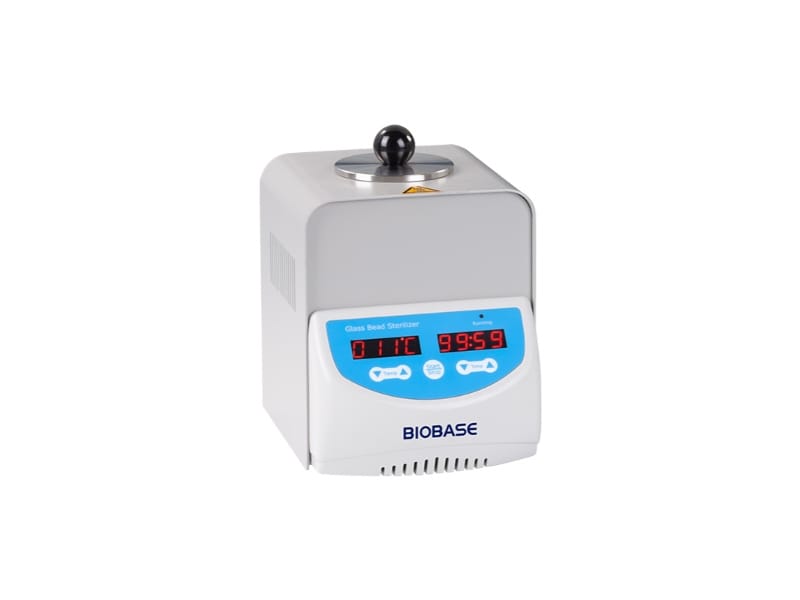
- Glass Beads Capacity: 150 g
- Chamber Size: Ø40 × 80 mm
- Temperature Range: 100–300 °C
- Temperature Accuracy: ±5 °C
- Temperature Precision: 1 °C
€580,00 Original price was: €580,00.€530,00Current price is: €530,00. excl. VAT
Glass bead sterilizer comparison
| Feature | GBS300-L | GBS300-H |
|---|---|---|
| Glass bead capacity | 150 g | 300 g |
| Temperature range | 100–300°C | 100–300°C |
| Chamber size | Ø40 × 80 mm | Ø40 × 140 mm |
| Max. consumption | 120 W | 250 W |
| External dimensions | 176 × 135 × 189.5 mm | 176 × 135 × 249.5 mm |
| Net weight | 2.5 kg | 3.3 kg |
| Best suited for | Compact tools and limited bench space | Longer instruments and deeper insertion |
Summary: choose the GBS300-L for compact tools and space-saving use, or the GBS300-H when you need a deeper chamber and larger glass bead capacity.
Rapid sterilization for small laboratory instruments
A glass bead sterilizer uses high-temperature glass beads to sterilize small instruments by dry heat. The instrument tip is placed into the heated beads, where the high temperature helps eliminate microorganisms on the contact surface.
This makes glass bead sterilizers particularly useful for laboratories that repeatedly sterilize small tools during daily workflows.
Typical applications
Glass bead sterilizers are commonly used for:
- forceps and tweezers
- needles and small scissors
- scalpels and small metal tools
- inoculating loops
- small glass or metal laboratory instruments
They are especially practical in microbiology, tissue culture, research laboratories, teaching labs and routine bench work where fast turnaround is important.
Fast, compact and flame-free
Compared with flame sterilization, a glass bead sterilizer offers a cleaner and more controlled alternative. It avoids open flames, alcohol burners and chemical disinfectants, making it suitable for many laboratory benches and laminar flow work areas.
The compact footprint also makes the GBS300 series easy to position close to the workstation, saving bench space while keeping sterilization within reach.
Temperature range up to 300°C
The GBS300 models offer a temperature range of 100°C to 300°C, with digital control and temperature monitoring. The sterilizer reaches 300°C in approximately 25 minutes and is designed for short sterilization cycles of small instruments.
- temperature range: 100–300°C
- temperature accuracy: ±5°C
- temperature precision: 1°C
- heating time: ≤25 minutes to 300°C
- timer range: 1 minute to 99 hours 59 minutes, or continuous operation
GBS300-L or GBS300-H?
The choice mainly depends on the size and length of the instruments you want to sterilize.
The GBS300-L is the compact version with 150 g glass bead capacity and a chamber size of Ø40 × 80 mm. It is ideal for short instruments and laboratories where bench space is limited.
The GBS300-H has a larger 300 g glass bead capacity and a deeper chamber of Ø40 × 140 mm. This model is better suited for longer tools or users who need more working depth.
Safe and durable construction
The GBS300 series is designed with a stainless steel inner container and lid. It includes over-temperature protection and a high-precision temperature controller for stable operation during routine use.
- stainless steel inner container
- stainless steel lid
- over-temperature protection
- digital temperature control
- glass beads included as standard accessory
Important limitations
A glass bead sterilizer is intended for small solid metal or glass instruments. It is not suitable for plastics, wrapped instruments, porous materials or large instruments that cannot be fully inserted into the heated bead chamber.
For validated sterilization of complete instrument sets, wrapped tools or critical medical instruments, an autoclave remains the preferred solution. A glass bead sterilizer is best used as a fast bench-top sterilization aid for small tools during laboratory workflows.
Choosing the right sterilization solution for laminar flow and biosafety cabinets
Inside laminar flow cabinets and biological safety cabinets, sterilization is not only about effectiveness — maintaining airflow integrity and operator safety is equally important.
A common mistake is using a standard Bunsen burner for every sterilization task. Continuous open flame use can disturb laminar airflow, potentially compromising:
- product sterility
- operator protection
- overall cabinet performance
The safest and most efficient workflow is achieved by selecting the right sterilization technology for each application:
- Infrared loop sterilizers for microbiology loops and inoculation needles — flame-free sterilization with minimal airflow disturbance
- Glass bead sterilizers for scalpels, forceps and small metal instruments used in plant culture, tissue culture and laboratory workflows
- Inverted burners with foot pedal for bottle neck sterilization during media transfer, with reduced airflow disruption because the flame is directed downward and only activated when needed
Combining the correct sterilization equipment with the appropriate laminar flow cabinet or biological safety cabinet helps maintain aseptic conditions while improving laboratory safety and workflow efficiency.