
Type 3 RO Laboratory Water Systems
Type 3 RO water (ASTM D1193) is the foundation of many laboratory water installations. Produced by reverse osmosis, it removes the majority of dissolved salts and contaminants, delivering stable, cost-efficient water for technical laboratory applications and as feed water for higher purity systems.

- Product: central laboratory RO water system (Type 3)
- Feed: tap water (potable water)
- Production rate: up to 52 L/h RO water
- Storage volume: 80 L integrated tank
- Pump type: integrated booster pressure pump
€8.018,00 excl. VAT

- Product: central laboratory RO water system
- Feed: potable tap water
- Available production volumes: 60, 180, 350, 500, 900 or 1200 L/h
- Storage volume: optional 160 L integrated tank
- Pump type: optional integrated distribution pump
€17.000,00 excl. VAT
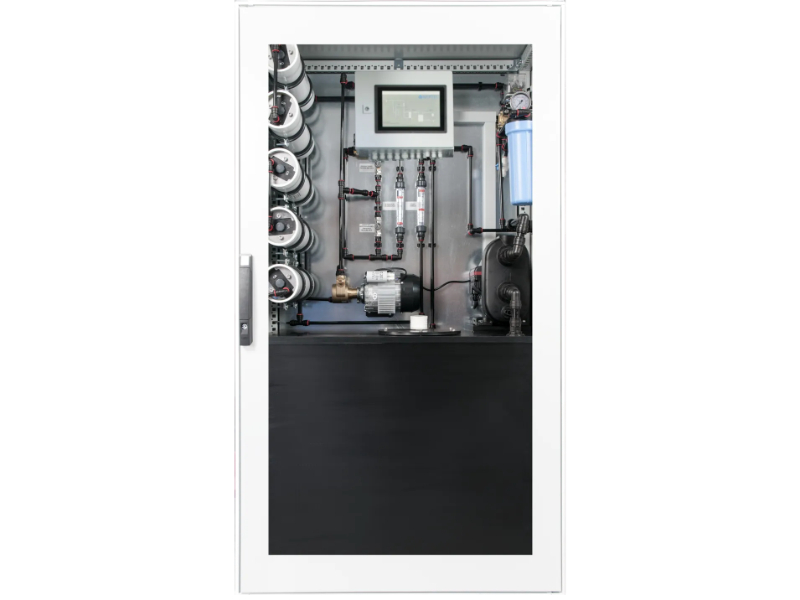
- Product: central laboratory RO water system
- Feed: potable tap water
- Available production volumes: 60, 180, 350 or 500 L/h
- Storage volume: optional 300 L integrated tank
- Pump type: optional integrated distribution pump
€20.000,00 excl. VAT

- Product: laboratory RO production unit (Type 3)
- Feed: tap water (potable water)
- Production rate: 40 L/h RO water
- Storage volume: external tank required
- Pump type: external pump system
€4.835,00 excl. VAT
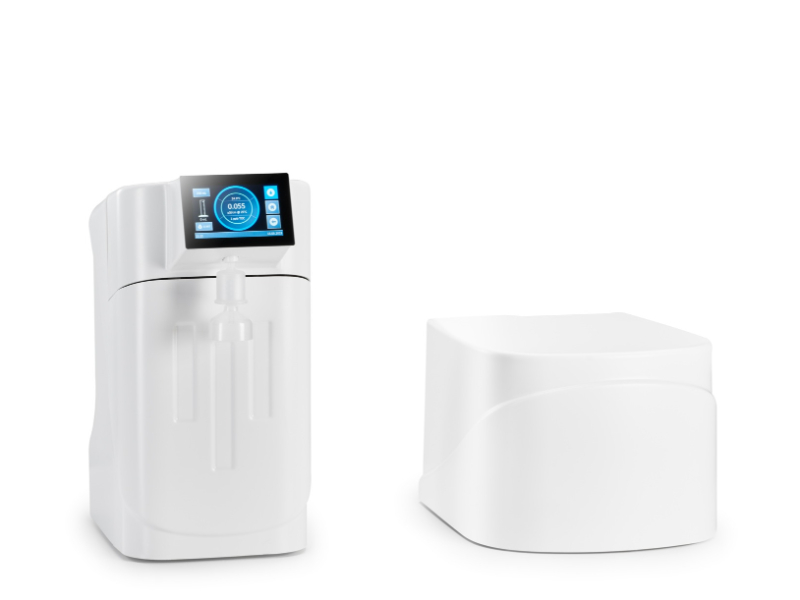
- Product: Type 1 + Type 3 water system
- Feed: potable tap water
- Water quality: 18.2 MΩ·cm ultrapure water + Type 3 pure water
- Production rate: 12 L/h pure water
- Storage volume: 50 L tank
€7.222,00 excl. VAT
- Product: Type 1 + Type 3 water system
- Feed: potable tap water
- Water quality: 18.2 MΩ·cm ultrapure water + Type 3 pure water
- Production rate: 6 L/h pure water
- Storage volume: 50 L tank
€6.903,00 excl. VAT
- Product: laboratory RO water system (Type 3)
- Feed: tap water (potable water)
- Production rate: 12 L/h RO water
- Storage volume: 10 L integrated tank
- Pump type: recirculation pump
€5.445,00 excl. VAT
- Product: laboratory RO water system (Type 3)
- Feed: tap water (potable water)
- Production rate: 6 L/h RO water
- Storage volume: 10 L integrated tank
- Pump type: recirculation pump
€5.135,00 excl. VAT
Laboratory Water Grades According to ASTM D1193
Type 3 water is commonly used as bulk laboratory water and as a stable feed for further purification.
| Water Grade | Main Role | Minimum Resistivity |
|---|---|---|
| Type 1 | Ultrapure water for sensitive analysis | 18 MΩ·cm |
| Type 2 | High-quality general laboratory water | 1.0 MΩ·cm |
| Type 3 | RO bulk water & feed for Type 1 | 4.0 MΩ·cm |
Key Type 3 Parameters
| Parameter | Type III |
|---|---|
| Resistivity | ≥ 4.0 MΩ·cm |
| Conductivity | ≤ 0.25 µS/cm |
| TOC | ≤ 200 µg/L |
| Sodium | ≤ 10 µg/L |
| Chloride | ≤ 10 µg/L |
Important: Type 3 RO systems described here are intended for professional laboratory and technical use — not domestic drinking water purification.
What is Type 3 RO Water?
Type 3 water is produced using reverse osmosis (RO), a membrane-based purification technology that removes 95–99% of dissolved salts, particles and many organic contaminants. It provides stable bulk laboratory water and serves as a reliable feed for higher purity systems.
Typical Laboratory Applications
- Final rinsing of laboratory glassware
- Autoclave feed water
- Humidification systems
- Feed water for Type 1 ultrapure systems
- Feed water for Type 2 pure water systems
Why Reverse Osmosis is Essential in Laboratories
Tap water quality can vary significantly across Belgium, the Netherlands and Luxembourg in terms of hardness, silica and chloride levels. RO stabilizes these parameters, reducing scaling, corrosion and equipment downtime.
System Configurations
- Compact bench-top RO units
- RO systems with storage tanks for peak demand
- Central laboratory water systems with distribution loops
Equipment Compatibility
Type 3 water is frequently used to supply laboratory glassware washers (page coming soon) and constant climate chambers, helping prevent mineral deposits and extending equipment lifespan.
System Sizing and Planning
The correct system depends on daily consumption (L/day), peak flow (L/hour), storage requirements and whether integration into a central infrastructure is required.