
Type 1 Ultrapure Water Systems (ASTM)
Type 1 ultrapure water (ASTM D1193) represents the highest purity class for analytical and life science laboratories. With a resistivity of 18.2 MΩ·cm and extremely low TOC levels, it is essential for sensitive applications such as HPLC, LC-MS, ICP-MS, cell culture and molecular biology.
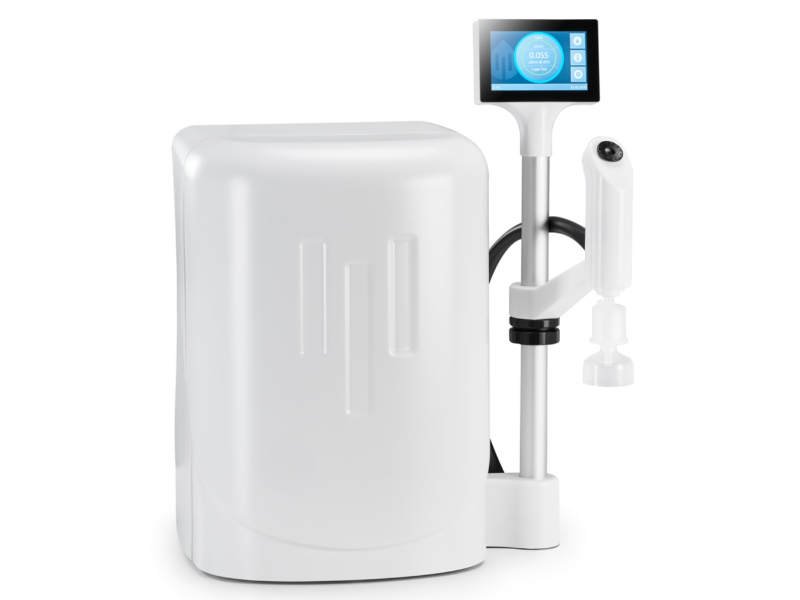
- Product: Type 1 + Type 2 water system
- Feed: potable tap water
- Water quality: 18.2 MΩ·cm ultrapure water + Type 2 pure water
- Production rate: 40 L/h pure water
- Dispensing: integrated adjustable dispenser
€10.218,00 excl. VAT
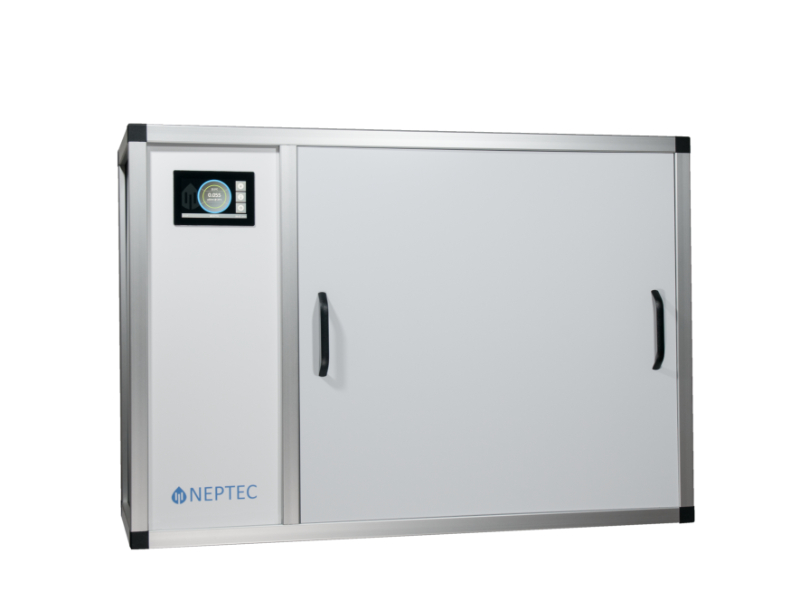
- Product: High-flow Type 1 ultrapure water system
- Feed: pre-treated water (RO, DI, EDI or distilled)
- Water quality: 18.2 MΩ·cm ASTM Type 1
- Flow rate: up to 10 L/min ultrapure water
- Dispensing: dispensing gun with volume dosing
€9.900,00 excl. VAT
Laboratory Water Quality According to ASTM D1193
ASTM D1193 defines four grades of laboratory water. Type I is the most stringent classification and is required for highly sensitive analytical techniques.
| Parameter | Type I | Type II | Type III |
|---|---|---|---|
| Resistivity (min.) | 18 MΩ·cm | 1.0 MΩ·cm | 4.0 MΩ·cm |
| Conductivity (max.) | 0.055 µS/cm | 1.0 µS/cm | 0.25 µS/cm |
| TOC (max.) | 50 µg/L | 50 µg/L | 200 µg/L |
| Sodium (max.) | 1 µg/L | 5 µg/L | 10 µg/L |
| Chloride (max.) | 1 µg/L | 5 µg/L | 10 µg/L |
| Total Silica (max.) | 3 µg/L | 3 µg/L | 500 µg/L |
Conclusion: Type 1 water is mandatory for applications where trace ionic or organic contamination can affect analytical performance.
What is Type 1 Ultrapure Water?
Type 1 water is the highest purity grade defined by ASTM D1193. It is produced using a combination of reverse osmosis (RO), deionization or EDI, UV oxidation (185/254 nm), ultrafiltration and final 0.2 µm filtration to achieve a resistivity of 18.2 MΩ·cm at 25°C.
Typical Applications
- HPLC / UHPLC / LC-MS – eliminates background interference
- ICP-MS / ICP-OES – essential for trace metal analysis
- Molecular biology – RNase/DNase-free applications
- Cell and tissue culture – strict microbiological control
- Preparation of standards and buffers
Purification Technologies Used
- Reverse Osmosis (RO)
- Deionization or Electrodeionization (EDI)
- UV oxidation at 185 nm (TOC reduction)
- UV disinfection at 254 nm
- Ultrafiltration for endotoxin removal
- Final 0.2 µm filtration
Compliance and Standards
Besides ASTM D1193, laboratories in the BeNeLux region may also refer to ISO guidelines, CLSI recommendations and European Pharmacopoeia requirements depending on the application.
Integration in Laboratory Infrastructure
Type 1 water systems can operate as standalone bench units or be integrated into a central laboratory water system with recirculation loops for multi-laboratory buildings.
Related Equipment
High-quality water is also critical for equipment such as laboratory glassware washers (page coming soon) and constant climate chambers to prevent scaling and ensure stable performance.
Solutions for Laboratories in the BeNeLux
Research institutions, hospitals and pharmaceutical companies in Belgium, the Netherlands and Luxembourg rely on validated, reliable ultrapure water systems to maintain analytical accuracy and operational continuity.