
Cubic Vacuum Desiccators
Cubic vacuum desiccators are space-efficient vacuum chambers designed for controlled drying and moisture protection of laboratory samples.
Their rectangular design allows optimized internal tray organization and higher usable capacity compared to round models.
Labman Instruments supplies Jeiotech cubic vacuum desiccators across Europe, offering stackable, multi-tray solutions for research, QA/QC and industrial laboratories.
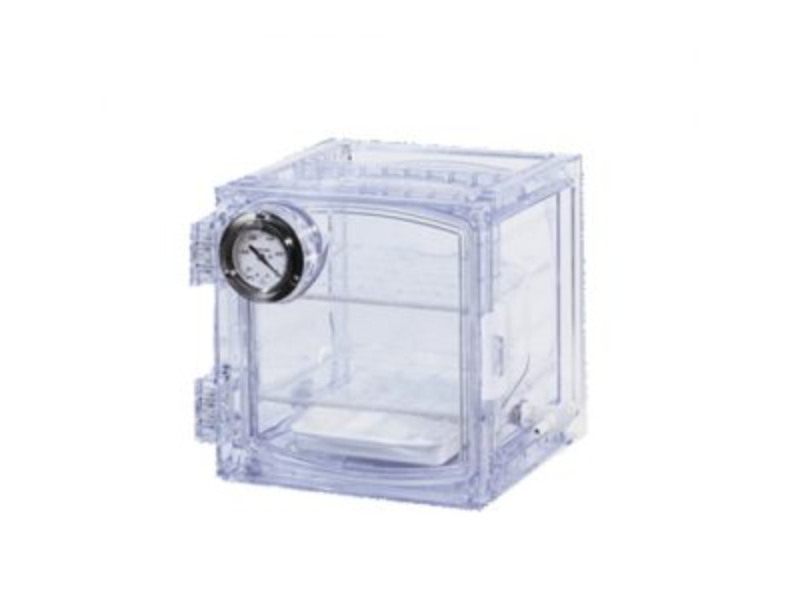
- Type: Clear, cubic
- Vacuum level: Up to 1 Torr for 72 hours
- Internal volume: 11 L
- Body material: Clear PMMA
- Highlights: Analog gauge, safety locker
€980,00 excl. VAT
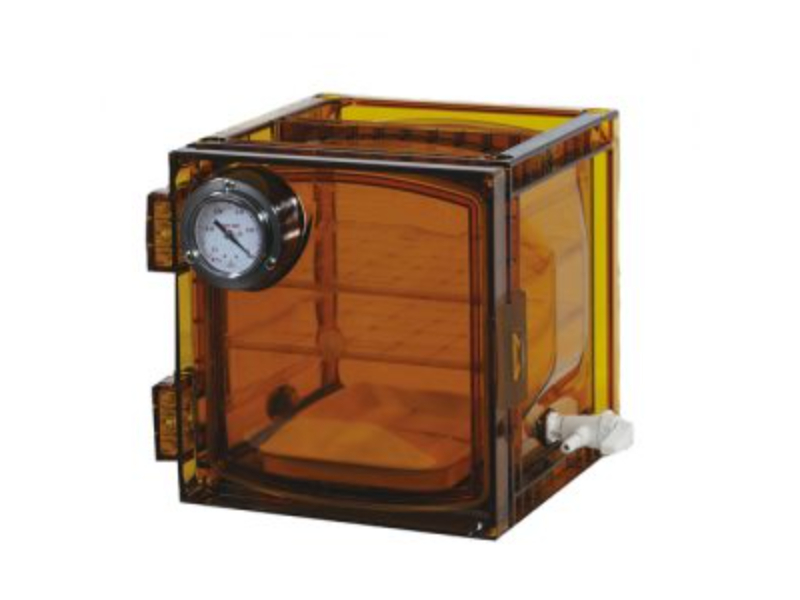
- Type: UV-blocking, cubic
- Vacuum level: Up to 1 Torr for 72 hours
- Internal volume: 11 L
- Body material: UV-blocking PMMA
- Highlights: UV protection, compact size
€1.030,00 excl. VAT
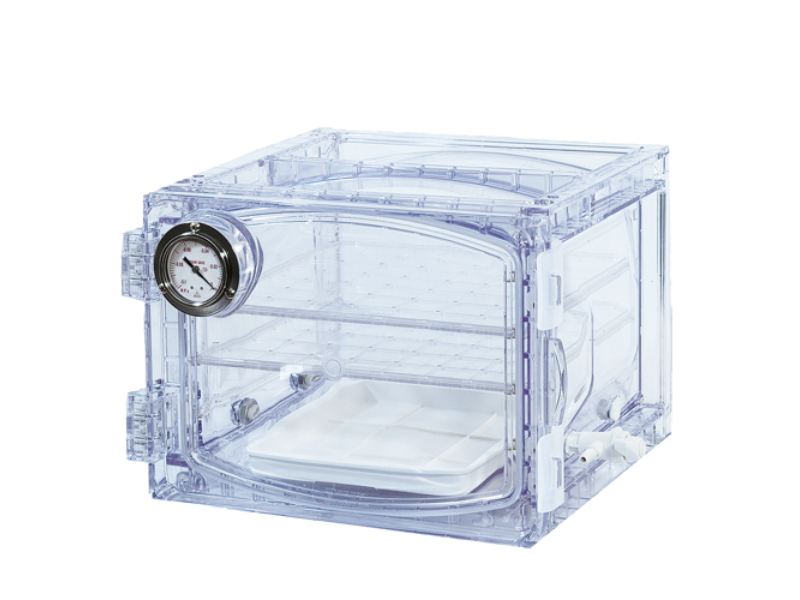
- Type: Clear, cubic
- Vacuum level: Up to 1 Torr for 72 hours
- Internal volume: 23 L
- Body material: Clear PMMA
- Highlights: Analog gauge, safety locker
€1.203,00 excl. VAT
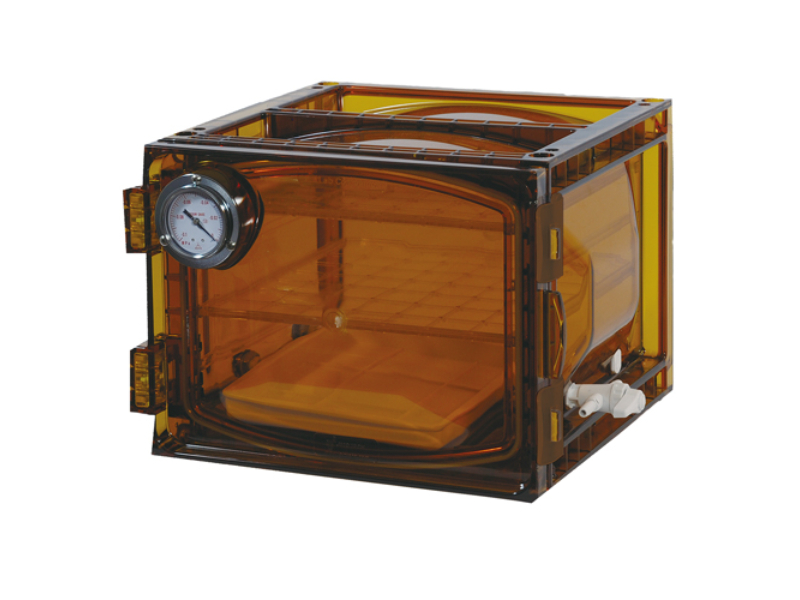
- Type: UV-blocking, cubic
- Vacuum level: Up to 1 Torr for 72 hours
- Internal volume: 23 L
- Body material: UV-blocking PMMA
- Highlights: UV protection, safety locker
€1.220,00 excl. VAT
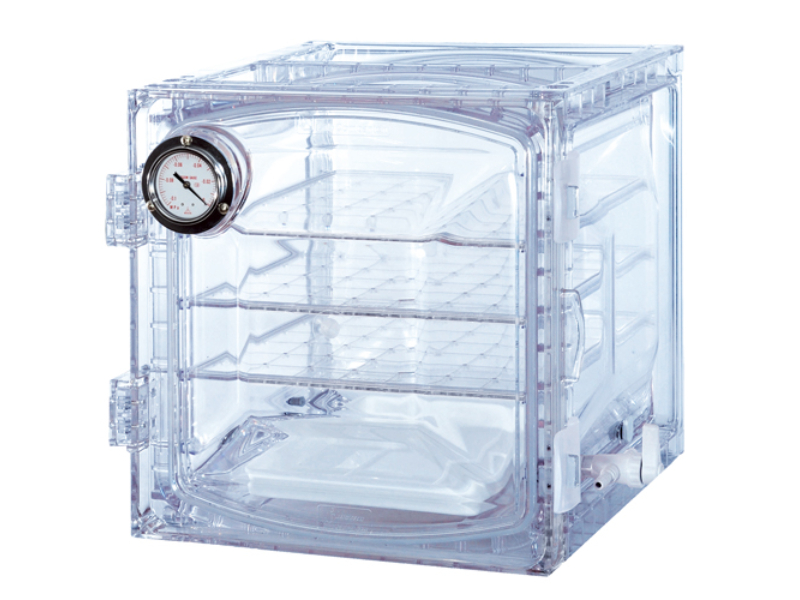
- Type: Clear, cubic
- Vacuum level: Up to 1 Torr for 72 hours
- Internal volume: 35 L
- Body material: Clear PMMA
- Highlights: Analog gauge, safety locker
€1.438,00 excl. VAT
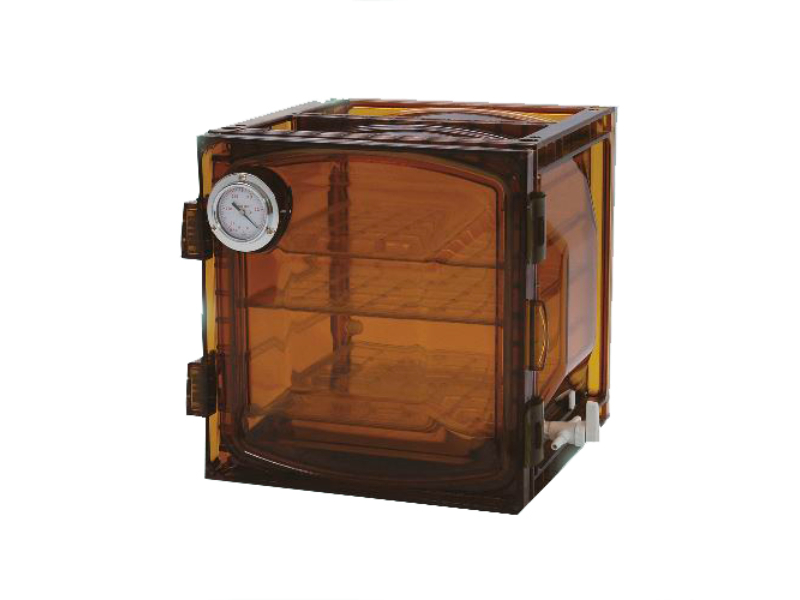
- Type: UV-blocking, cubic
- Vacuum level: Up to 1 Torr for 72 hours
- Internal volume: 35 L
- Body material: UV-blocking PMMA
- Highlights: UV protection, safety locker
€1.500,00 excl. VAT
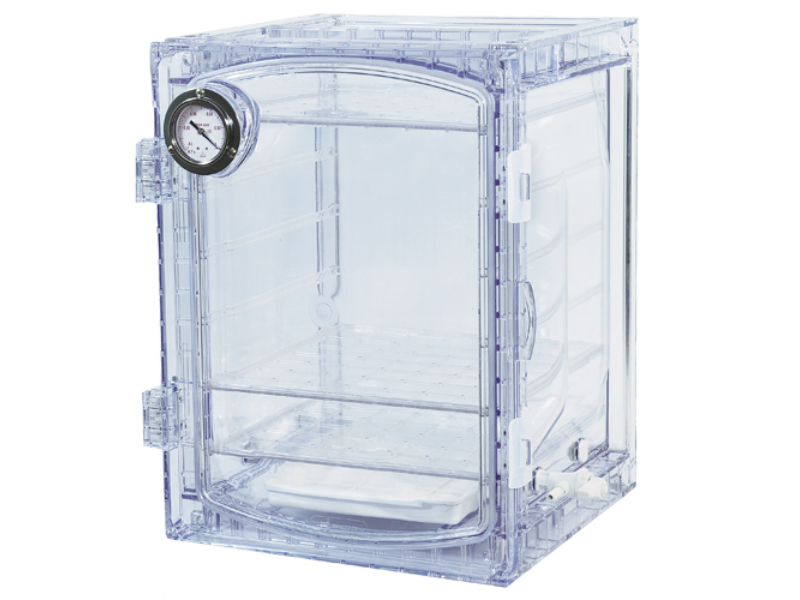
- Type: Clear, cubic
- Vacuum level: Up to 1 Torr for 72 hours
- Internal volume: 45 L
- Body material: Clear PMMA
- Highlights: Analog gauge, safety locker
€1.780,00 excl. VAT
Cubic vs round vacuum desiccators: key differences
Both cubic and round vacuum desiccators operate under reduced pressure up to 1 Torr. The main difference lies in storage efficiency, tray configuration and laboratory space optimization.
Quick comparison overview
| Feature | Cubic vacuum desiccator | Round vacuum desiccator |
|---|---|---|
| Shape | Rectangular chamber | Cylindrical chamber |
| Internal organization | Multiple perforated trays possible | Single main platform |
| Space efficiency | High internal volume utilization | Compact footprint |
| Stackability | Yes (stackable design) | Typically no |
| Best suited for | Organized multi-sample drying | Routine compact drying |
When to choose cubic vacuum desiccators
- Higher sample throughput
- Need for multi-level tray organization
- Optimized laboratory bench space usage
- Structured storage workflows
Optimized vacuum drying with maximum storage efficiency
Cubic vacuum desiccators combine reduced-pressure drying with efficient internal space usage.
Their rectangular design allows multiple perforated trays, enabling better organization and higher sample capacity compared to traditional round models.
Operating at reduced pressure (up to 1 Torr), these desiccators accelerate moisture removal for hygroscopic materials, laboratory reagents, electronic components and sensitive research samples.
The transparent polycarbonate chamber ensures full visibility while maintaining chemical resistance and durability.
Key advantages of cubic vacuum desiccators
- High internal storage efficiency
- Stackable configuration for space optimization
- Integrated vacuum gauge (standard on most models)
- Grease-free airtight silicone gasket sealing
- Suitable for pharmaceutical, electronics and research laboratories
For compact single-sample applications, round vacuum desiccators may be sufficient.
If stable long-term humidity control without vacuum is required, consider auto-desiccator cabinets as an alternative solution.
Related drying and humidity control equipment
Cubic vacuum desiccators are ideal for organized multi-sample vacuum drying. Depending on your workflow, you may also consider:
- Round vacuum desiccators: compact solution for routine drying.
- Cylindrical vacuum desiccators: space-saving vertical models.
- Atmospheric desiccators: passive dry storage without vacuum.
- Auto-desiccator cabinets: electronically controlled humidity storage.
- Vacuum ovens: heat combined with vacuum for accelerated low-temperature drying.
The optimal choice depends on required drying speed, storage volume and humidity stability needs.