
Desiccators
Labman Instruments supplies a complete range of Jeiotech desiccators and vacuum desiccators for laboratories across Europe.
Whether you need routine dry storage, faster drying under vacuum, or stable long-term humidity control, our portfolio covers the most common laboratory use-cases.
Explore vacuum desiccators (round, cubic or cylindrical), atmospheric desiccators for passive dry storage, and auto-desiccator cabinets for electronically controlled relative humidity.
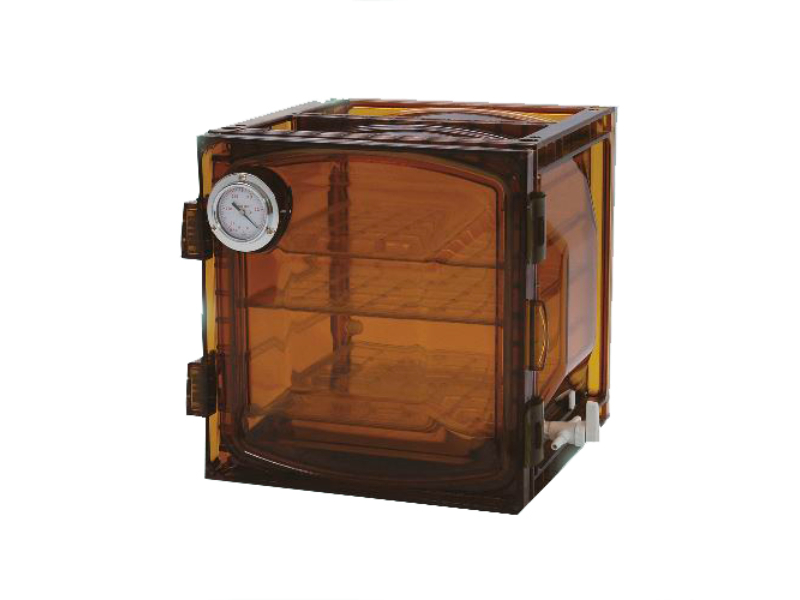
- Type: UV-blocking, cubic
- Vacuum level: Up to 1 Torr for 72 hours
- Internal volume: 35 L
- Body material: UV-blocking PMMA
- Highlights: UV protection, safety locker
€1.500,00 excl. VAT
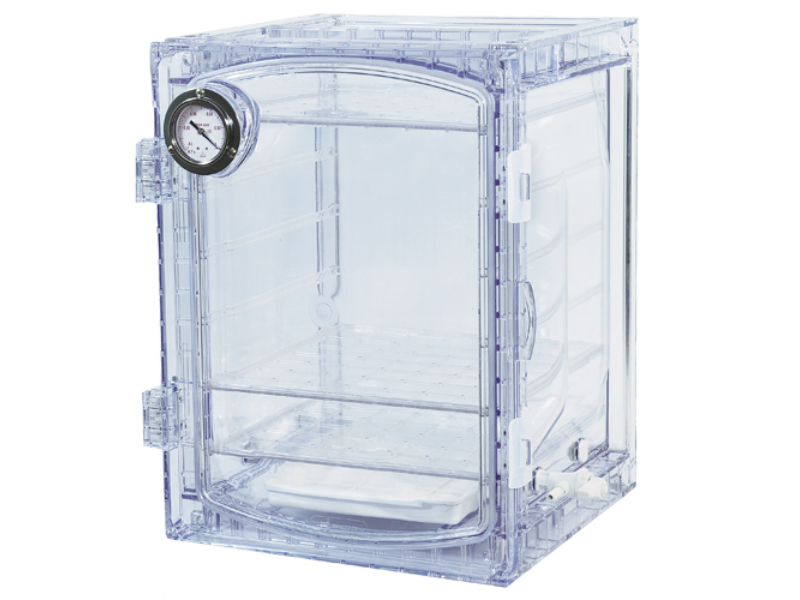
- Type: Clear, cubic
- Vacuum level: Up to 1 Torr for 72 hours
- Internal volume: 45 L
- Body material: Clear PMMA
- Highlights: Analog gauge, safety locker
€1.780,00 excl. VAT
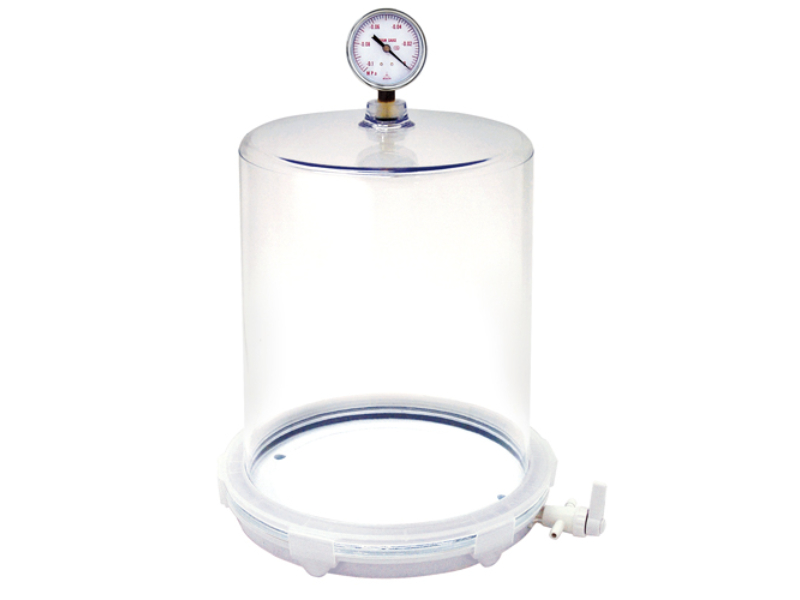
- Type: Clear, cylinder
- Vacuum level: Up to 1 Torr for 72 hours
- Internal volume: 16 L
- Body material: Clear PMMA
- Highlights: Analog gauge, flexible shelving
€630,00 excl. VAT
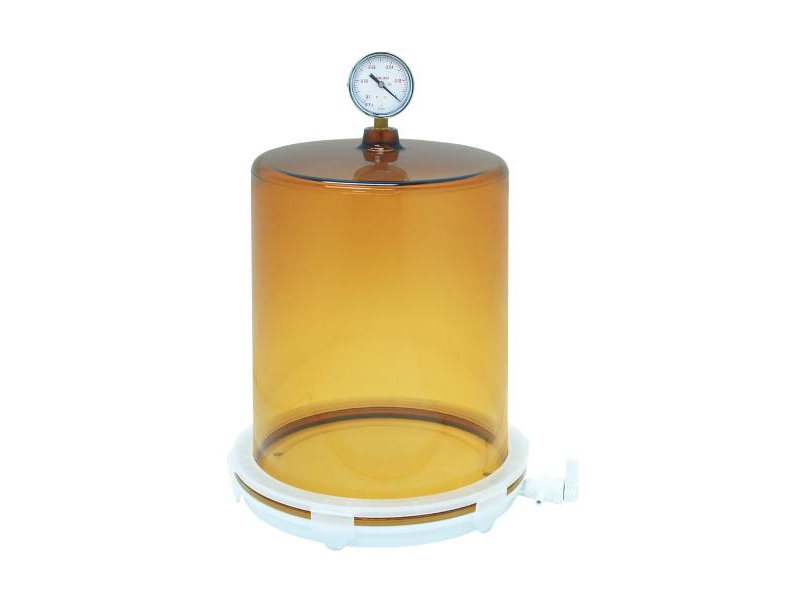
- Type: UV-blocking, cylinder
- Vacuum level: Up to 1 Torr for 72 hours
- Internal volume: 16 L
- Body material: UV-blocking PMMA
- Highlights: Analog gauge, flexible shelf setup
€652,00 excl. VAT
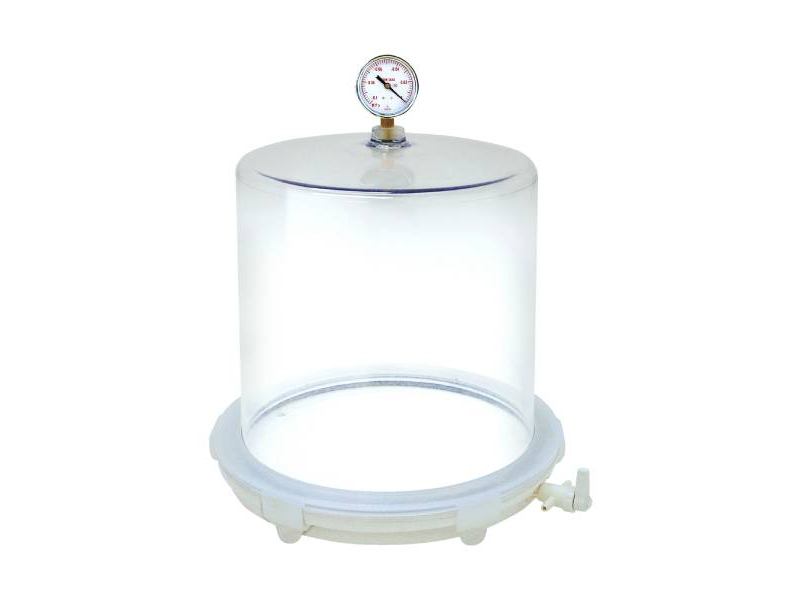
- Type: Clear, cilinder
- Vacuum level: Up to 1 Torr for 72 hours
- Internal volume: 24.9 L
- Body material: Clear PMMA
- Highlights: Analog gauge, flexible shelving
€840,00 excl. VAT
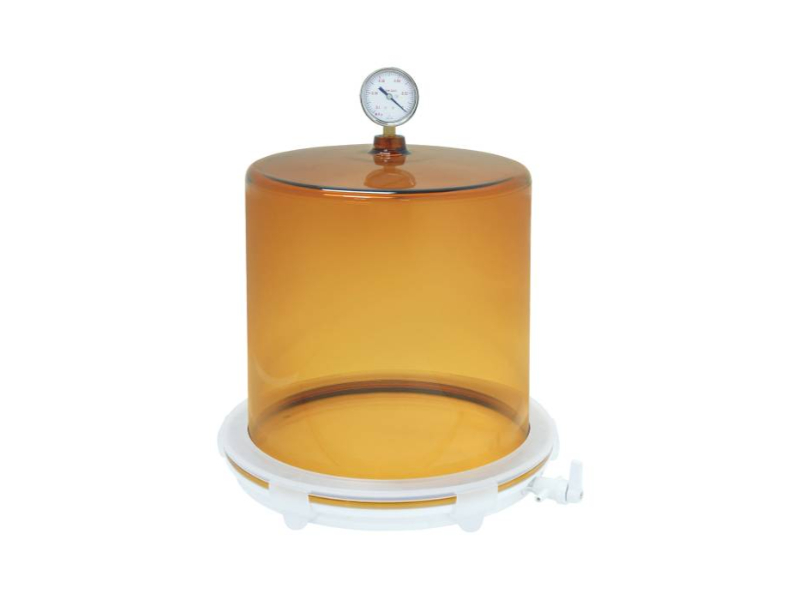
- Type: UV-blocking, cylinder
- Vacuum level: Up to 1 Torr for 72 hours
- Internal volume: 24.9 L
- Body material: UV-blocking PMMA
- Highlights: Analog gauge, flexible shelving
€890,00 excl. VAT
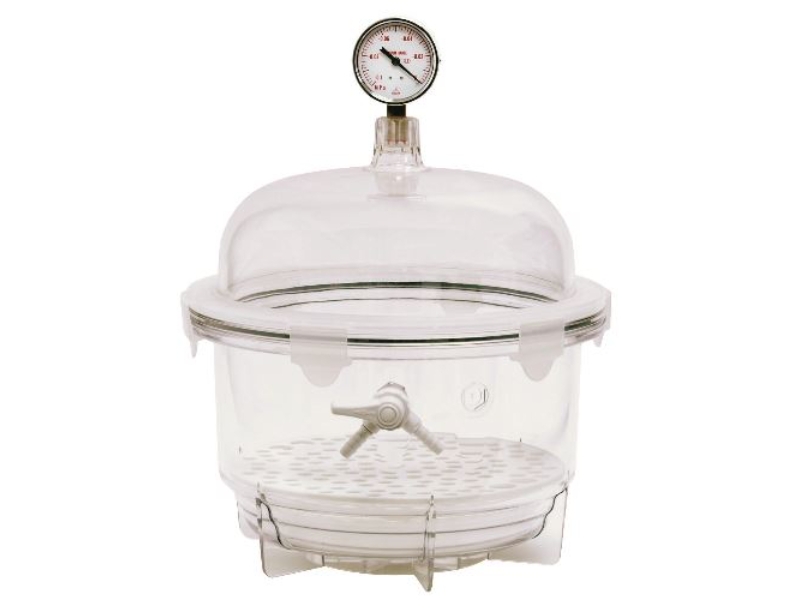
- Type: Clear, round
- Vacuum level: Up to 1 Torr for 72 hours
- Internal volume: 6 L
- Body material: Polycarbonate (transparent)
- Highlights: UV-blocking option, optional vacuum gauge
€388,00 excl. VAT
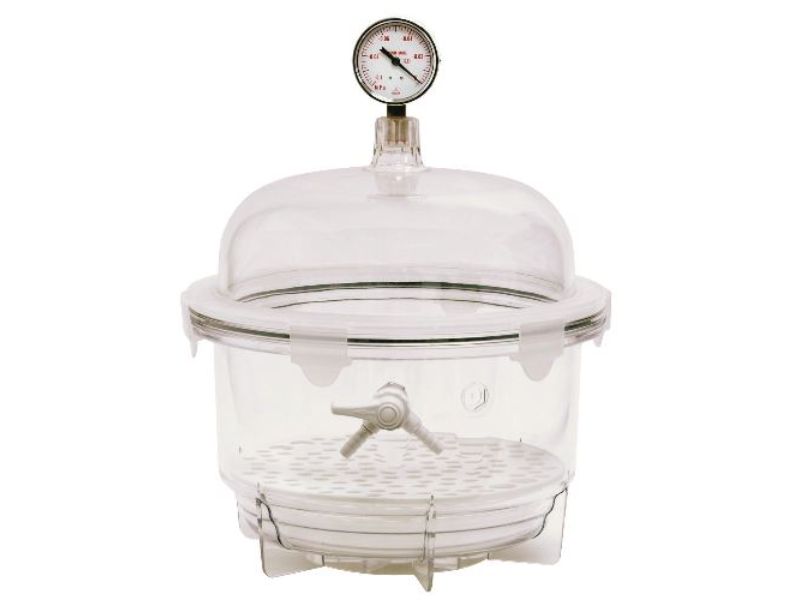
- Type: Clear, round
- Vacuum level: Up to 1 Torr for 72 hours
- Internal volume: 6 L
- Body material: Polycarbonate (transparent)
- Highlights: Analog gauge, UV-blocking option
€480,00 excl. VAT
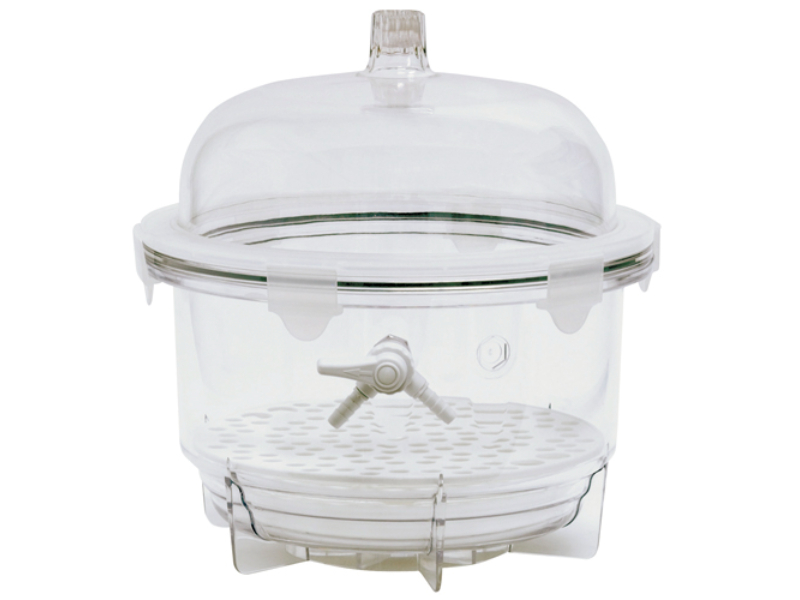
- Type: Clear, round
- Vacuum level: Up to 1 Torr for 72 hours
- Internal volume: 10 L
- Body material: Polycarbonate (transparent)
- Highlights: UV-blocking option, optional vacuum gauge
€432,00 excl. VAT
- Type: Clear, round
- Vacuum level: Up to 1 Torr for 72 hours
- Internal volume: 10 L
- Body material: Polycarbonate (transparent)
- Highlights: Analog gauge, UV-blocking option
€525,00 excl. VAT
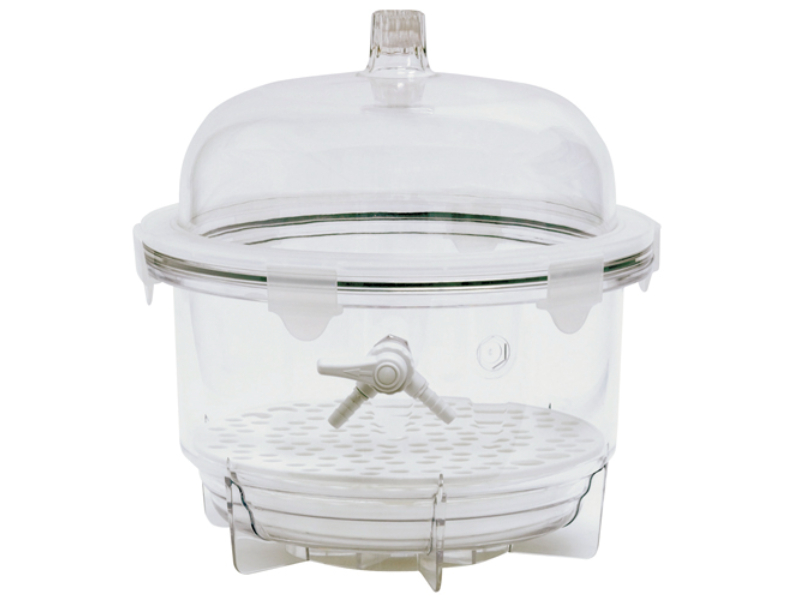
- Type: Clear, round
- Vacuum level: Up to 1 Torr for 72 hours
- Internal volume: 20L
- Body material: Polycarbonate (transparent)
- Highlights: UV-blocking option, optional vacuum gauge
€500,00 excl. VAT
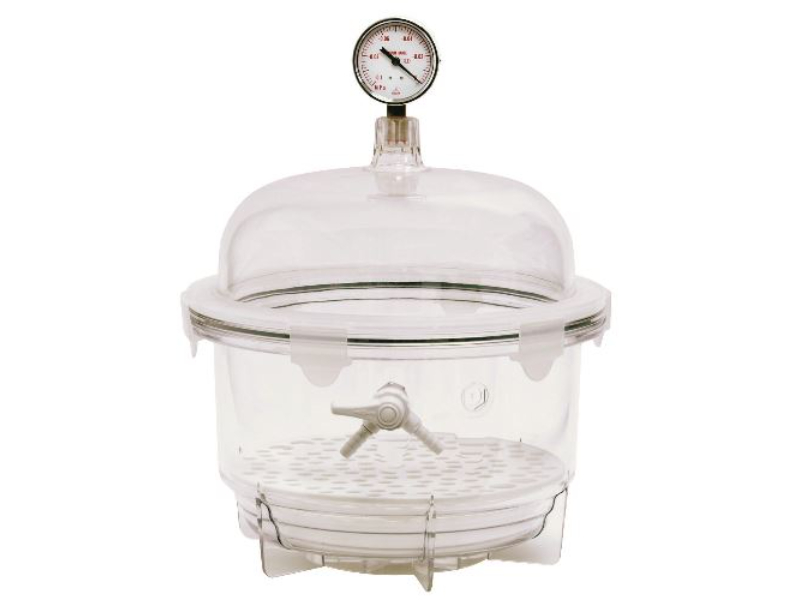
- Type: Clear, round
- Vacuum level: Up to 1 Torr for 72 hours
- Internal volume: 20 L
- Body material: Polycarbonate (transparent)
- Highlights: Analog gauge, UV-blocking option
€600,00 excl. VAT
Which desiccator do you need?
Use the quick guide below to choose the right desiccator type for your lab. The best choice depends on whether you need routine dry storage, faster drying, or stable humidity control without manual desiccant handling.
Quick comparison overview
| Feature | Atmospheric desiccator | Vacuum desiccator | Auto-desiccator cabinet |
|---|---|---|---|
| Pressure control | No (ambient pressure) | Yes (vacuum with external pump) | No (ambient pressure) |
| Humidity control | Passive (desiccant) | Passive + vacuum (faster moisture removal) | Active electronic RH control (setpoint) |
| Drying speed | Moderate | Fast | Stable controlled drying/storage |
| Maintenance | Replace/regenerate desiccant | Pump maintenance + seals | Low manual handling (no silica gel refills) |
| Best suited for | Routine dry storage | Critical drying & moisture-sensitive samples | Long-term storage with constant RH |
| Typical users | QA/QC, research, teaching labs | Pharma, materials, micro-electronics | Electronics, optics, long-term sample storage |
When to choose each type
- Atmospheric desiccator: best for daily dry storage when you want a simple, cost-effective solution.
- Vacuum desiccator: choose when faster drying is required or when moisture sensitivity is critical.
- Auto-desiccator cabinet: ideal when you need a stable RH setpoint for long-term storage without manual desiccant maintenance.
Desiccators for controlled dry storage in laboratories
Desiccators are used to protect moisture-sensitive materials from ambient humidity, dust and contamination during storage.
They are commonly used for hygroscopic chemicals, powders, reagents, reference standards, electronic components, optics, and samples that must remain dry to preserve stability and performance.
In many laboratories, the right desiccator choice depends on the required drying speed and the level of control.
Atmospheric desiccators are a reliable solution for routine dry storage using desiccant.
When applications require faster moisture removal, vacuum desiccators enable accelerated drying by reducing pressure (with an external vacuum pump).
For long-term storage with a constant RH setpoint, auto-desiccator cabinets provide electronically controlled humidity without manual silica gel handling.
Typical applications
- Storage of hygroscopic chemicals, powders and reagents
- Dry storage for QC/QA reference materials
- Protection of electronics, PCBs, sensors and micro-components
- Storage of optics and precision instruments
- General laboratory sample protection in research and teaching labs
Labman Instruments supports laboratories across Europe with selection guidance, configuration, and documentation.
If you are unsure which desiccator type fits your application, share your sample type and target conditions and we will recommend the most suitable model and volume.
Alternatives for drying and conditioning samples
Desiccators are ideal for dry storage and moisture protection at ambient temperature.
If your application requires temperature drying, controlled heating, or accelerated drying under reduced pressure, other lab equipment may be a better fit:
- Laboratory ovens: temperature-based drying for glassware, materials and routine sample drying.
- Vacuum ovens: faster drying at lower temperatures by combining heat with vacuum conditions.
- Incubators: gentle temperature conditioning for sensitive samples where aggressive drying is not suitable.
- Constant climate chambers: conditioning samples with controlled temperature and humidity for stability studies and material testing.
Use desiccators when you mainly need humidity protection. Choose ovens, incubators or climate chambers when temperature and/or programmed humidity conditioning is required.