
Atmospheric Desiccators
Atmospheric desiccators provide reliable dry storage at ambient pressure for moisture-sensitive laboratory materials.
They use desiccant to passively reduce humidity, making them a practical choice for routine sample protection without the need for a vacuum pump.
Labman Instruments supplies Jeiotech atmospheric desiccators across Europe in different volumes and formats, ideal for daily laboratory use in research, QA/QC and teaching environments.
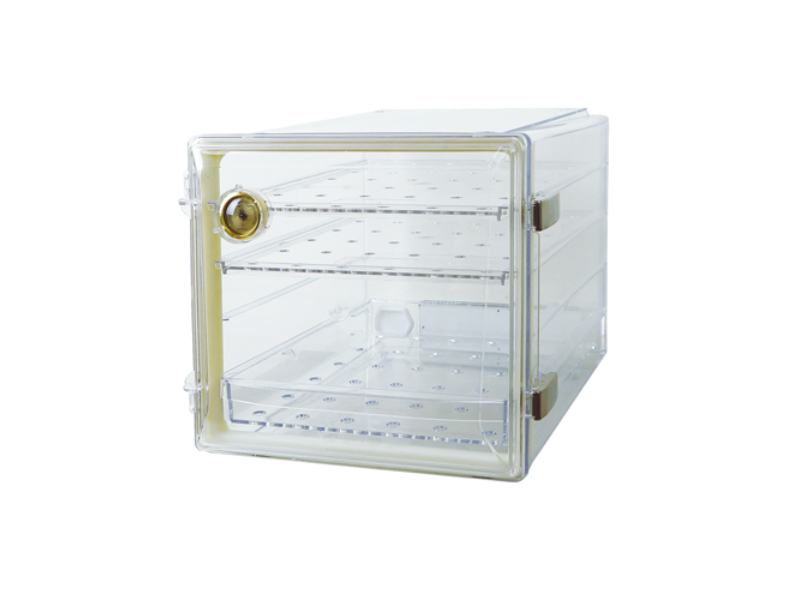
- Type: Clear, cubic
- Internal volume: 35 L
- Drawers: 2 standard, up to 4 total
- Material: Clear PMMA
- Highlights: Hygrometers, desiccant tray
€888,00 excl. VAT
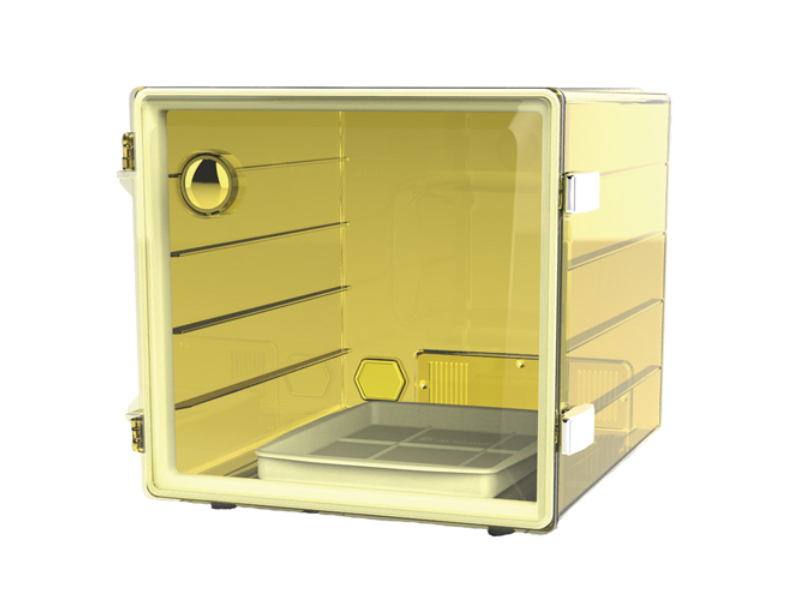
- Type: UV-protected, cubic
- Internal volume: 35 L
- Drawers: 2 standard, up to 4 total
- Material: UV-blocking PMMA
- Highlights: Hygrometers, desiccant tray
€1.000,00 excl. VAT
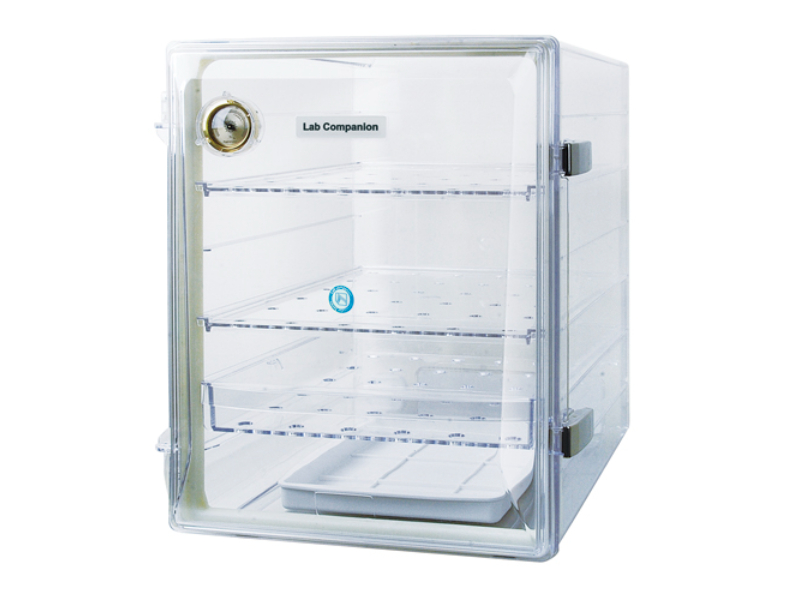
- Type: Clear, cubic
- Internal volume: 50 L
- Drawers: 3 standard, up to 6 total
- Material: Clear PMMA
- Highlights: Hygrometers, desiccant tray
€960,00 excl. VAT
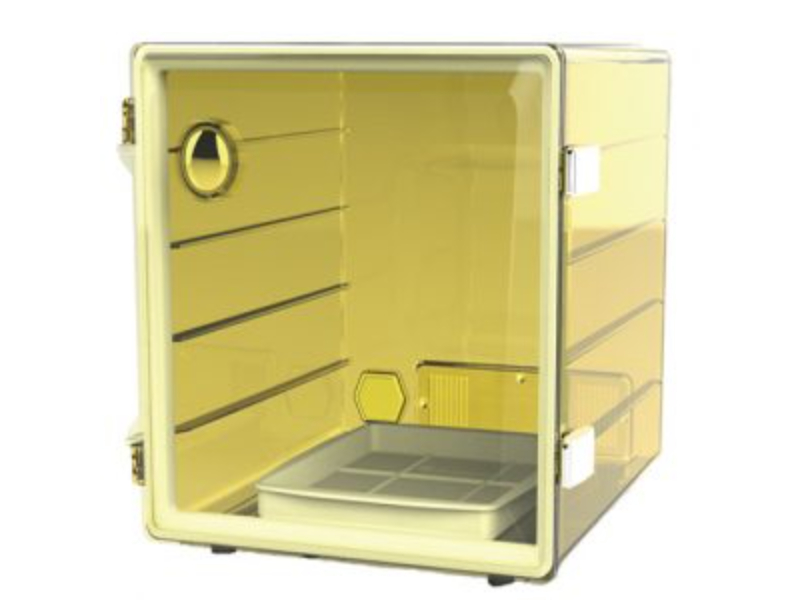
- Type: UV-protected, cubic
- Internal volume: 50 L
- Drawers: 3 standard, up to 6 total
- Material: UV-blocking PMMA
- Highlights: Hygrometers, desiccant tray
€1.080,00 excl. VAT
Atmospheric desiccator vs vacuum desiccator vs auto-desiccator cabinet
Atmospheric desiccators are designed for simple, cost-effective dry storage. If your application requires faster drying or stable humidity at a fixed setpoint, vacuum or electronic humidity control may be more suitable.
Quick comparison overview
| Feature | Atmospheric desiccator | Vacuum desiccator | Auto-desiccator cabinet |
|---|---|---|---|
| Pressure control | No (ambient pressure) | Yes (vacuum with external pump) | No (ambient pressure) |
| Humidity control | Passive (desiccant) | Passive + vacuum (faster moisture removal) | Active electronic RH control (setpoint) |
| Drying speed | Moderate | Fast | Stable controlled storage/drying |
| Maintenance | Replace/regenerate desiccant | Pump maintenance + seals | Low manual handling (no silica gel refills) |
| Best suited for | Routine dry storage | Critical drying & very sensitive samples | Long-term storage with constant RH |
Best use-cases for atmospheric desiccators
- Daily dry storage of hygroscopic chemicals and reagents
- Protecting samples from ambient humidity and dust
- Simple, low-cost solution without vacuum equipment
Atmospheric desiccators for routine dry storage in laboratories
Atmospheric desiccators are widely used for protecting laboratory materials against moisture during storage.
They operate at ambient pressure and use desiccant to reduce humidity inside the chamber, helping to maintain sample integrity and reduce moisture-related degradation.
In daily laboratory workflows, atmospheric desiccators are an efficient solution for storing hygroscopic chemicals, powders, reagents, reference standards, and materials that must remain dry.
Because no external vacuum pump is required, they are easy to implement, cost-effective, and well suited for research labs, QA/QC departments and teaching facilities across Europe.
Typical applications
- Storage of hygroscopic reagents and powders
- Dry storage for QC/QA reference materials
- General sample protection in research and teaching labs
- Moisture protection of sensitive components and instruments
If your application requires faster drying than passive desiccant storage can provide, consider a vacuum desiccator.
For long-term storage with a stable RH setpoint and minimal manual maintenance, an auto-desiccator cabinet is often the best solution.
When atmospheric desiccators are not enough
Atmospheric desiccators are ideal for passive dry storage at ambient temperature.
If your process needs faster moisture removal, controlled temperature drying, or programmable humidity conditioning, other lab equipment may be a better fit:
- Vacuum desiccators: faster drying by reducing pressure (requires external vacuum pump).
- Auto-desiccator cabinets: electronically controlled RH for stable long-term storage without manual silica gel refills.
- Laboratory ovens: temperature drying for routine laboratory processes.
- Vacuum ovens: heat + vacuum for accelerated low-temperature drying.
- Constant climate chambers: controlled temperature and humidity for conditioning and stability workflows.
Choose atmospheric desiccators when humidity protection is the main goal and a simple passive solution is sufficient.