
CLRW / CLSI Clinical Laboratory Water
CLRW (Clinical Laboratory Reagent Water) is defined by the CLSI (Clinical and Laboratory Standards Institute) for use in clinical diagnostic laboratories. It provides stable chemical and microbiological quality required for automated analyzers and patient testing environments.
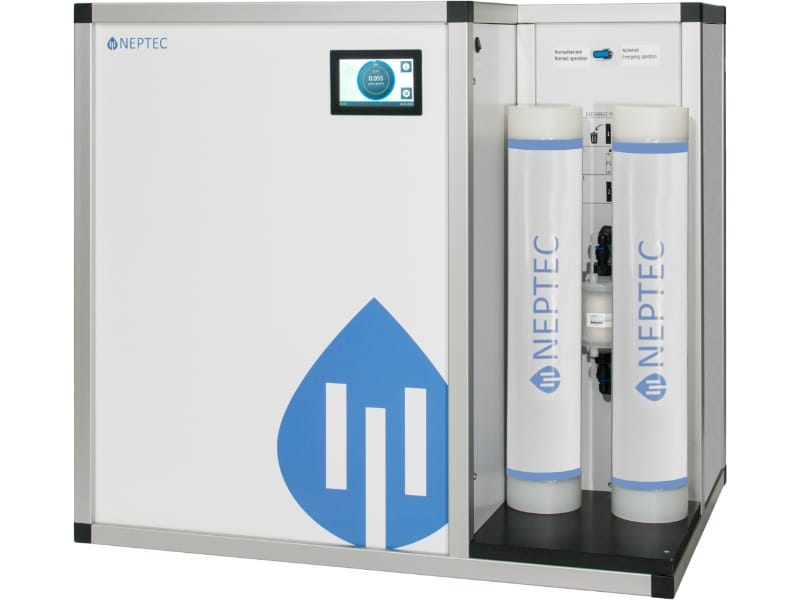
- Product: CLSI Water System
- Feed: Tap / potable water
- Production rate: 52 L/h (20 °C)
- Storage volume: 80 L integrated tank
- Pump type: Integrated booster pump
€7.720,00 excl. VAT

- Product: central Type 2 laboratory water system (RO + CEDI)
- Feed: potable tap water
- Available production volumes: 60, 180, 350 or 500 L/h
- Storage volume: optional 160 L integrated tank
- Pump type: optional integrated distribution pump
€25.000,00 excl. VAT
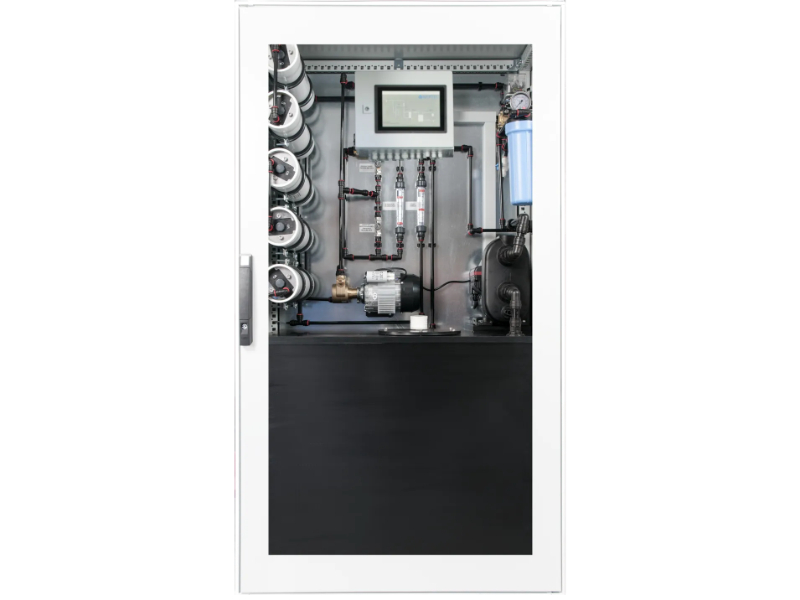
- Product: central Type 2 laboratory water system (RO + CEDI)
- Feed: potable tap water
- Available production volumes: 60, 180, 350 or 500 L/h
- Storage volume: optional 300 L integrated tank
- Pump type: optional integrated distribution pump
€30.000,00 excl. VAT
CLRW Requirements According to CLSI
The CLSI guideline (formerly NCCLS C3-A4) defines minimum performance criteria for water used in clinical laboratories and diagnostic analyzers.
| Parameter | CLRW Requirement |
|---|---|
| Resistivity | ≥ 10 MΩ·cm |
| Total Organic Carbon (TOC) | < 500 ppb |
| Bacterial Count | < 10 CFU/mL |
| Final Filtration | 0.2 µm inline filter |
Important: CLRW is a clinical classification and does not directly correspond to ASTM Type 1 or Type 2, although some parameters may overlap.
What is CLRW (Clinical Laboratory Reagent Water)?
CLRW is a water quality standard defined by the Clinical and Laboratory Standards Institute (CLSI) for use in clinical laboratories. It is specifically designed to support automated analyzers used in hospitals and diagnostic facilities.
Why CLRW is Critical for Clinical Analyzers
Clinical analyzers rely on purified water for reagent preparation, dilution, internal rinsing and calibration. Variations in water quality can lead to:
- Analytical drift
- Calibration instability
- Increased error rates
- Contamination of internal fluidics
CLRW ensures consistent diagnostic performance and patient safety.
CLRW vs ASTM Type 2 Water
While ASTM Type 2 water offers high chemical purity, CLRW includes defined microbiological control and mandatory 0.2 µm final filtration tailored to clinical applications. Compliance with analyzer manufacturer requirements is essential.
Purification Technologies for CLRW Production
- Reverse Osmosis (RO)
- Deionization or Electrodeionization (EDI)
- UV disinfection (254 nm)
- Final 0.2 µm filtration
- Continuous resistivity monitoring
Integration in Hospital Infrastructure
CLRW systems can operate as standalone units or be integrated into a central laboratory water system supplying multiple analyzers through a recirculation loop.
Related Laboratory Equipment
Hospitals and clinical laboratories also require stable water quality for equipment such as laboratory glassware washers (page coming soon) and constant climate chambers to maintain consistent performance.
Clinical Laboratory Solutions in the BeNeLux
Hospitals and diagnostic centers across Belgium, the Netherlands and Luxembourg rely on validated CLRW systems to maintain regulatory compliance and ensure uninterrupted analytical workflows.